Small kitchens in Arlington, Vienna, and Tysons don’t need to feel cramped. A peninsula design transforms limited space into a functional, open layout that works harder for your home.
We at Dzala General Contractor have seen how the right peninsula remodel ideas can add counter space, improve traffic flow, and create distinct zones without closing off your kitchen. This guide shows you exactly how to make it work.
Why Peninsula Design Adds Real Value to Small Kitchens
Counter Space Without Sacrificing Floor Area
A peninsula adds 60 to 90 inches of usable counter space in tight kitchens without consuming the floor area an island would demand. In Arlington, Vienna, and Tysons homes where square footage comes at a premium, this matters. Homeowners consistently underestimate how much counter real estate they’re missing in small kitchens. A peninsula solves this by extending your workspace into the room rather than eating into it. You gain prep surface, appliance placement, and storage drawers all in one footprint.
Quartz and granite countertops on a peninsula handle heavy daily use without requiring constant maintenance. The material choice directly impacts your budget-quartz typically costs less than granite while delivering similar durability. The storage underneath matters equally; pull-out drawers, spice organizers, and cabinet pull-outs integrated into the peninsula base transform dead space into organized zones for cookware, pantry items, and cleaning supplies.
Traffic Flow Gets Better, Not Worse
Small kitchens suffer from bottlenecks when multiple people need to move through them simultaneously. A peninsula actually improves this by creating a defined work zone that doesn’t block pathways. Unlike a full island, which requires clearance on all sides, a peninsula attaches to an existing wall or counter, freeing up one direction entirely.
You maintain at least a comfortable walking width around the peninsula-typically 36 to 42 inches-allowing someone to move from the refrigerator to the stove without squeezing past another person. This layout works especially well in galley kitchens common to Arlington townhomes and Vienna condos, where a peninsula divides the cooking zone from the dining area while keeping sightlines open. The zone separation happens naturally without closing off your kitchen from the living space, which modern homeowners in Tysons demand.
Pendant lighting mounted above the peninsula reinforces this separation and provides focused task lighting where you prep food, eliminating the need for additional overhead fixtures that can make small spaces feel harsh.
Built-In Seating Replaces Dining Furniture
A peninsula with an overhang of 15 inches or more accommodates bar stools, turning your counter into a casual dining spot. This eliminates the need for a separate dining table in homes where space is already tight. Counter-height seating (typically 36 inches) allows comfortable legroom and knee space underneath-critical details that separate functional design from uncomfortable afterthoughts.
Integrated seating on a peninsula creates a social hub during cooking and meal prep, keeping family members or guests engaged without crowding the work area. The seating also serves double duty as extra prep space when you’re not dining, making it genuinely multi-functional rather than decorative. These practical benefits set the stage for exploring specific design layouts that work in Arlington, Vienna, and Tysons homes.

Three Peninsula Layouts That Work in Arlington, Vienna, and Tysons Homes
L-Shaped Kitchens with Extended Peninsulas
L-shaped kitchens dominate small homes across Arlington, Vienna, and Tysons, and adding a peninsula extension to one wall transforms workflow dramatically. Instead of turning the corner at a 90-degree angle, you extend the counter perpendicular into the room, creating additional prep space and seating without requiring structural changes. This layout works best when you attach the peninsula to the longer wall of your L, giving you roughly 48 to 72 inches of new counter depending on your room’s dimensions.
The peninsula then becomes a natural gathering point between your cooking zone and living area, with counter-height seating on the open side. Quartz countertops on the peninsula cost between $40 and $65 per square foot installed, making this upgrade affordable compared to a full island installation. The key detail most homeowners miss: maintain at least 42 inches of clearance on the traffic side of your peninsula, or you’ll create the bottleneck you were trying to avoid.

Galley Kitchens with Central Peninsulas
In galley kitchens common to Vienna townhomes, a peninsula works differently. You position it perpendicular to one of your parallel walls, essentially creating a central divider that separates your cooking zone from the dining or living area. This layout delivers 60 to 90 inches of counter space while maintaining the galley’s efficient workflow.
The peninsula with an integrated sink or cooktop frees wall space for additional upper cabinets and appliances-a critical advantage when your kitchen measures under 100 square feet. Pendant lights mounted 30 to 36 inches above the peninsula counter provide task lighting directly where you prep food and define the dining nook without overhead fixtures that can overwhelm tight spaces.
Open-Concept Kitchens with Breakfast Bar Peninsulas
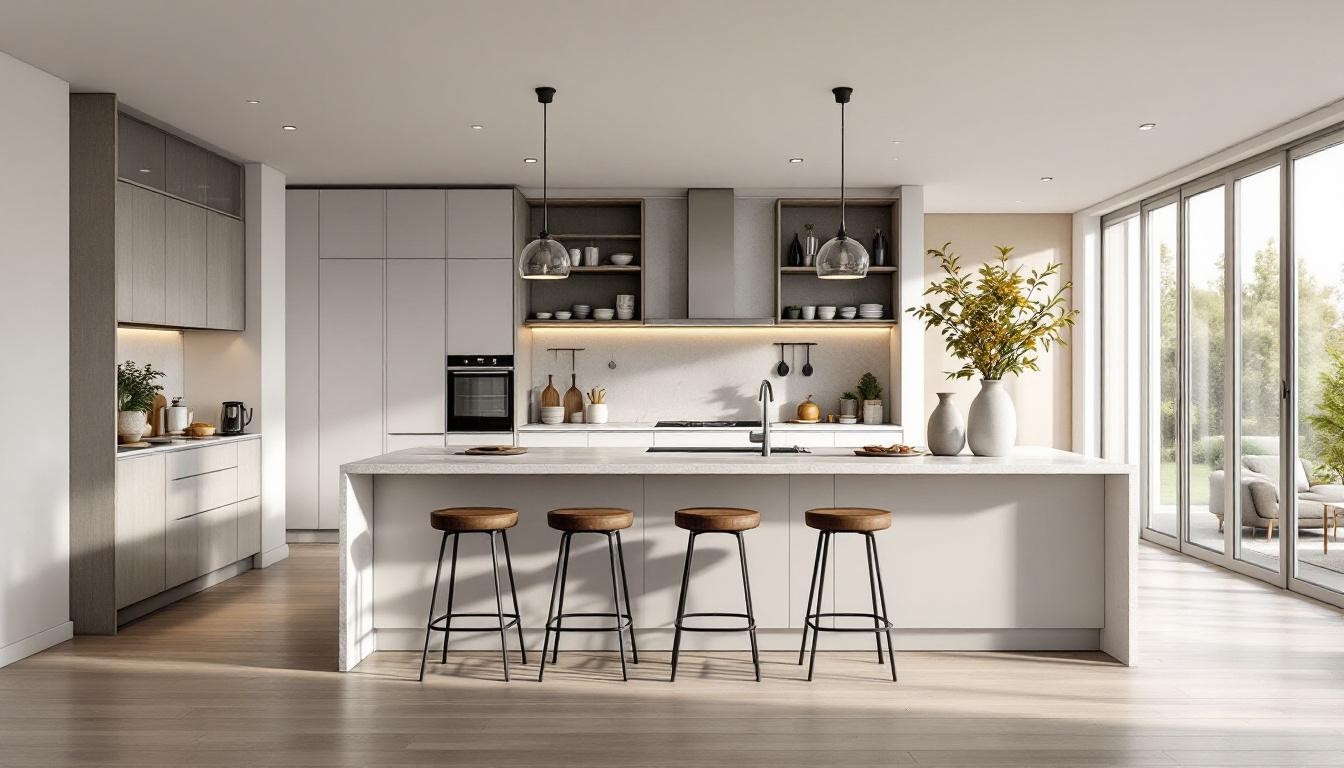
Open-concept kitchens in Tysons homes benefit most from a breakfast bar peninsula design, where the peninsula serves primarily as seating rather than prep space. This configuration places the peninsula parallel to your kitchen’s primary counter, creating an intimate dining area that doesn’t interrupt your cooking workflow. The breakfast bar typically features a 15 to 18-inch overhang on the living-room side, accommodating three to four bar stools comfortably with proper knee clearance.
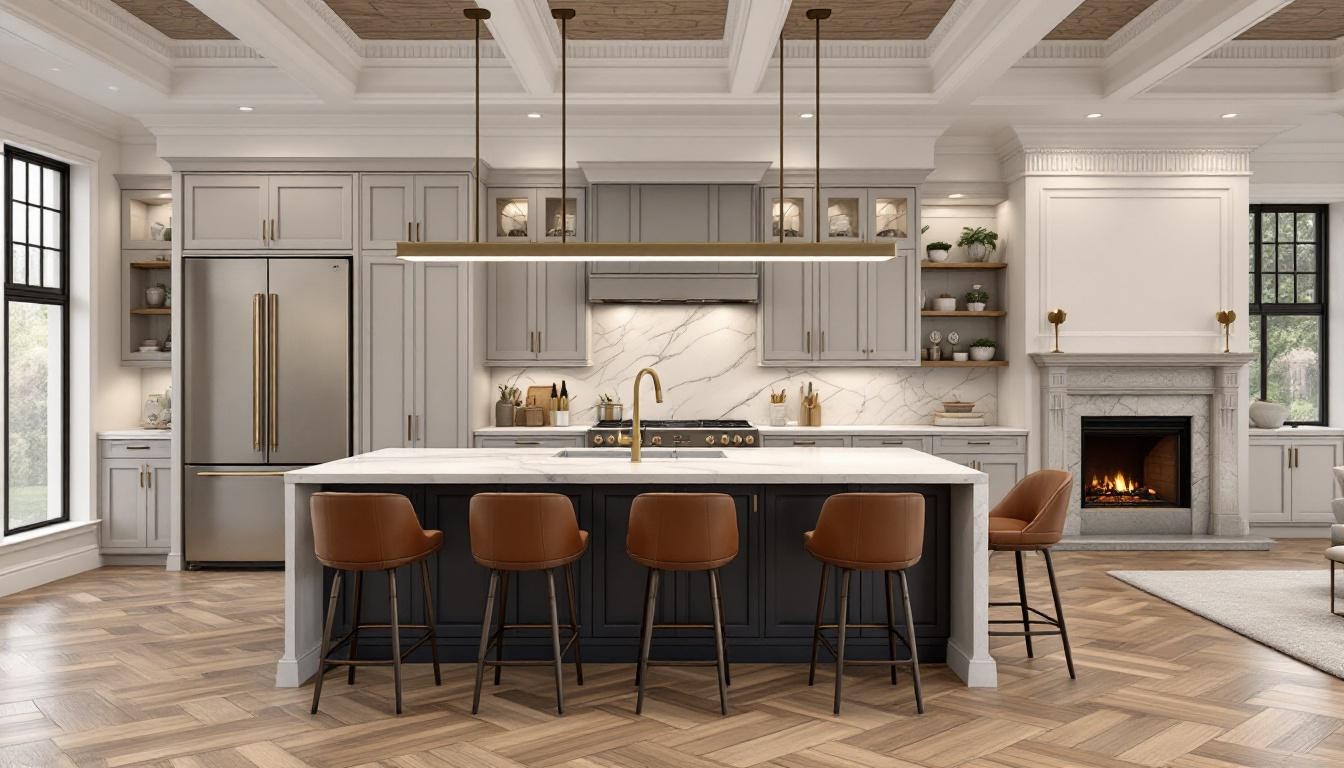
Wood base cabinets paired with light quartz countertops keep the peninsula visually open, preventing the space from feeling divided. The distance between your breakfast bar and any cabinets or appliances behind it should reach at least 36 inches to allow someone to stand and work without bumping into stools. Two-tone cabinetry (such as white uppers with a contrasting darker peninsula base) adds visual depth without making your kitchen feel cramped, according to design data from Houzz.
The overhang matters for comfort and function-stools with a 26-inch seat height work with a 36-inch counter, while 24-inch stools pair with 34-inch bars. These specific measurements prevent uncomfortable perching and make seating genuinely usable rather than decorative. Each layout prioritizes different kitchen functions, but all three share one principle: your peninsula must attach to existing structure rather than float, keeping installation costs reasonable and maintaining the open feel you’re seeking. The design you select depends on your kitchen’s current shape and how your family uses the space-a distinction that becomes clearer when you explore kitchen remodel ideas with peninsula designs to maximize storage and workspace in your Arlington, Vienna, and Tysons home.
How to Pick Materials and Finishes That Make Small Peninsulas Feel Larger
Countertop Materials That Reflect Light and Space
The materials you select for your peninsula determine whether your small kitchen feels open or cramped. Quartz countertops cost $40 to $65 per square foot installed and outperform granite in small spaces because they come in lighter, more uniform colors that reflect light and expand visual space. Granite varies significantly in tone and pattern, which works against you when your goal is making 60 to 90 inches of counter feel less heavy. In Arlington, Vienna, and Tysons homes where kitchens often measure under 120 square feet, this difference matters more than most homeowners realize.
White, cream, or pale gray quartz on your peninsula countertop instantly makes your space feel 15 to 20 percent larger according to Houzz’s analysis of small kitchen designs. The light surface bounces natural and artificial light throughout the room, preventing the peninsula from becoming a visual anchor that weighs down tight quarters.
Cabinet Colors and Base Finishes
Cabinet color on the peninsula base should either match your existing cabinetry or contrast sharply with it-never settle for a muddy in-between shade that reads as indecision. White or soft gray peninsula bases paired with light countertops create the maximum sense of openness, while darker wood tones add warmth without closing off the space if your existing cabinets are already neutral.
Avoid dark peninsula bases if your kitchen has limited natural light, which describes most kitchens in older Arlington townhomes and Vienna condos. Shaker-style cabinet fronts and flat-panel doors keep the peninsula looking streamlined, while ornate hardware adds visual complexity you don’t need in small kitchens. Your peninsula succeeds when every element serves a function and nothing exists purely for decoration.
Lighting That Defines Zones Without Overwhelming Space
Pendant lights mounted 30 to 36 inches above your peninsula counter provide task lighting directly where you prep food and define the dining area without relying on overhead fixtures that cast harsh shadows in tight spaces. Pendant lights cost $150 to $400 each installed, and three pendants spaced evenly across a 72-inch peninsula deliver better illumination than a single fixture.
The spacing and height matter for function-too low and stools bump the fixtures; too high and you lose focused task lighting. This focused approach to lighting prevents the harsh, overwhelming feel that overhead fixtures create in small kitchens common throughout Tysons and Vienna.
Storage Solutions That Eliminate Visual Clutter
Storage solutions integrated into your peninsula base should include deep drawers for cookware and pull-out organizers for spices, oils, and frequently used items rather than open shelving that collects clutter and visual weight. Pull-out drawers and cabinet pull-outs transform dead space into organized zones for cookware, pantry items, and cleaning supplies without adding visual bulk to your peninsula.
These practical storage features (deep drawers, spice organizers, and pull-outs) keep your peninsula functioning as a true work surface rather than a decorative element. The organized base allows your countertop to remain clear, which maintains the open, spacious feeling you worked to create with your material and color selections.
Final Thoughts
A peninsula transforms small kitchens in Arlington, Vienna, and Tysons by delivering counter space, seating, and storage without consuming the floor area an island demands. Light quartz countertops, streamlined cabinetry, and focused pendant lighting prevent your peninsula from overwhelming tight quarters, while integrated storage and counter-height seating create genuine multi-functional zones that improve how your family uses the kitchen daily. Measure your kitchen’s dimensions and identify which layout matches your space-an L-shaped peninsula works best when you extend perpendicular to your longer wall, while galley kitchens benefit from a central divider that separates cooking from dining.
Budget planning matters equally, as quartz countertops run $40 to $65 per square foot installed and cabinetry accounts for roughly 30 percent of your total remodel cost. A 20 percent contingency fund protects against material delays or unforeseen structural issues that commonly arise during kitchen work. Northern Virginia projects tend to run higher than national averages due to premium materials and labor rates, so expect costs to exceed the national midrange average of $79,982 for major remodels.

We at Dzala General Contractor handle every aspect of your small kitchen remodel ideas with peninsula designs, from initial design through final walkthrough. Our team manages the structural planning, material selection, and installation coordination that transforms your small kitchen into a functional, open space. Contact us today to schedule a consultation and discuss how a peninsula design fits your Arlington, Vienna, or Tysons home.