Open kitchens have become the standard in modern homes, and for good reason. They create a sense of spaciousness and keep families connected while cooking and entertaining.
We at Dzala General Contractor have guided countless homeowners through open kitchen remodel ideas that balance style with everyday functionality. This guide walks you through the design principles, materials, and practical solutions that make open kitchens work.
Designing Open Kitchens That Actually Work
Open kitchen layouts demand careful planning around three critical areas: removing structural barriers, maximizing usable space, and controlling light. Many homeowners jump into wall removal without considering how traffic flows or where they’ll store everyday items. This mistake leads to kitchens that look spacious but function poorly.
Removing Walls Without Sacrificing Structure
Tearing down a wall between your kitchen and living area requires more than just opening up space. You need to identify whether the wall is load-bearing, which requires structural engineering and proper support installation. Load-bearing walls need beams, posts, or other reinforcement to distribute weight safely. Non-load-bearing walls are simpler to remove, but hiring a structural engineer costs $300–$800 and prevents expensive mistakes. In Arlington, Vienna, and Tysons, local building codes require permits for any wall removal, and inspectors will verify that the work meets structural standards before you proceed. Skipping the engineer to save money risks foundation issues or worse. The investment in proper assessment pays for itself through avoided repairs.
Storage and Counter Solutions in Open Plans
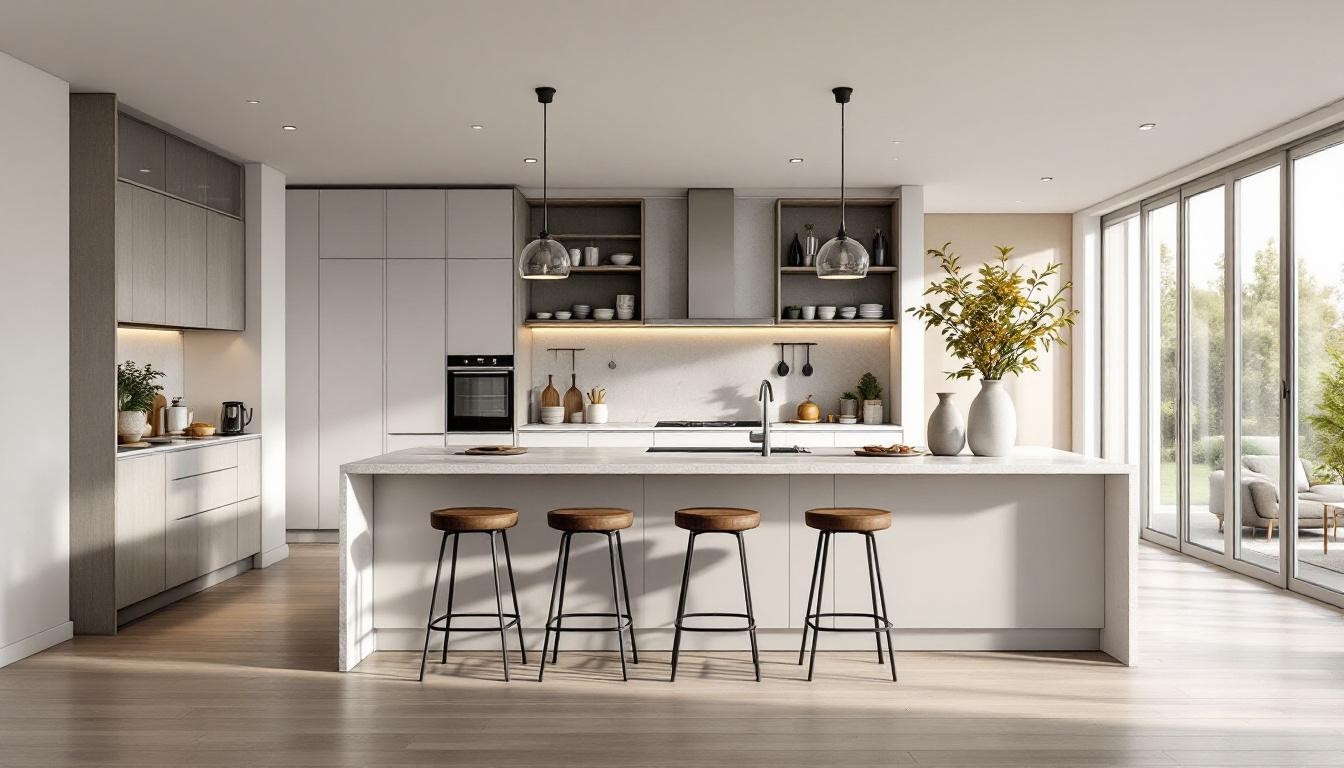
Open kitchens expose everything, so your storage and counter strategy must be intentional. Kitchen storage in open concepts typically uses vertical solutions like tall cabinetry, open shelving, or kitchen islands with integrated storage. Islands serve double duty as food prep space and a visual boundary between the kitchen and living area, creating a natural zone without walls. Counter depth matters too-standard 24-inch counters work, but 30-inch or 36-inch islands give you more prep surface and storage underneath. Install lower cabinets and upper shelving rather than upper cabinets that block sightlines and make the space feel cramped. Drawers organized with dividers keep utensils and small items contained, preventing visual clutter that undermines the open aesthetic.
Lighting Creates Definition in Open Spaces
Lighting is where open kitchens succeed or fail visually. Recessed ceiling lights alone won’t create an inviting space-you need layered lighting with task lighting under cabinets for food prep, pendant lights over islands for definition, and ambient ceiling lights for overall brightness. Pendant lights over an island define the kitchen zone while keeping sightlines open to the living area.
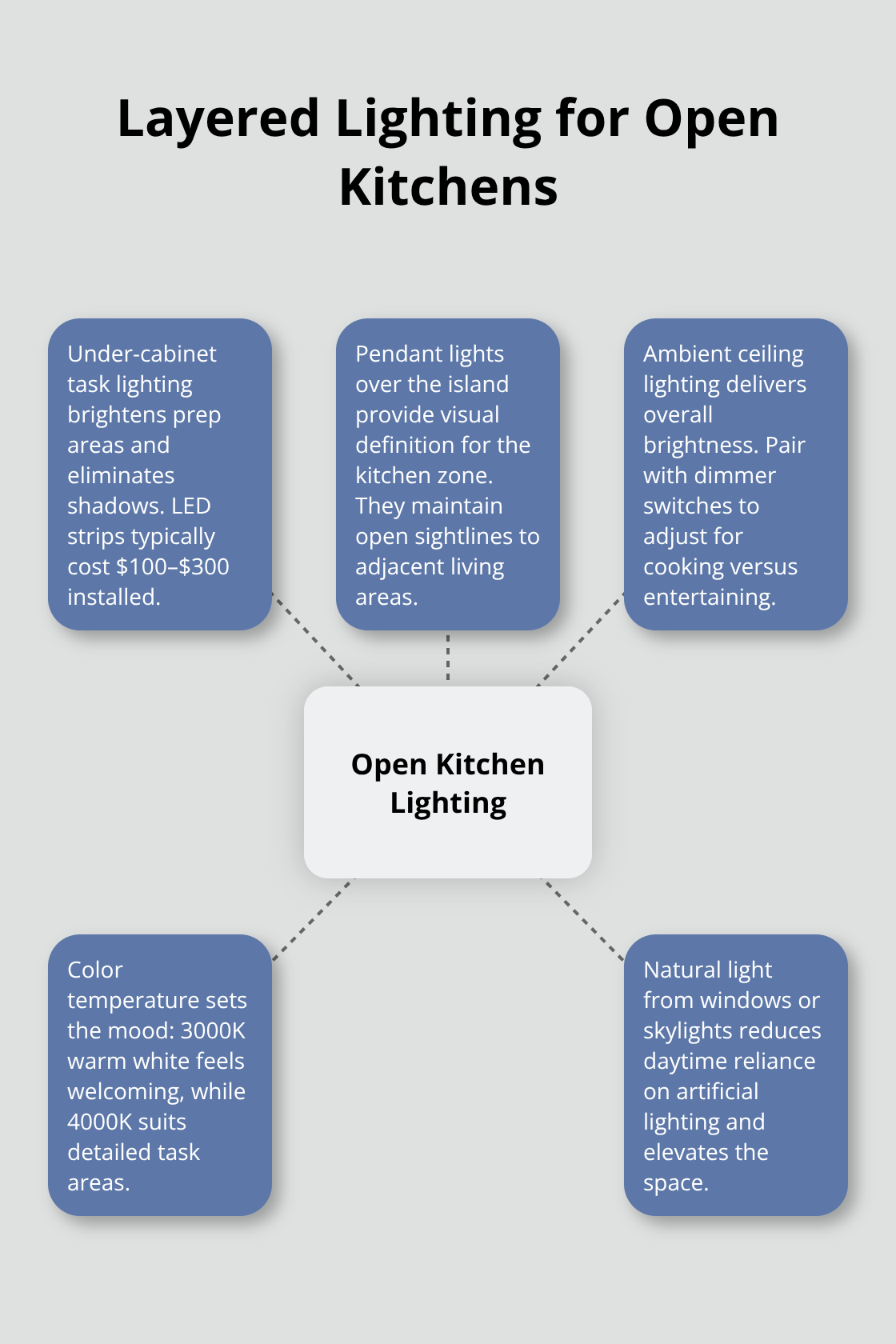
Under-cabinet LED strips cost $100–$300 installed and eliminate shadows on your work surface. Dimmer switches on ambient lights let you adjust brightness for cooking versus entertaining. Color temperature matters: 3000K warm white light feels welcoming in kitchens, while cooler 4000K light works better for task areas. In Arlington, Vienna, and Tysons homes, natural light through windows or skylights reduces reliance on artificial lighting during the day and adds value to your open kitchen design.
Selecting Materials That Support Your Layout
The materials you choose either enhance or detract from your open kitchen’s flow. Flooring that extends from the kitchen into the living area (such as large-format tile or polished concrete) visually connects the spaces without walls. Cabinetry with clean lines and minimal hardware maintains the streamlined aesthetic that open kitchens demand. Countertops in neutral tones or subtle patterns prevent visual noise that fragments the space. These material choices work together to create cohesion across your open layout, setting the stage for how appliances and functional zones fit into the design.
Materials That Work in Open Kitchen Spaces
Selecting Cabinetry for Open Layouts
Cabinetry in open kitchens functions as both storage and interior design statement, which means your cabinet choice shapes how the entire space feels. Flat-panel or slab-style cabinets in matte finishes outperform ornate or raised-panel designs that compete visually with the rest of your home. Matte finishes hide fingerprints better than gloss, reducing maintenance on surfaces people see constantly. Hardware should be minimal and recessed or integrated into cabinet faces rather than protruding knobs that interrupt sightlines. Soft-close hinges and drawer mechanisms cost $30–$60 per cabinet but eliminate slamming sounds that travel through open spaces, a practical benefit homeowners in Arlington, Vienna, and Tysons appreciate immediately.
Cabinet Color Strategy
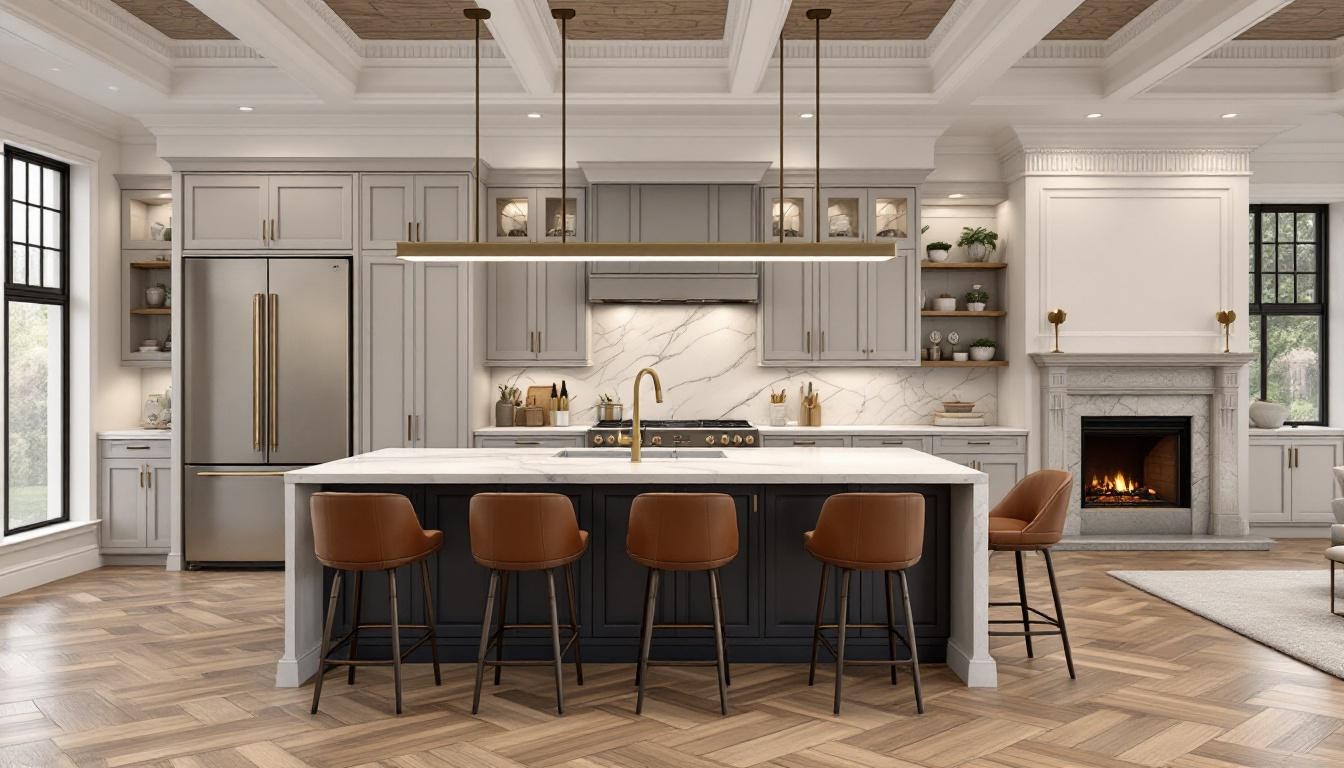
Cabinet color strategy matters more in open kitchens than enclosed ones. Neutral tones like white, gray, or natural wood blend into the broader living space, while bold cabinet colors like navy or black create visual weight that can make open layouts feel cramped. If you want color, apply it to an island base while keeping perimeter cabinets neutral-a compromise that adds personality without overwhelming the space.
Countertop Materials for Durability and Flow
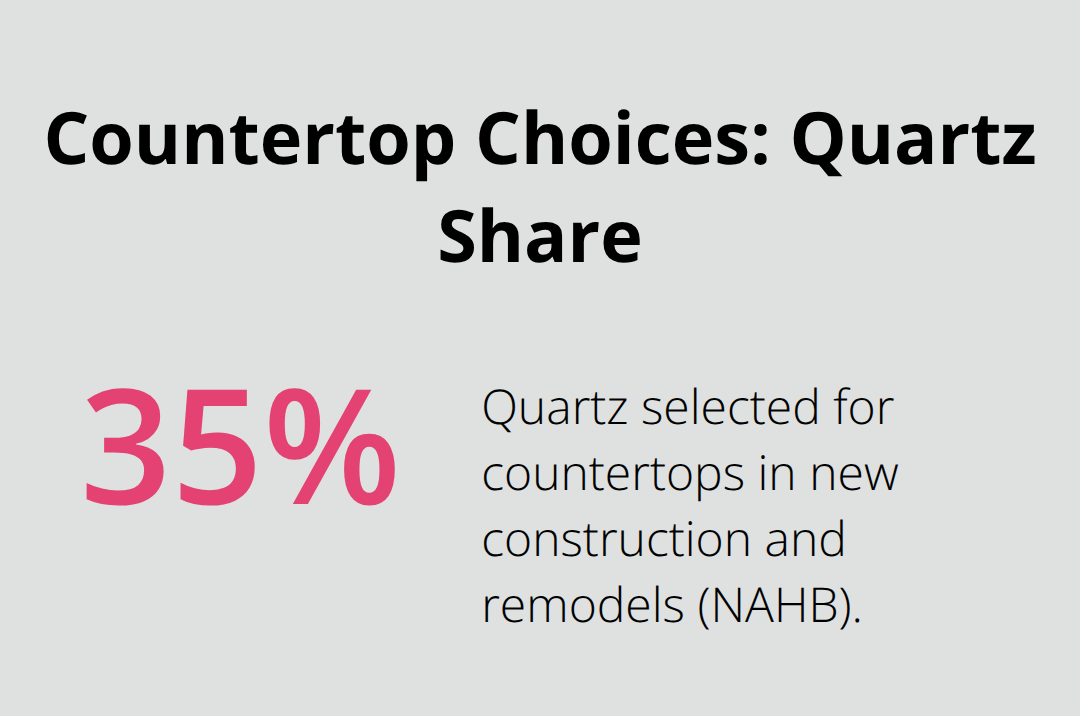
Countertop materials must balance durability with visual continuity in open kitchens. Quartz consistently outperforms other options in residential applications because it resists stains, requires minimal sealing, and maintains appearance over 15–20 years with normal use. According to data from the National Association of Home Builders, quartz represents 35 percent of countertop selections in new construction and remodels, reflecting its reliability and low maintenance demands.
Large-format porcelain slabs eliminate grout lines that interrupt visual flow, creating seamless transitions between kitchen and dining areas. Butcher block or live-edge wood countertops add warmth but demand regular oiling and don’t tolerate moisture exposure, making them unsuitable for primary food prep areas in open kitchens where spills affect adjacent living spaces.
Flooring That Creates Visual Continuity
Flooring that extends from kitchen into living areas should use consistent material across the entire open zone rather than a transition line that visually divides the space. Large-format tiles in neutral gray or beige, polished concrete, or light wood-look porcelain create continuity while hiding dust and crumbs that become visible with smaller tile or scattered finishes. Matte or textured finishes prevent slipping hazards near kitchen work areas where water and food debris accumulate. These material choices work together to support how appliances and functional zones fit into your design, which brings us to the practical side of making your open kitchen actually work for daily life.
Integrating Appliances and Functionality
Selecting Appliances for Open Kitchen Visibility
Appliance selection in open kitchens demands a different approach than traditional enclosed spaces. Visible appliances become design elements, not hidden utilities, which means finish and size matter as much as performance. Stainless steel remains the dominant choice in open kitchens because it reflects light and doesn’t compete visually with surrounding materials, but fingerprints show constantly on polished finishes. Fingerprint-resistant or matte stainless steel costs $200–$400 more per appliance but eliminates the constant cleaning burden that frustrates homeowners in Arlington, Vienna, and Tysons.
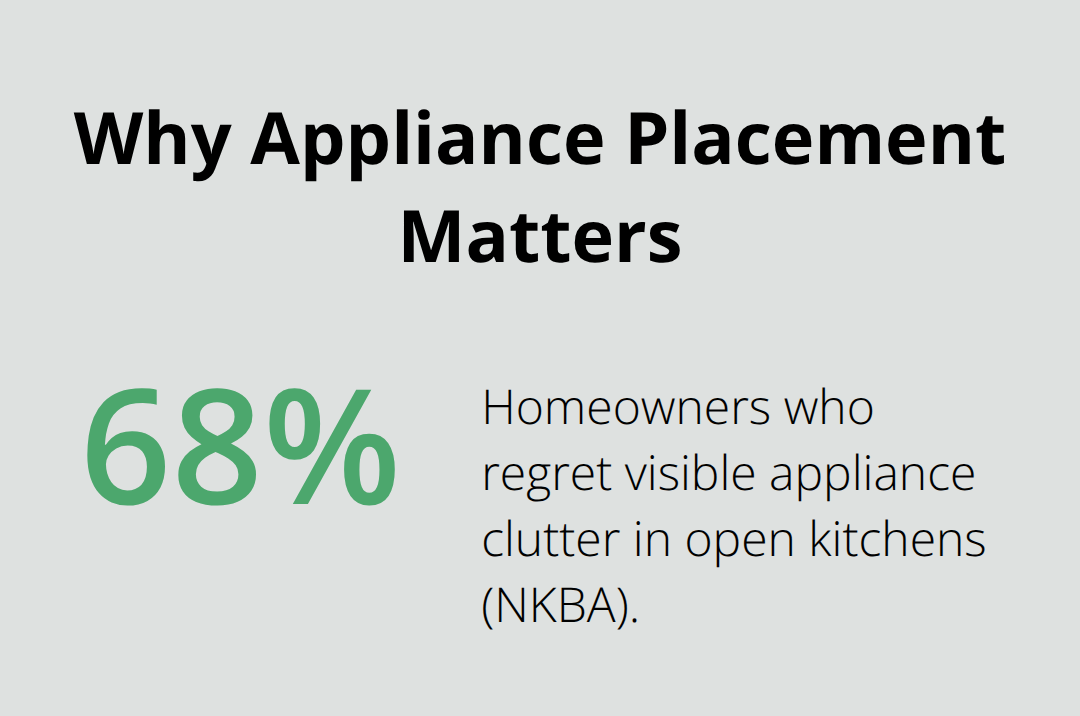
Refrigerator placement should anchor one end of your kitchen zone rather than sitting in the middle of sightlines from the living area. Cooktops positioned on islands create visual interest and allow cooks to face the living space, but they demand superior ventilation because steam and cooking odors travel freely through open layouts. Smaller appliances like coffee makers and toasters should live in a dedicated zone or closed pantry rather than cluttering visible counters. The National Kitchen and Bath Association reports that 68 percent of homeowners regret visible appliance clutter in open kitchens, making strategic placement a priority from the start.
Ventilation Systems That Control Odors and Steam
Ventilation separates successful open kitchens from ones that smell like last night’s dinner indefinitely. Island cooktops require downdraft ventilation or an overhead hood sized for your cooking habits, not just your cooktop dimensions. A 36-inch cooktop needs a hood at least 42 inches wide, and the hood should draw 300–600 cubic feet per minute depending on your cooking style, according to the Kitchen Cabinet Manufacturers Association.
Wall-mounted cooktops can use range hoods vented to the exterior, but open kitchens benefit from recirculating hoods with activated charcoal filters if exterior venting isn’t possible. Ductless range hoods cost $400–$1,200 installed and filter grease and odors without exterior ducting, though they require monthly filter replacement.
Creating Zones Without Walls
Zoning your open kitchen means defining where cooking happens, where eating happens, and where lounging happens through placement of islands, counters, and furniture rather than walls. An island with seating on one side and cooking on the other creates a natural boundary that separates prep work from dining without blocking sightlines. Flooring transitions from tile in the kitchen zone to wood or different tile in the living area reinforce these zones subtly.
Traffic flow patterns matter too: position your island so people don’t cut through your work zone to reach the living area or a hallway beyond. Sketch movement patterns through your space before finalizing appliance and island placement, catching problematic layouts before construction begins.
Final Thoughts
Open kitchen remodel ideas succeed when you balance structural planning, material selection, and functional zoning. Removing walls requires proper engineering and permits-not shortcuts that compromise safety. Your cabinetry, countertops, and flooring must work together visually while supporting daily use, and appliance placement determines whether your space feels spacious or chaotic after the first month.
Start with a structural assessment before committing to any design. A structural engineer evaluates load-bearing walls and costs $300–$800, an investment that prevents costly mistakes and satisfies local building codes in Arlington, Vienna, and Tysons. Sketch your layout with island placement, cooktop location, and traffic patterns marked clearly so you catch problems before construction begins.
Material choices create the cohesive backdrop that makes open kitchens work. Select neutral cabinetry with soft-close hardware, quartz or large-format porcelain countertops, and flooring that extends visually from kitchen into living areas. Contact Dzala General Contractor to discuss your kitchen remodel and transform your space into one that works as beautifully as it looks.