Open kitchens have become the standard in modern homes across Arlington, Vienna, and Tysons. Homeowners want spaces where cooking, dining, and living blend together seamlessly.
We at Dzala General Contractor have renovated hundreds of kitchens, and we’ve learned what open kitchen design ideas actually work in Northern Virginia homes. The right layout, materials, and smart planning make all the difference between a kitchen that functions beautifully and one that creates problems.
Open Kitchen Layouts That Work Best
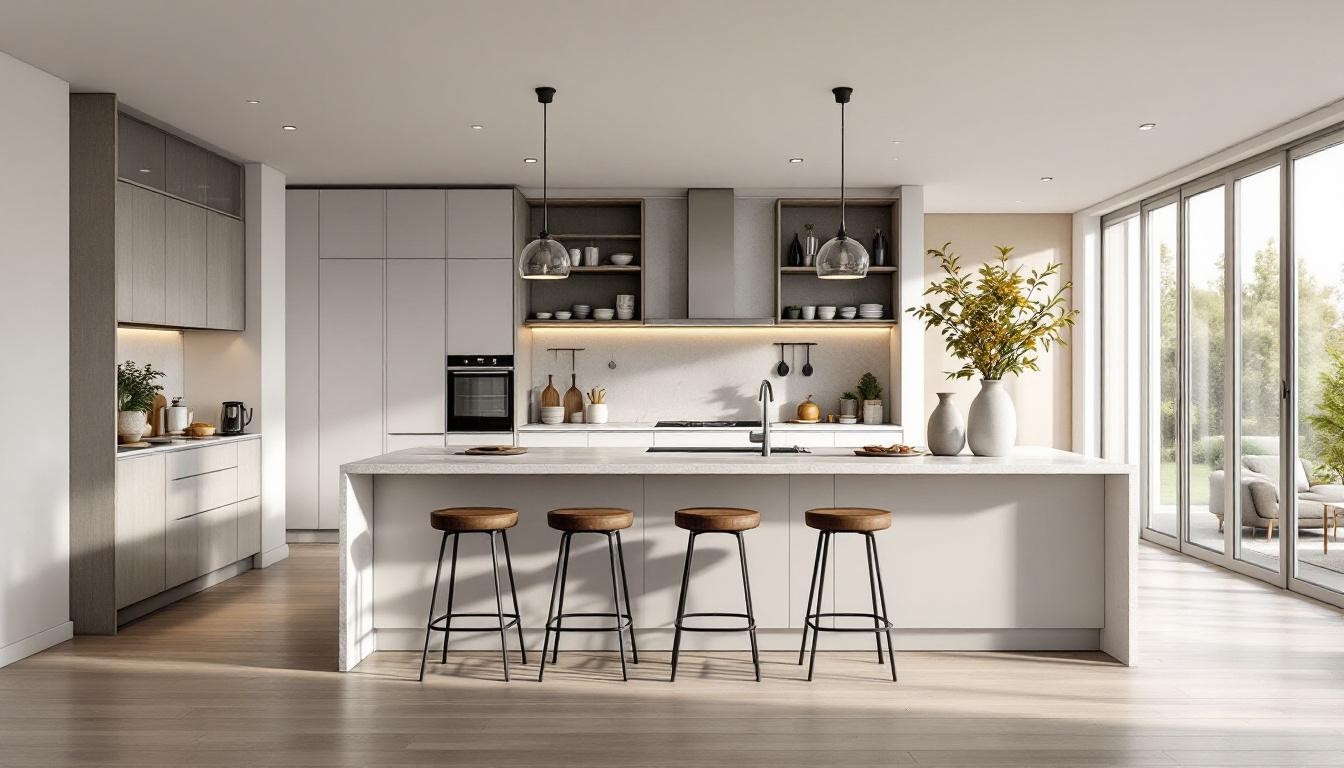
The kitchen layout you choose determines whether your open space functions for daily cooking or becomes a bottleneck during family dinners. Islands dominate open kitchen design, and for good reason. A properly positioned island creates distinct zones without walls. It separates the cooking area from the living space while keeping sight lines open. The island works as a prep station, seating area, and visual anchor all at once.
Homeowners in Arlington and Vienna often choose double island configurations. The first island handles food preparation with appliances or a cooktop, while the second island becomes the social hub with seating. This approach gives you two functional zones within one open space. Size matters significantly. A 12-by-12 kitchen in Arlington typically costs between $45,000 and $95,000 for mid-range finishes, and a well-placed island adds roughly 15 to 20 percent to your material costs but multiplies your usable space. L-shaped and U-shaped layouts work exceptionally well when you adapt them for openness. Instead of closing off the kitchen with walls, position your cabinets and appliances along two adjacent walls, leaving the third side completely open to the dining and living areas. This preserves the work triangle efficiency while maintaining visual flow. U-shaped designs perform better than L-shaped ones in larger kitchens because they provide more counter and storage space without requiring a center island.
Island Size That Matches Your Space
Most homeowners overestimate how much island space they need. A functional island should be at least 30 inches deep and 48 inches long minimum. Anything smaller feels cramped for two people working simultaneously. In Tysons homes with generous square footage, try an island that runs 60 to 72 inches long. This length accommodates four to six bar stools and gives you adequate prep space. The distance between your island and the perimeter cabinets should be at least 42 inches.
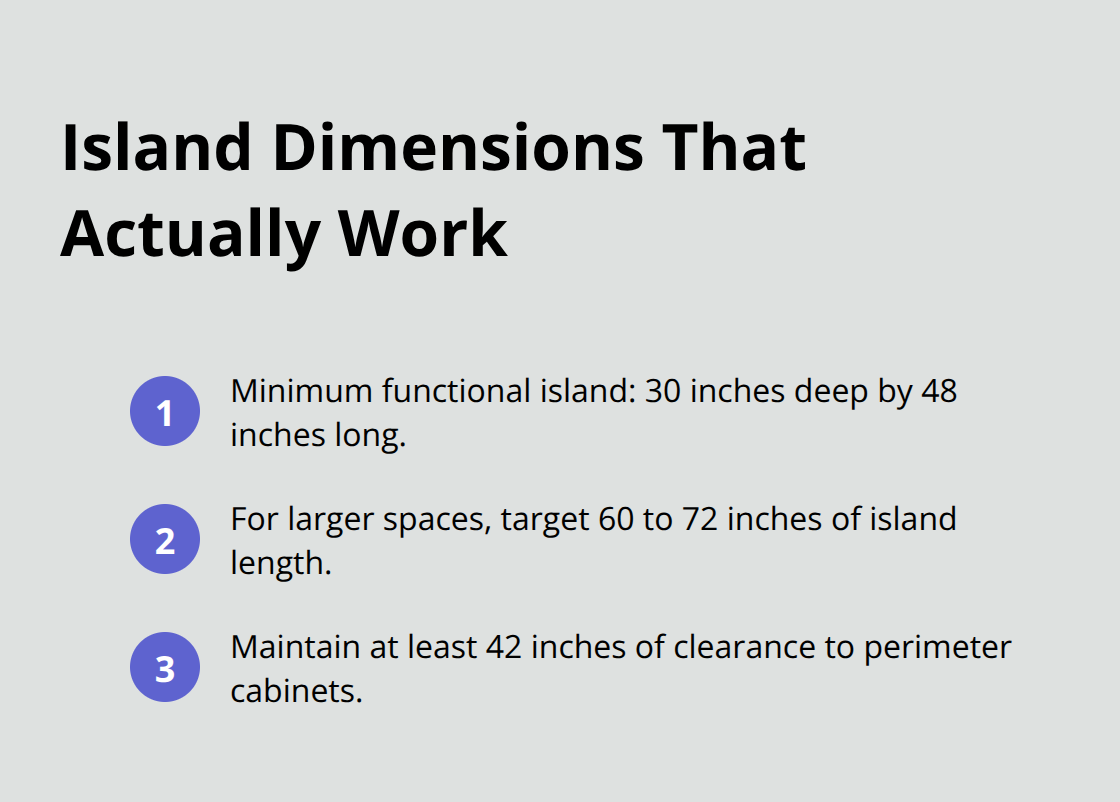
This allows cabinet doors and appliance doors to open without hitting the island. Anything less than 42 inches creates workflow problems that no amount of design polish can fix.
Adapting Galley Kitchens for Open Living
Older Arlington and Vienna homes frequently have galley kitchens. You can adapt this layout for open living without gutting your walls. Position one side of your galley with open shelving or a pass-through window instead of solid cabinets. Keep your appliances and main cabinetry on the opposite wall. This creates sightlines into the kitchen while preserving efficient workflow. The galley layout actually performs better than open kitchens for serious cooks because everything stays within arm’s reach. If entertaining matters more than cooking volume, add a pass-through bar counter that opens the galley toward your dining area. This hybrid approach gives you the efficiency of a galley with the openness modern homeowners demand.
The materials and finishes you select next will either enhance these layouts or work against them. Your choice of countertops, cabinetry, and hardware determines how well your open kitchen flows visually into the rest of your home.
Materials and Finishes That Anchor Your Open Space
Your material choices in an open kitchen determine whether the space feels cohesive or fragmented. When your kitchen opens directly into living and dining areas, every surface becomes visible from multiple angles, so consistency matters far more than in traditional closed kitchens.
Countertops and Cabinetry That Create Flow
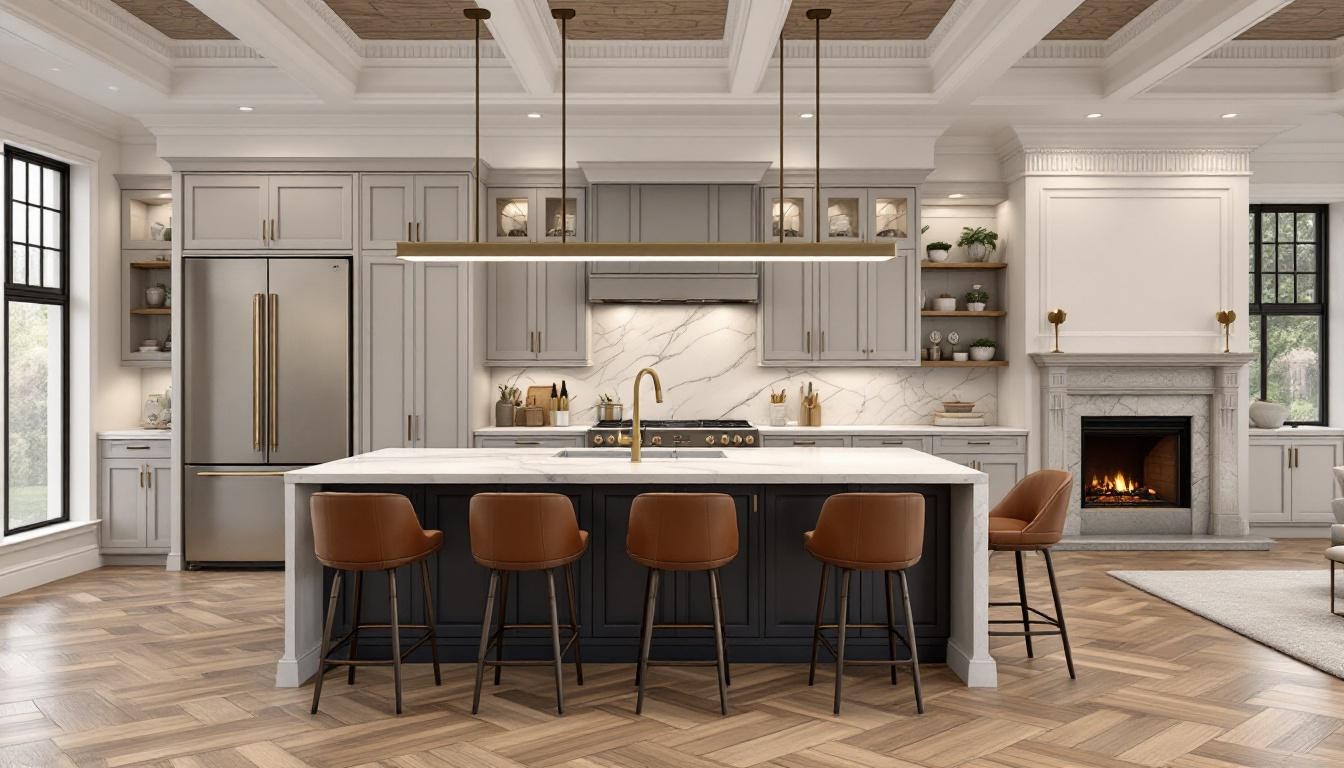
Quartz countertops work exceptionally well in open layouts because they offer non-porous, durable surfaces in a wide range of colors and textures that coordinate easily with cabinetry and flooring. Taj Mahal Quartzite delivers premium aesthetics and durability for social cooking spaces, making it a popular choice among homeowners in Arlington, Vienna, and Tysons. Grey kitchen cabinets paired with flat-surface wood-look finishes create the modern, cohesive look that keeps an open space feeling intentional rather than chaotic. The key is selecting materials that flow visually from your cooking zone through your dining area without jarring transitions.
A 12-by-12 kitchen renovation in Arlington typically budgets around 30 percent of total costs toward cabinets, so your cabinet selection heavily influences both functionality and appearance. Reclaimed wood beams layered with sleek modern cabinetry strike a balance between rustic warmth and contemporary polish, preventing your open kitchen from feeling too sterile or too casual.
Hardware and Accent Materials
Brass hardware adds warmth and creates a timeless accent that works across neutral palettes, while contrasting matte black fixtures with polished brass elevates the overall aesthetic. Mixed materials and textures (wood, metal, stone, and glass) create visual interest without sacrificing the openness you want. These contrasts prevent your space from feeling monotonous while maintaining the visual continuity that open layouts demand.
Lighting That Defines Zones Without Walls
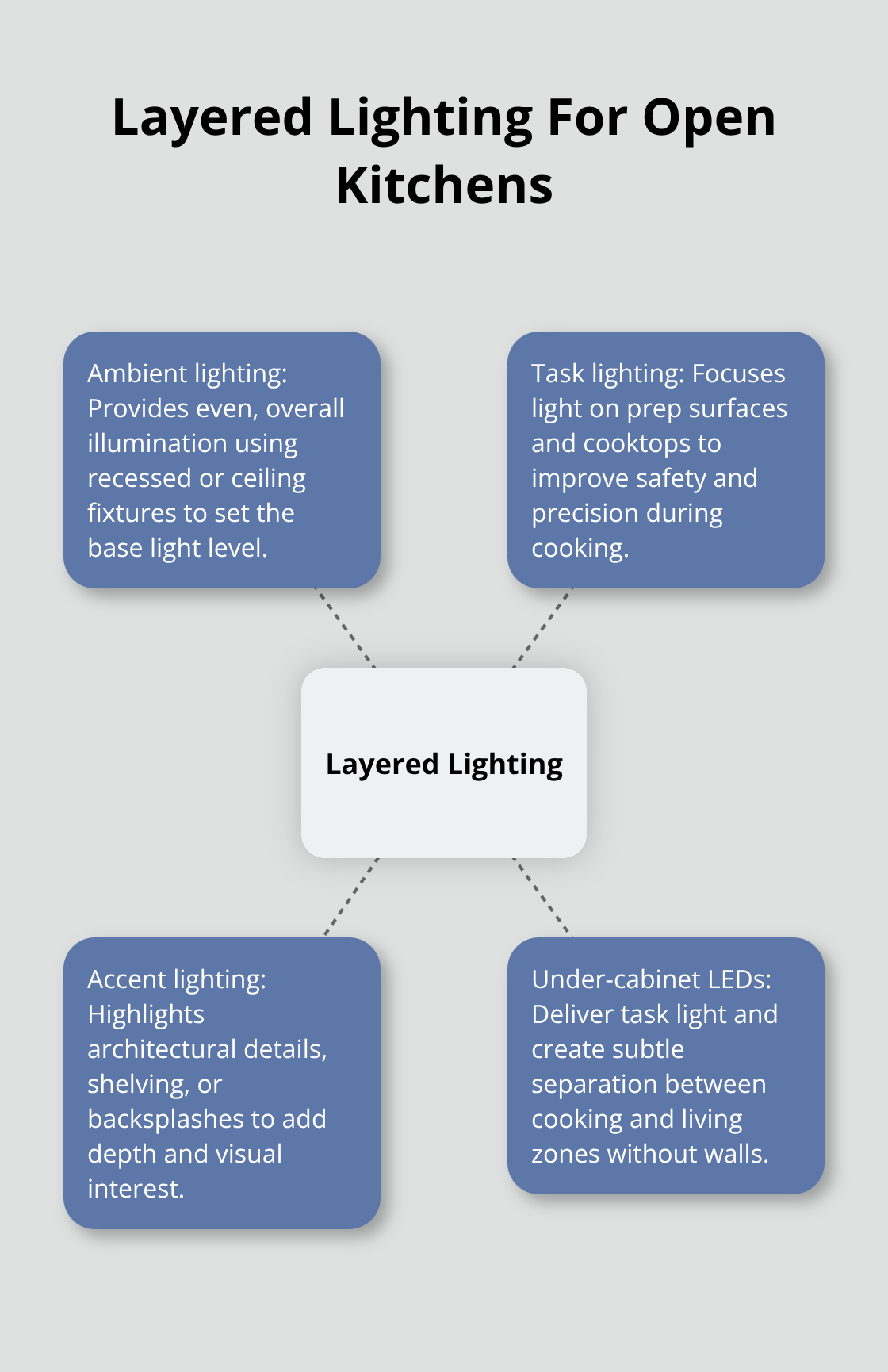
Lighting design in open kitchens requires layering three distinct types: ambient lighting for overall illumination, task lighting focused on prep surfaces and cooking zones, and accent lighting that highlights design features. Under-cabinet LED lighting serves double duty by illuminating your countertops for food prep while creating visual separation between your cooking zone and the adjacent living space without adding walls. This layered approach helps define distinct areas while preserving the openness homeowners want.
Storage Solutions That Keep Surfaces Clear
Storage solutions determine whether your open kitchen looks intentional or cluttered, and this matters more in open layouts where countertops are constantly visible. Custom cabinetry with hidden storage (pull-out spice racks, appliance garages, deep drawers, and toe-kick drawers) maximizes space while keeping surfaces uncluttered. Selective open shelving can display stylish dishware and décor to enhance sociability, but balance this with closed storage to control visual clutter. Thoughtful storage planning prevents the common problem where open kitchens become dumping grounds for visible appliances and cooking tools.
Managing Odors and Ventilation
Proper ventilation with a range hood remains essential because odors and heat travel freely in open layouts, and you need a hood powerful enough to manage cooking smells without overwhelming adjacent spaces. Peninsula design solutions offer practical ways to organize your cooking zone while maintaining the social flow of your space. Once you’ve selected your materials and finishes, the practical challenge becomes managing how your open kitchen actually functions during daily cooking and entertaining.
Making Open Kitchens Work in Northern Virginia Homes
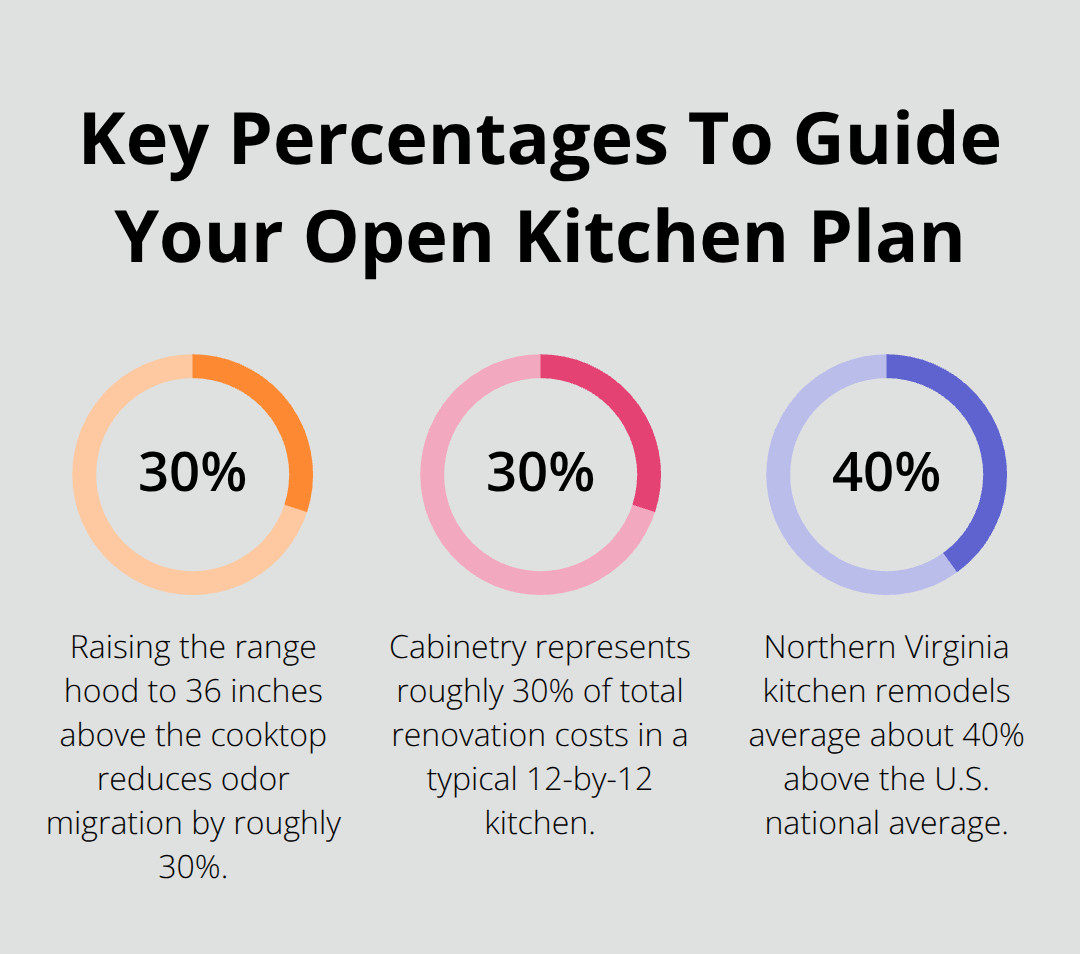
Open kitchens create real problems that closed kitchens never face, and pretending otherwise wastes your renovation budget. Cooking odors, noise, and visual clutter travel directly into your living spaces, which means you need practical solutions before construction starts. Ventilation is your first line of defense, but standard range hoods fail in open kitchens because they’re sized for enclosed spaces. A 12-by-12 kitchen in Arlington needs a hood rated for at least 600 CFM (cubic feet per minute), not the typical 400 CFM you find in most builder-grade installations. Install your hood higher than standard height-36 inches above your cooktop instead of 30 inches-because the extra clearance gives air a longer path to escape before spreading into adjacent rooms. This single change reduces odor migration by roughly 30 percent.
Controlling Noise and Odors
Noise travels equally far in open layouts, so specify quiet-running appliances during your initial planning. Refrigerators rated below 45 decibels and dishwashers under 50 decibels prevent constant background noise from dominating your living space. In Tysons and Vienna homes, many homeowners add a sliding glass partition that closes off the cooking zone during dinner parties, then slides away for everyday openness. This costs between $3,000 and $5,000 but gives you flexibility that fixed designs cannot provide.
Creating Visual Zones Without Walls
A 48-inch-tall peninsula or island acts as a visual boundary that separates your cooking zone from the living area without blocking sightlines. Position your island perpendicular to your main cabinetry line so it naturally creates a division between prep work and social spaces. Flooring continuity matters less than you’d think-many Arlington and Vienna homeowners use different materials in the kitchen and living areas because the visual break actually helps define zones. Your cabinet placement should anchor your zoning strategy (cabinetry represents roughly 30 percent of total renovation costs in a 12-by-12 kitchen). Keep appliances and prep surfaces on one side of the island, reserve the opposite side for seating and entertaining. This arrangement prevents guests from standing directly behind someone cooking, which solves both safety and social awkwardness simultaneously.
Prioritizing Your Budget
Budget-friendly open kitchen renovations focus on what actually matters: solid cabinetry, durable countertops, and proper ventilation. Skip expensive finishes and invest instead in semi-custom cabinets priced between $200 and $650 per linear foot with 3-to-6-week lead times, rather than custom options exceeding $500 per linear foot. Quartz countertops cost roughly 15 to 20 percent less than natural stone while offering superior durability in visible open spaces. The Nova Remodeling Cost Calculator provides location-specific estimates for Fairfax, Arlington, Alexandria, Loudoun, and Prince William counties, reflecting actual permit and labor costs in your area rather than national averages. Northern Virginia kitchen remodels average about $75,000, roughly 40 percent above the national average, so knowing your local baseline prevents budget surprises.
In Tysons, where square footage typically runs larger, a functional open kitchen renovation ranges from $60,000 to $120,000 depending on material choices. Skip trendy features that add 10 to 15 percent to your budget without improving daily function-specialty backsplashes, decorative hardware, and accent lighting sound appealing but deliver minimal practical value. Instead, allocate your budget toward ventilation, storage solutions, and durable finishes that handle the constant visibility and traffic of open layouts (proper ventilation and smart storage prevent the common problem where open kitchens become visually chaotic).
Final Thoughts
Open kitchens transform how families live together by eliminating the isolation of traditional cooking spaces and creating environments where cooking, dining, and entertaining happen simultaneously. The open kitchen design ideas we’ve covered-from island configurations to material selections to practical ventilation solutions-all serve one purpose: making your kitchen function beautifully while staying connected to the rest of your home. Executing this correctly requires planning that most homeowners cannot do alone, which is why we at Dzala General Contractor handle every aspect of your project from initial design through final installation.
We’ve renovated hundreds of kitchens across Arlington, Vienna, and Tysons, and we understand the specific challenges Northern Virginia homes present. Our full-service approach means we manage design, permitting, material selection, and installation under one roof, eliminating the coordination headaches that plague homeowners who hire separate designers and contractors. We specify the right ventilation capacity for your space, position islands for optimal workflow, select materials that coordinate across zones, and build storage solutions that keep surfaces clear.
Starting your open kitchen renovation begins with understanding your actual budget and timeline. Visit our showrooms in Vienna, Alexandria, or Herndon to compare materials in person, then contact Dzala General Contractor to schedule a consultation where we’ll discuss your layout, storage needs, and design preferences tailored to your specific home.