A kitchen island transforms how you cook, eat, and gather with family. Whether you’re working with a compact space in Arlington or a sprawling layout in Vienna or Tysons, the right island design makes all the difference.
We at Dzala General Contractor have helped homeowners across Northern Virginia discover kitchen remodel ideas with islands that fit their lifestyle and budget. This guide walks you through layouts, features, and materials to help you plan your next project.
Which Island Layout Works Best for Your Space
Single-Level Islands for Open-Concept Kitchens
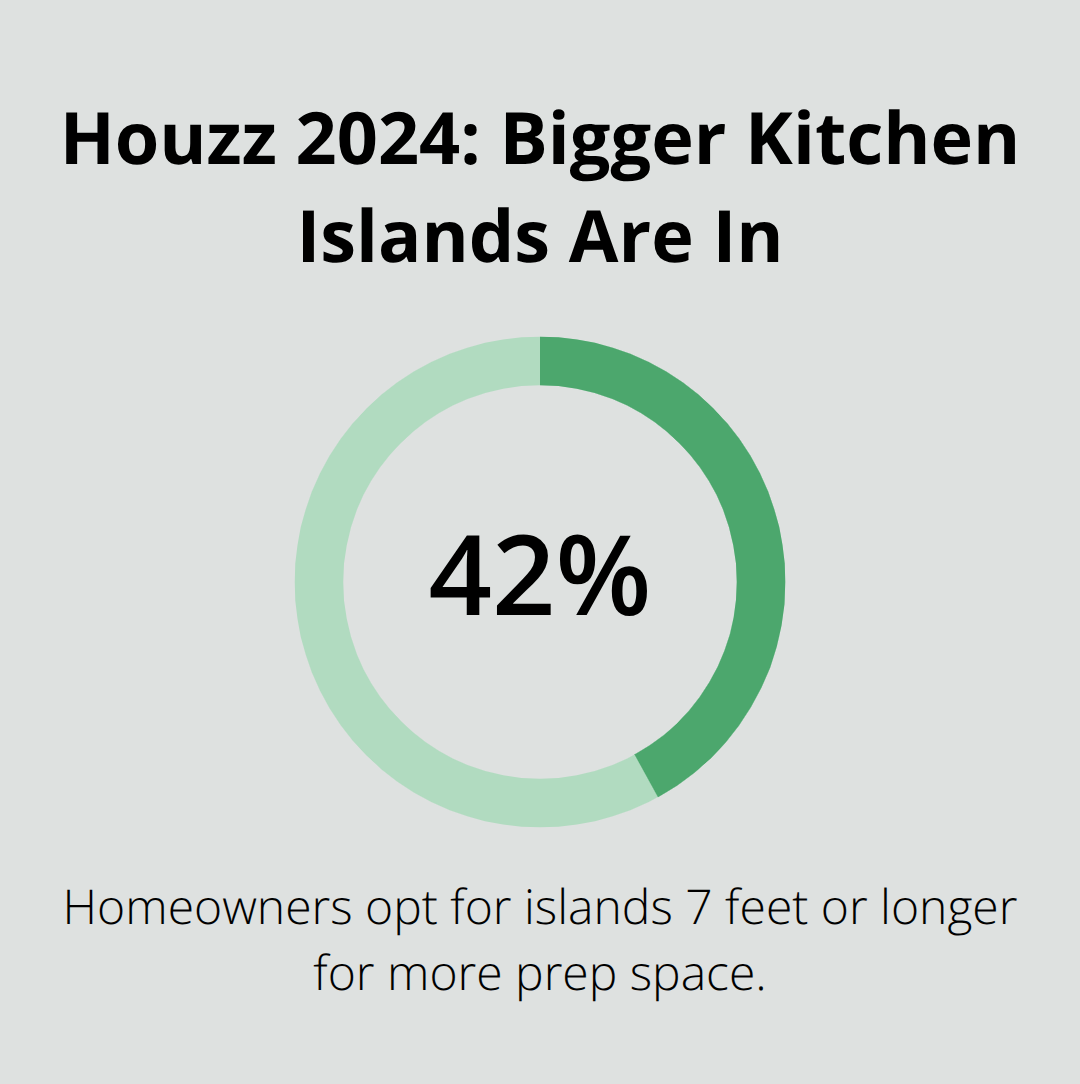
The island layout you select determines how efficiently your kitchen functions and how naturally people move through the space. Houzz data from 2024 shows that 42 percent of homeowners opt for islands 7 feet or longer, reflecting a clear preference for substantial prep surfaces. A single-level island works well in open-concept kitchens where sightlines matter-you want an unobstructed view from the kitchen into the living or dining area.
This design keeps the island visually light and allows conversation to flow naturally across the space.
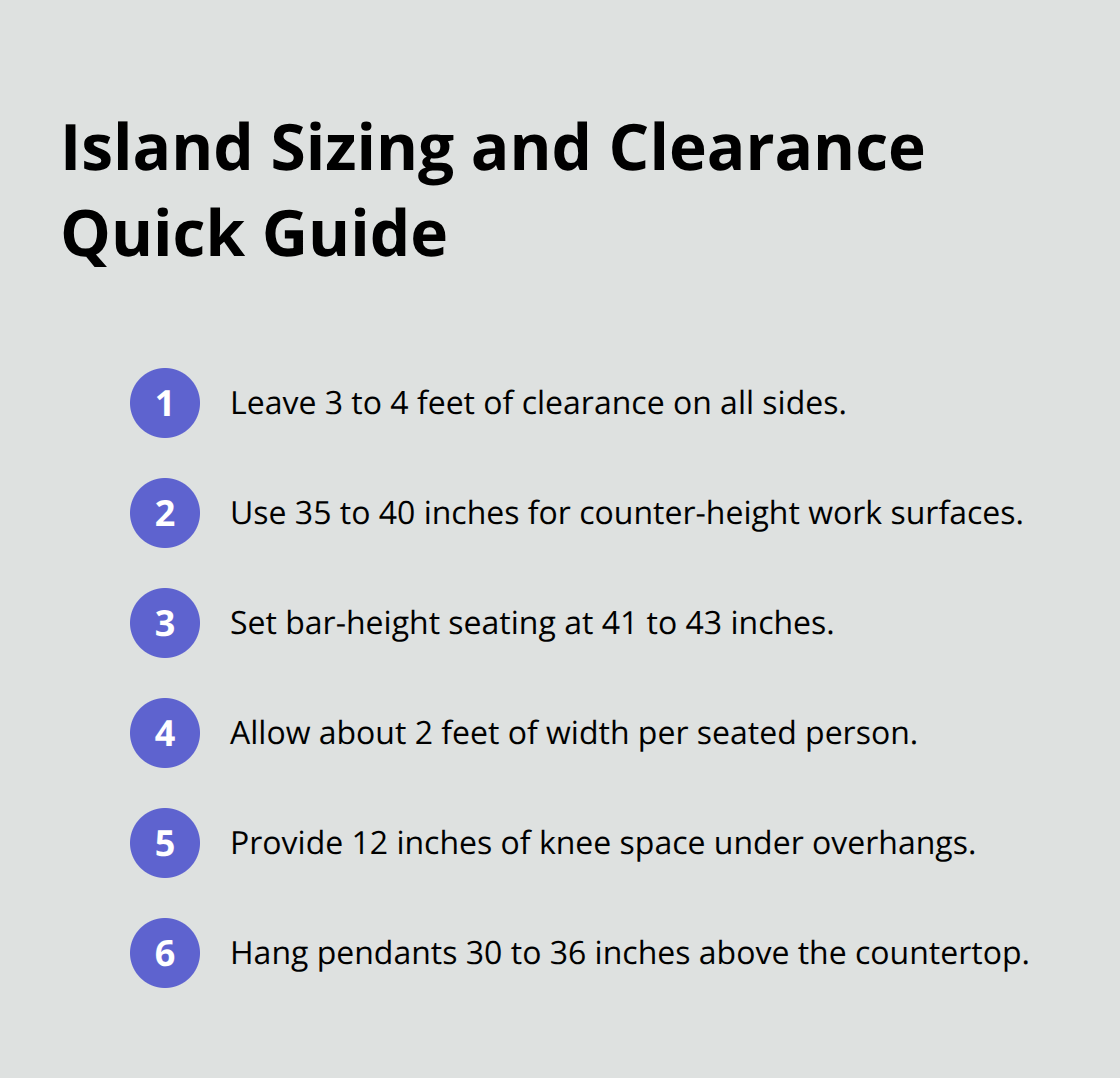
The standard approach is to maintain 3 to 4 feet of clearance around all sides of the island, which prevents bottlenecks when multiple people cook or move through the kitchen. In Arlington, Vienna, and Tysons homes with open floor plans, this spacing prevents the island from feeling cramped or blocking traffic patterns. Counter height islands at 35 to 40 inches work best for food prep and everyday tasks, while bar height at 41 to 43 inches suits casual dining and entertaining.
Multi-Level Islands for Cooking and Dining Separation
Multi-level islands solve a different problem-they separate cooking work from social dining without requiring a second island. The elevated section typically seats two to three people comfortably, with about 2 feet of width per person and 12 inches of knee space underneath. This design works especially well in homes where the kitchen feeds directly into a living area, since diners face outward toward the room rather than toward the cook.
Peninsula Islands as Space-Saving Alternatives
Peninsula islands, which attach to an existing wall or cabinetry, are the practical choice when floor space is limited. They save roughly 10 percent of kitchen square footage compared to freestanding islands while still providing seating, storage, and prep surface. In compact kitchens across Northern Virginia, a peninsula can function identically to an island without consuming the center of the room. The key difference is traffic flow-you only need clearance on three sides rather than four, making peninsula islands ideal for galley kitchens or L-shaped layouts where a full island would feel cramped. Your next decision involves which functional features will make your island work harder for your daily life.
What Features Make Your Island Earn Its Space
A kitchen island only justifies its footprint if it works harder than a standard counter. The most practical islands combine cooking, storage, and seating into one unified workspace rather than serving a single function. In Arlington, Vienna, and Tysons homes, homeowners who skip this integration often end up with an island that looks impressive but wastes valuable real estate. Start by identifying which activities happen most in your kitchen, then design the island around those tasks.
Built-In Cooking and Prep Stations
If you cook frequently, a built-in cooktop or prep sink transforms the island into a true cooking station where you face guests while working rather than standing at a wall. A 2022 study from NAR and NARI found that 86 percent of homeowners report increased enjoyment after complete kitchen renovations, and this jump in satisfaction correlates directly with functional design choices. Installing a cooktop on your island requires proper ventilation, which means an island-mounted vent hood becomes both a practical necessity and a significant design focal point. If entertaining matters more than intensive cooking, skip the cooktop and maximize seating depth instead, allocating roughly 2 feet of width per person and ensuring 12 inches of knee space under any overhang.
Smart Storage Integration
Storage capacity separates a well-designed island from a wasted one. Deep drawers, pull-out baskets, and discreet cabinets integrated into the island structure keep your countertop clear and your most-used tools within arm’s reach. Plan for at least three distinct storage zones on your island: one for cooking equipment, one for dining essentials like napkins and place mats, and one for pantry overflow. This approach prevents clutter and makes daily kitchen tasks faster.
Seating That Doesn’t Compromise Workspace
Seating arrangements should never compromise prep workspace, so if your island measures 7 feet or longer, you can comfortably fit both a work zone and a dining zone without crowding either function. Quartzite or marble countertops paired with wood cabinetry create warmth while delivering durability, and this mixed-material approach has become standard in Northern Virginia kitchens over the past two years. The island becomes your kitchen’s anchor point, so every feature you add should answer a specific need in your household rather than following trends. Material choices and aesthetic preferences shape how your island looks, which brings us to the styles and finishes that define modern kitchen islands.
What Materials and Styles Define Modern Kitchen Islands
The countertop material you select for your island determines durability, maintenance, and visual impact far more than any other design decision. Quartz and quartzite outperform granite in real-world kitchens because they resist staining without annual sealing, which matters in Arlington, Vienna, and Tysons homes where busy families need low-maintenance surfaces. Houzz data from 2024 shows homeowners increasingly select Calacatta Viola marble, Crema Valencia marble, Cristallo white quartzite, and Brazilian quartzite for island countertops. However, marble demands regular sealing and etches from acidic foods-it’s beautiful but impractical for islands where cooking actually happens. Quartz delivers the luxury aesthetic without the upkeep, making it the smarter financial choice over a 15-year period.
If you prefer warmth over clinical polish, pair a quartzite or marble countertop with a timber island base using oak or walnut cabinetry. This mixed-material approach has become standard across Northern Virginia kitchens because it solves a real problem: stone countertops feel cold without wood elements, and wood alone lacks the durability islands require. The combination costs more upfront but creates a premium appearance that justifies the expense.
Island Color Creates Visual Contrast and Personality
Your island color should contrast with your main cabinetry, not blend with it. White cabinetry dominates 46 percent of homes according to Houzz 2024 data, which means a bold island color becomes your opportunity to inject personality without overwhelming the space. Navy, indigo, and periwinkle islands paired with light upper cabinetry create visual anchor points that buyers notice during resale.
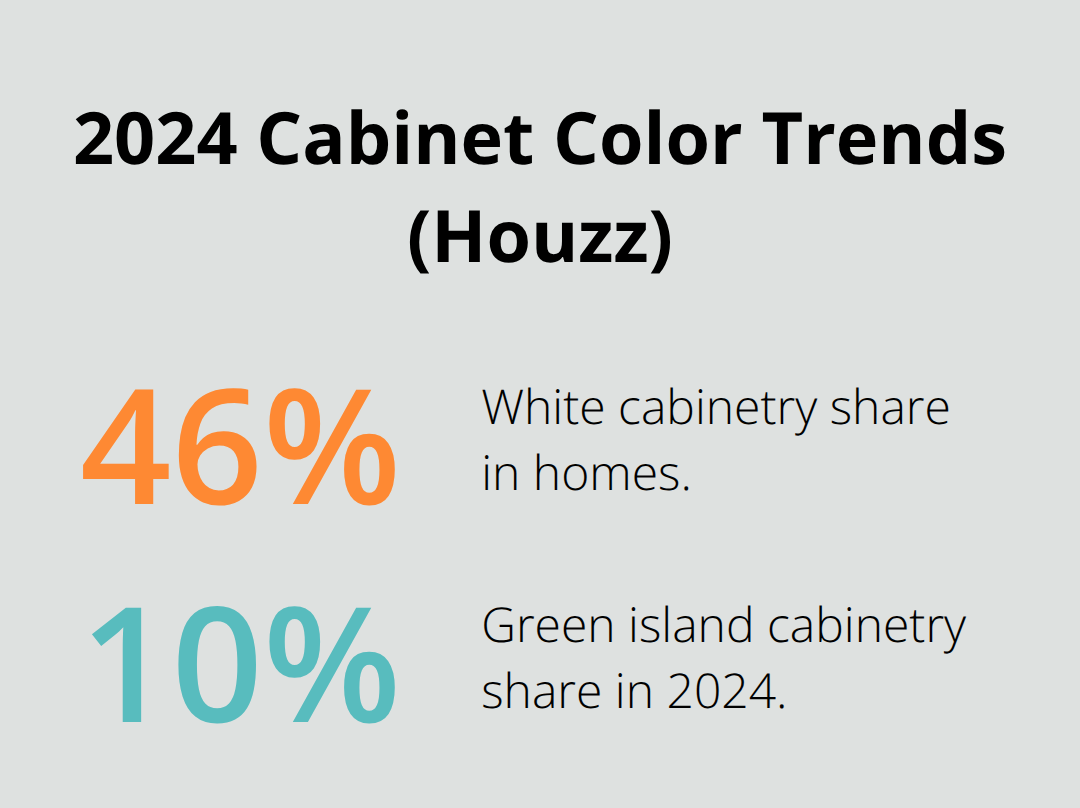
The NAR and NARI 2022 study found mid-range kitchen upgrades recoup 67.5 percent of cost at resale, and color choices directly influence that return. Green island cabinetry rose to 10 percent in 2024, signaling that homeowners in Northern Virginia are moving beyond safe neutrals.
Try this approach: select your island color first, then choose white or pale cabinetry around it. This method forces intentional design rather than adding color as an afterthought.
Modern Minimalist versus Traditional Aesthetics
Modern minimalist islands emphasize clean lines, integrated hardware, and waterfall countertop edges that flow uninterrupted from the countertop down the side panel. This style reads as intentional and expensive without relying on decorative elements. Traditional islands feature paneled cabinetry, decorative molding, and separate hardware that stands apart from the surface, creating visual warmth that feels collected rather than designed. Both approaches work equally well in Arlington, Vienna, and Tysons homes-the choice depends on whether your kitchen leans toward contemporary or classic design language.
Lighting and Details Elevate Function Into Character
Pendant lighting above your island serves a practical purpose (task lighting for prep work) but functions equally as your kitchen’s focal point. Three to four globe pendants or statement chandeliers hung 30 to 36 inches above the countertop create ambiance while illuminating work surfaces. Under-counter LED strips add another functional layer, illuminating storage areas and creating a subtle glow that makes the island feel intentional rather than utilitarian.
Waterfall countertop edges, where quartzite or marble flows down the island’s side panel, cost more but eliminate visible seams and create a sculptural quality that justifies premium material pricing. Small details matter: fluted panel edges, curved corners instead of sharp 90-degree angles, and partial waterfall ends on just one or two sides deliver refinement without the full waterfall expense. These choices separate islands that look designed from islands that look assembled.
Final Thoughts
Your kitchen island represents one of the highest-impact investments in a home remodel, and the decisions you make about layout, features, and materials directly affect how your kitchen functions daily and how much value it returns at resale. Mid-range kitchen upgrades recoup approximately 67.5 percent of cost, while complete renovations recoup about 75 percent according to NAR and NARI data from 2022. This means kitchen remodel ideas with island designs aren’t just about aesthetics-they’re financial decisions that matter.
Identify your priorities before you start planning. Do you need more prep space, additional seating for entertaining, or better storage? The answers determine whether you need a cooktop on your island, how much counter depth matters, and which storage solutions will actually get used. In Arlington, Vienna, and Tysons homes, homeowners who design around their actual lifestyle rather than aspirational trends report far greater satisfaction with their finished kitchens.
Contact Dzala General Contractor to schedule a consultation in Arlington, Vienna, or Tysons and discuss kitchen remodel ideas with island designs that fit your home and budget. Our team manages the structural work, appliance installation, countertop fabrication, and finishing details that separate professional results from DIY attempts. We’ll walk through your space, provide a clear estimate before any work starts, and build an island that works as hard as you do.