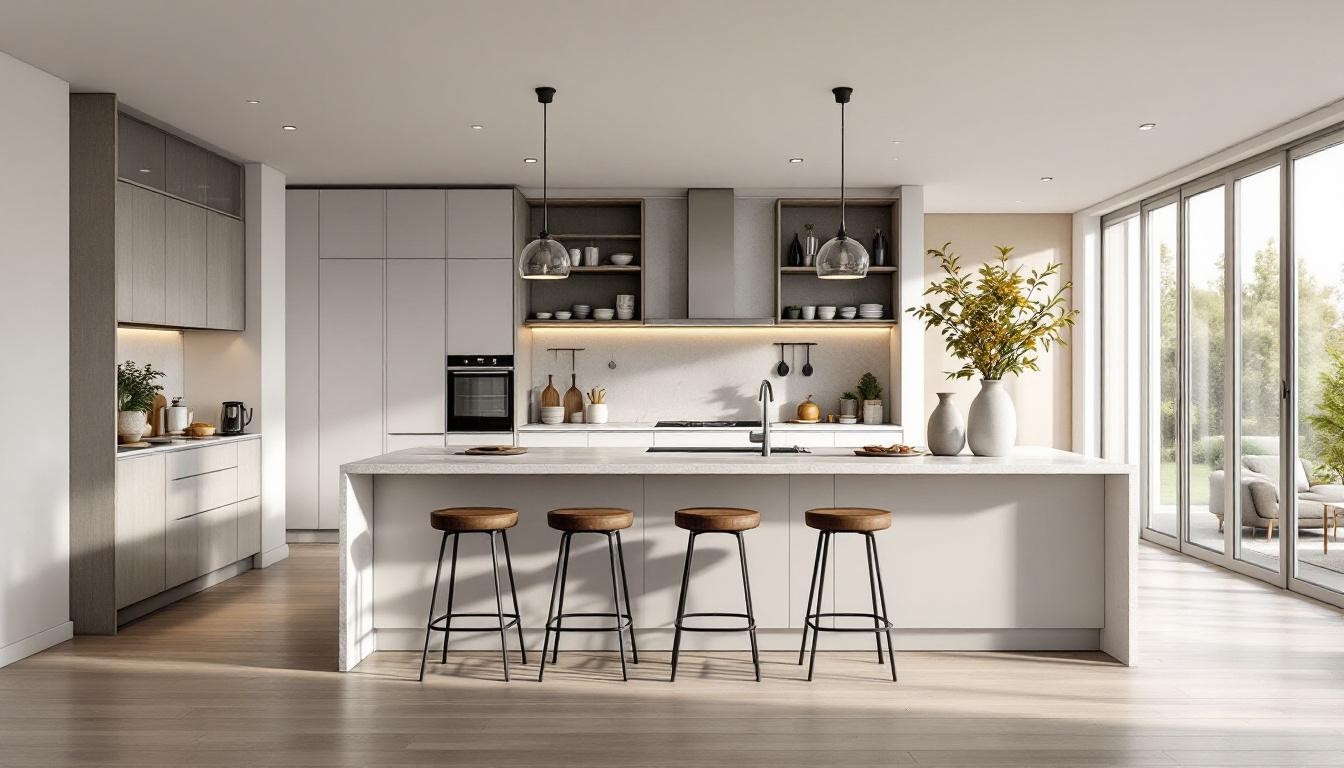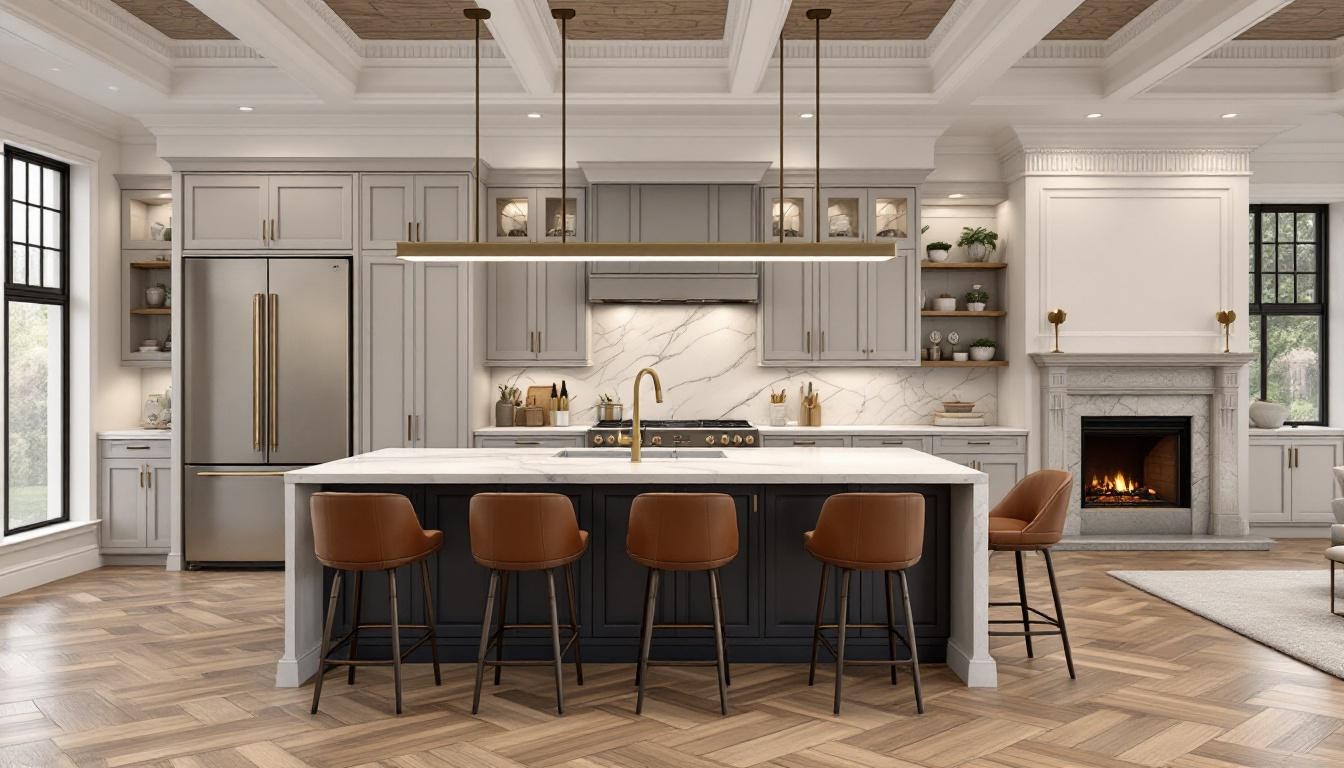
Bay windows transform kitchens into bright, functional spaces that homeowners in Arlington, Vienna, and Tysons increasingly desire. These architectural features create natural gathering spots while maximizing both light and storage potential.
We at Dzala General Contractor see growing demand for kitchen remodel ideas with bay window integration. The right design approach turns these windows into stunning focal points that enhance your home’s value and daily living experience.
Maximizing Natural Light with Bay Window Kitchen Designs
South-facing bay windows deliver the strongest natural light throughout the day, making them ideal for kitchen workspaces. The American Institute of Architects reports that 70% of homeowners prioritize natural light in kitchen designs, and strategic bay window placement directly addresses this preference. Position your bay window over the sink area or along the main food preparation zone to illuminate these frequently used spaces.

Morning Light Optimization
East-facing bay windows capture brilliant morning sunlight, perfect for breakfast areas and coffee stations. Install your bay window where family members naturally gather in the morning hours. The large, multi-paneled design allows maximum light penetration compared to standard windows (creating an energizing start to each day). Window treatments should complement this natural rhythm rather than obstruct it.
Window Treatment Selection for Light Control
Modern blinds offer superior light management compared to heavy drapes or traditional curtains. Choose light-colored treatments that reflect sunlight deeper into the kitchen space. Roller shades work exceptionally well for bay windows because they reduce harsh afternoon glare while maintaining brightness. Avoid dark or thick materials that block precious natural light during peak cooking hours (especially during winter months when daylight hours are limited).
Layout Coordination with Bay Window Features
Position kitchen islands perpendicular to bay windows to avoid shadows on work surfaces. The National Kitchen & Bath Association emphasizes that open-concept designs work best when bay windows anchor the space visually. Place dining tables or breakfast bars directly within the bay window alcove to maximize the connection between indoor cooking and outdoor views. This configuration creates natural conversation areas while maintaining optimal workflow patterns.
Climate Considerations for Northern Virginia
Arlington, Vienna, and Tysons homeowners must consider seasonal light variations when planning bay window placement. Winter sun sits lower in the sky, making south-facing windows even more valuable during shorter days. Summer positioning requires careful attention to heat gain and glare control (particularly important in Virginia’s humid climate). These regional factors directly influence both window treatment choices and kitchen layout decisions, setting the stage for thoughtful seating and storage solutions that complement your bay window design.
Bay Window Seating and Storage Solutions
Bay window seating delivers powerful storage solutions that Arlington, Vienna, and Tysons homeowners desperately need. Custom-built window seats with hinged tops provide immediate access to kitchen essentials while they maintain clean sight lines. The typical bay window alcove measures 4-6 feet wide and offers substantial storage capacity equivalent to three standard kitchen cabinets. Drawers beneath the seating area store frequently used items like dish towels, serving pieces, and seasonal cookware.
Built-in Window Seat Design Options
Window seats require 18-20 inches of depth to accommodate comfortable seating while they maximize under-seat storage volume. The height should match standard dining chair dimensions at 17-19 inches for seamless integration with kitchen tables. Remodeling Magazine’s Cost Vs. Value Report indicates that built-in seating features add significant appeal to potential buyers (particularly in Northern Virginia’s competitive housing market).

Oak or maple materials work best for seat construction, as these woods withstand daily kitchen use and moisture exposure better than softer alternatives.
Under-Seat Storage for Kitchen Essentials
Under-seat storage divides into zones based on kitchen workflow patterns. Frequently accessed items like coffee supplies and breakfast essentials position closest to the kitchen entrance. Deeper storage areas reserve space for seasonal items such as holiday serving dishes and specialty appliances. Soft-close hinges prevent slamming and protect stored items from impact damage. The storage capacity often surprises homeowners who discover they can eliminate countertop clutter entirely.
Breakfast Nook Configurations with Bay Windows
Breakfast nook configurations work exceptionally well when the bay window faces east or southeast, as morning light captures the space while convenient storage supports daily meal preparation. The seating arrangement accommodates 4-6 people comfortably when paired with a round or oval table. Built-in cushions with removable covers allow for easy cleaning and seasonal updates (essential for busy kitchen environments). These thoughtful design elements create the foundation for integrating bay windows into various kitchen styles that reflect your personal aesthetic preferences.
Incorporating Bay Windows into Different Kitchen Styles
Traditional kitchen designs benefit from bay windows with divided light patterns and classic trim work that matches existing cabinetry profiles. Shaker-style cabinets pair exceptionally well with bay windows that feature white or cream-colored frames and traditional window grids. The American Institute of Architects data shows that homeowners who invest in traditional kitchen remodels recoup 65-80% of costs, with bay windows that add significant appeal to Arlington, Vienna, and Tysons buyers who prefer timeless aesthetics. Install wooden shutters or cafe curtains to complete the classic look while you maintain privacy and light control. Cambria quartz countertops in neutral tones complement traditional bay window installations without they compete for visual attention.
Modern Kitchen Bay Window Integration
Modern kitchen layouts demand clean lines and minimal window treatments that emphasize the bay window’s architectural form. Floor-to-ceiling bay windows work best in contemporary designs, particularly when you pair them with handleless cabinetry and integrated appliances. Skip traditional window grids entirely and choose sleek frames in black or bronze finishes that coordinate with modern hardware selections.

Motorized blinds provide the technological sophistication that modern homeowners expect while they maintain the uncluttered appearance that defines contemporary kitchen design.
Farmhouse Style Bay Window Applications
Farmhouse kitchens require bay windows with substantial trim work and natural materials that reflect rural architectural traditions. Wide window sills accommodate herb gardens or decorative pottery that reinforces the farmhouse aesthetic (particularly popular in Northern Virginia homes). Natural wood frames in honey or weathered finishes work better than painted options for authentic farmhouse appeal. Linen or burlap window treatments add texture while they allow maximum light penetration during food preparation activities. The combination of exposed beams and bay windows creates the open, airy atmosphere that makes farmhouse kitchens so appealing to homeowners who seek comfortable, lived-in spaces.
Transitional Kitchen Bay Window Design
Transitional kitchens blend traditional and modern elements through bay windows that feature simplified trim profiles and neutral color palettes. These designs work exceptionally well for homeowners who want classic appeal without ornate details. Choose bay windows with minimal grids or clean-lined frames that complement both painted and stained cabinetry options. Roman shades in natural fabrics provide the perfect balance between casual comfort and refined elegance (ideal for Northern Virginia’s diverse architectural styles).
Final Thoughts
Kitchen remodel ideas with bay window features deliver measurable benefits that extend far beyond aesthetic appeal. Remodeling Magazine’s Cost Vs. Value Report confirms that kitchen renovations with architectural elements like bay windows recoup 50-75% of investment costs. These windows increase natural light by up to 40% compared to standard windows while they create valuable storage and seating areas that maximize functionality.
Arlington, Vienna, and Tysons homeowners face unique considerations when they incorporate bay windows into kitchen designs. Northern Virginia’s climate requires energy-efficient window selections that manage seasonal temperature variations effectively. Local building codes may restrict bay window projections, particularly in neighborhoods with strict architectural guidelines (especially in historic districts).
Professional consultation helps assess structural requirements and design possibilities for your kitchen renovation project. Bay window installations often require structural modifications that demand expert evaluation and permits. We at Dzala General Contractor handle kitchen remodeling projects from initial design through final walkthrough. Contact our team to explore how bay window integration can enhance your kitchen’s value and daily functionality.