Your kitchen is the heart of your home, and it deserves a design that works as hard as you do. Whether you’re in Arlington, Vienna, or Tysons, we at Dzala General Contractor see homeowners choosing kitchen remodel design ideas that blend style with smart functionality.
The right layout, materials, and storage solutions can completely change how your kitchen feels and performs. Let’s walk through the designs and strategies that are transforming kitchens across Northern Virginia.
Kitchen Layouts That Work for Your Home
Open Concept Designs Connect Your Kitchen to Living Spaces
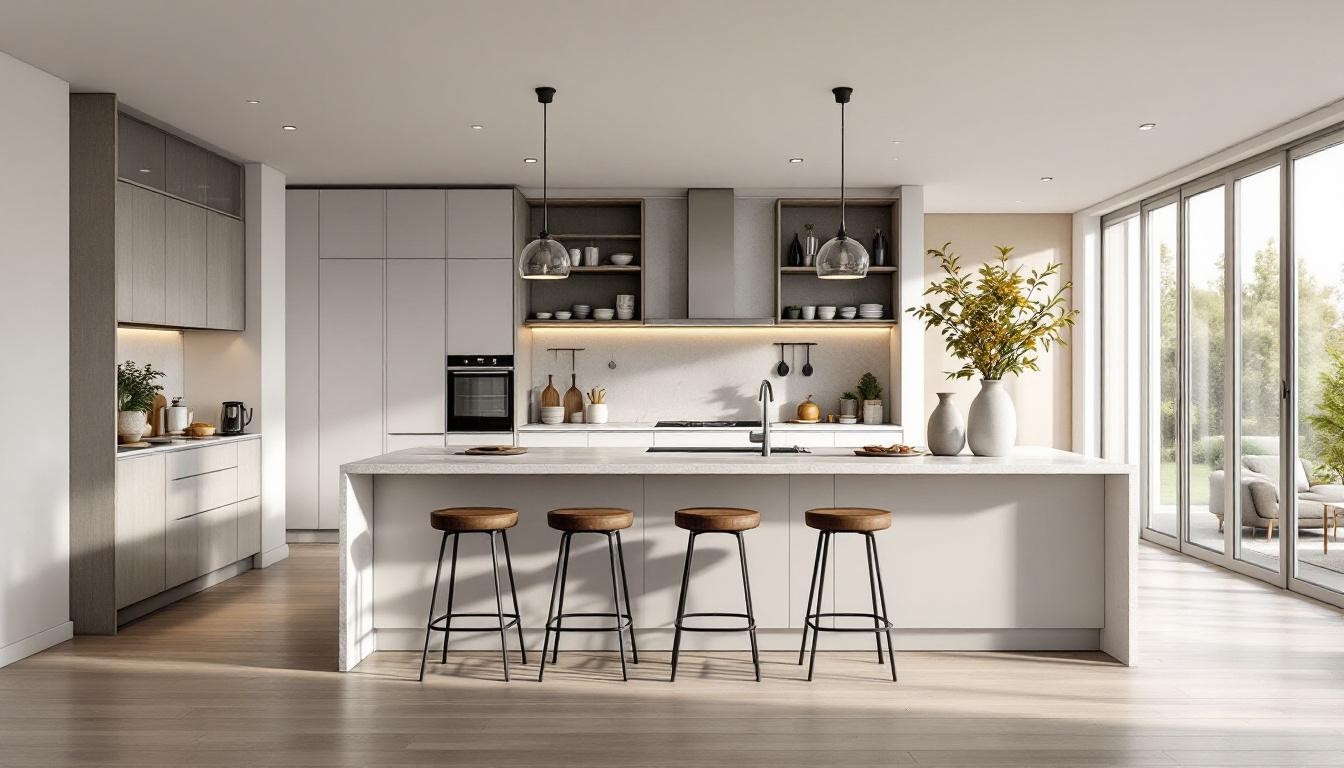
Open kitchens have become standard in Arlington, Vienna, and Tysons homes because they solve a real problem: older kitchens isolate you from family and guests. Removing walls between your kitchen and living area creates flow and makes smaller homes feel larger. In Arlington, where many properties have dated layouts from the 1970s and 1980s, this change alone can add significant value. However, opening a kitchen requires structural planning-you’ll need to identify load-bearing walls and install proper support beams, which adds $8,000 to $15,000 to your budget. The payoff comes from improved sightlines, better natural light, and a space where you can cook while staying connected to what’s happening in your home.
Galley Kitchens Maximize Efficiency in Smaller Spaces
Galley kitchens work exceptionally well in Vienna and Tysons townhomes where square footage is limited. This layout places cabinetry and appliances along two parallel walls, creating an efficient workflow with minimal wasted steps. According to House Beautiful, a well-planned work triangle minimizes movement between your sink, stove, and refrigerator, which directly improves daily functionality. The real advantage is that galley kitchens don’t require structural changes, making them a practical choice for budget-conscious renovations. You can refresh the materials, upgrade appliances, and reorganize storage without touching walls.
Island Layouts Add Workspace and Storage
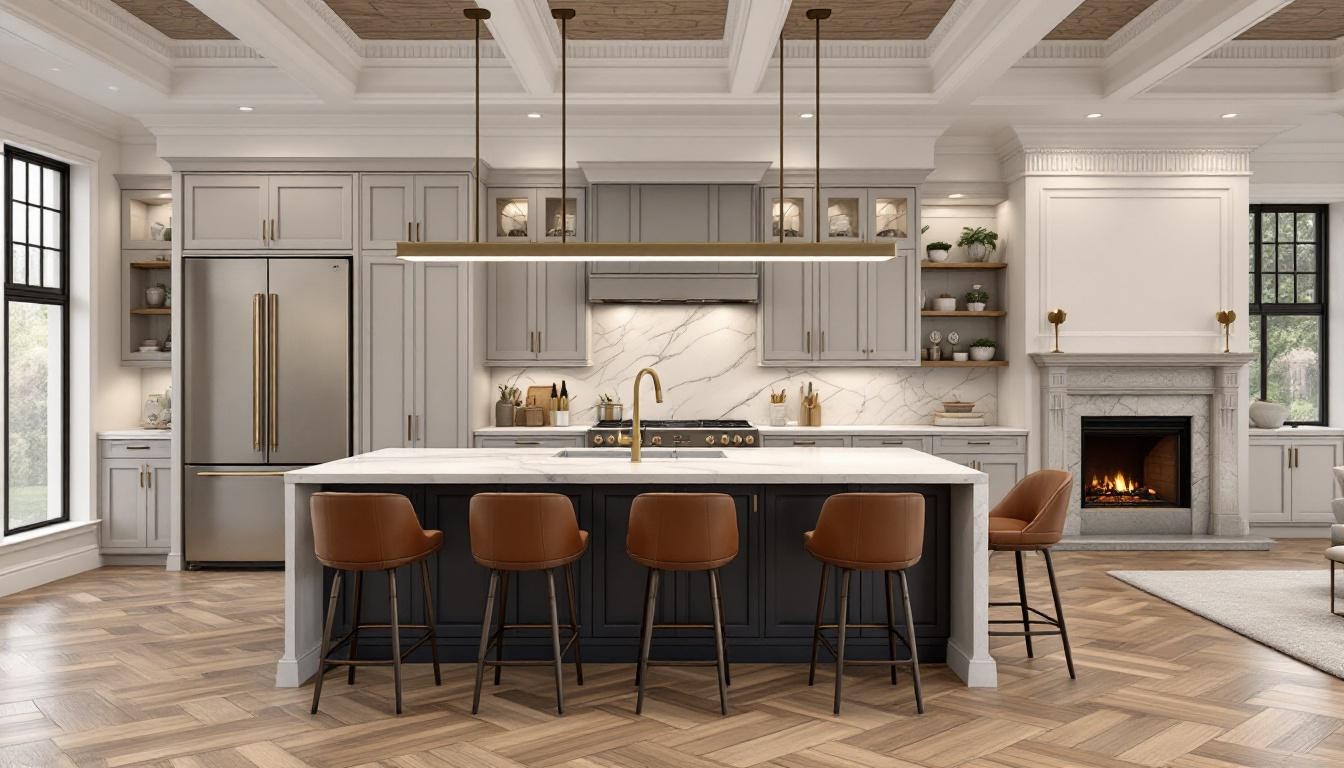
Island layouts appeal to homeowners with larger spaces, particularly in newer Tysons developments where kitchens connect to family rooms. An island provides additional countertop workspace, seating for entertaining, and storage underneath cabinets. Islands typically run 3 feet by 5 feet minimum and cost $3,000 to $8,000 depending on cabinetry and countertop materials. The practical benefit is that islands centralize your prep work and create a natural gathering point. Positioning your island perpendicular to your main sink wall maximizes efficiency and prevents traffic flow conflicts.
Plan Utilities Strategically to Control Costs
When planning any of these layouts, electrical and plumbing placement matters significantly because relocating utilities increases costs by 20 to 30 percent. The most cost-effective approach keeps sinks in their existing locations and positions islands away from major plumbing lines. Material choices and finishes then become your next opportunity to define the kitchen’s character and durability.

Materials That Stand Up to Daily Use in Northern Virginia
Countertops: Weighing Durability Against Long-Term Value
Countertops absorb the most wear in any kitchen, and your choice between quartz, granite, and laminate directly affects both durability and long-term costs. Quartz dominates Arlington, Vienna, and Tysons kitchens right now because it resists staining better than granite, requires no sealing, and costs between $60 and $120 per square foot installed.

Granite remains popular in upscale remodels at $50 to $100 per square foot, though it demands annual sealing to prevent water damage and staining. Laminate still serves budget-conscious projects at $20 to $40 per square foot, but it chips easily under heavy use and cannot be repaired without replacement. For Arlington homeowners with high-traffic kitchens, quartz makes financial sense over 15 to 20 years because you avoid sealing costs and replacement expenses.
Cabinets: Finding the Right Balance of Cost and Customization
Cabinets represent your largest single investment at roughly 29 percent of your total remodel budget, or approximately $6,670 in a typical Arlington project. Stock cabinets run $4,000 to $6,000 and arrive pre-made with standard sizes and finishes, perfect for galley kitchens where custom dimensions matter less. Semi-custom cabinets cost $8,000 to $12,000 and let you adjust depths, heights, and door styles to fit your exact space, which works well in Vienna townhomes where layouts vary. Custom cabinetry runs $12,000 to $20,000 but delivers storage solutions tailored to your workflow and design preferences. Upgrading from stock to semi-custom includes soft-close door hinges that prevent slamming and extend cabinet life by 10 to 15 years-a feature worth the extra investment if you have young children or frequent entertaining.
Flooring: Choosing Materials That Match Your Lifestyle
Flooring in Arlington, Vienna, and Tysons kitchens typically accounts for 7 percent of your budget, around $1,610 in a standard project, but material choice dramatically changes durability and maintenance demands. Tile holds up best in high-traffic kitchens and resists moisture, though grout lines require annual sealing to prevent mold and discoloration. Luxury vinyl plank (LVP) costs less than tile at $3 to $8 per square foot installed and mimics wood convincingly while handling spills and pet accidents better than traditional hardwood. Wood flooring adds warmth and value but demands regular refinishing every 5 to 10 years and struggles with moisture near sinks and dishwashers. In Tysons kitchens where open layouts connect to living spaces, LVP or tile creates visual continuity without the maintenance burden wood requires. The earthy, wooden aesthetic House Beautiful identifies as trending in Northern Virginia works well with LVP in medium to dark tones or natural tile finishes, giving you durability without the refinishing commitment.
Your material selections establish the kitchen’s foundation, but how you organize and position those materials determines whether your space actually functions well during daily cooking and entertaining.
Smart Storage That Actually Works in Your Kitchen
Clutter destroys kitchen functionality faster than poor layout does, and Arlington, Vienna, and Tysons homeowners consistently underestimate how much storage they need. House Beautiful identifies smart storage solutions as essential to avoid kitchen clutter, and the strategy works best when you combine custom-designed cabinets with ready-made organizational systems that fit your cooking style. Audit your current kitchen first-measure your cookware, canned goods, spices, and pantry items to understand your actual storage demands. Most homeowners discover they need 20 to 30 percent more storage than they initially planned.
Vertical Storage Maximizes Every Nook
Vertical storage changes the equation dramatically because it maximizes every nook without expanding your footprint. Pull-out drawers in base cabinets cost $300 to $800 per drawer but eliminate the wasted space deep inside traditional cabinets where items disappear and rot. In Vienna townhomes especially, where kitchens run 100 to 150 square feet, vertical shelving above counters and under-cabinet pull-out systems recover 15 to 25 percent more usable storage than standard fixed shelves. Soft-close mechanisms on drawers prevent slamming and let you organize smaller items like utensils and spices in compartmentalized trays that cost $40 to $120 each.
Position Your Work Triangle for Efficiency
Appliance positioning directly impacts both storage efficiency and daily workflow because every step you eliminate reduces cooking time and frustration. The classic work triangle-connecting your sink, stove, and refrigerator-should measure between 15 and 26 feet total, according to kitchen design standards, because distances outside that range force unnecessary walking. In Arlington kitchens opening to living spaces, position your refrigerator at the kitchen’s entry point to reduce traffic disruption; people can grab drinks without walking past your cooking zone. Your stove belongs in the center or along the wall with the most counter space on either side, giving you room to stage ingredients and finished dishes simultaneously.
Organize Your Cleanup and Prep Zones
The sink should sit within three feet of your dishwasher to minimize plumbing runs and keep the cleanup zone compact. Islands work best when positioned perpendicular to your main sink wall, creating a clear separation between prep areas and traffic paths-this arrangement prevents someone heading to the living room from walking directly through your cooking space.

In Tysons homes with larger kitchens, a secondary prep sink on the island costs $1,500 to $3,000 but cuts prep time significantly because multiple people can work simultaneously without competing for the main sink.
Layer Your Lighting for Visibility
Lighting placement determines whether you can actually see what you’re cutting or cooking. Install recessed lights every four feet above work surfaces, combined with pendant lights above the island at 30 inches above the countertop, to eliminate shadows and reduce eye strain during evening cooking.
Final Thoughts
The kitchen remodel design ideas that work best in Arlington, Vienna, and Tysons balance what you want to see with what actually functions during daily cooking and entertaining. Open layouts, efficient galley designs, and strategic islands solve real problems when paired with durable materials and smart storage systems. Quartz countertops, semi-custom cabinets, and luxury vinyl flooring deliver the durability and aesthetic appeal that Northern Virginia homeowners expect without constant maintenance or replacement.
What separates a successful remodel from a frustrating one is execution. The difference between a poorly positioned island and one that improves your workflow, between cabinets that hide clutter and ones that keep everything accessible, between lighting that creates shadows and lighting that lets you actually see what you’re cooking-these details matter because you’ll live with them every single day. We at Dzala General Contractor handle every aspect of your kitchen remodel, from initial design through final walkthrough, and we manage the structural planning required for open concepts, coordinate material selections that match your lifestyle, and position appliances and storage systems for maximum efficiency.
Your kitchen deserves a design that reflects how you actually cook and entertain, not how magazines suggest you should. We understand Arlington’s older home layouts, Vienna’s townhome constraints, and Tysons’ newer construction possibilities because we work in these communities regularly. Contact us to schedule your kitchen remodel consultation and transform your space into something that works as hard as you do.