Your kitchen is one of the most-used rooms in your home, and updating it with contemporary kitchen remodel ideas can transform both how it looks and how it functions.
We at Dzala General Contractor have helped homeowners in Arlington, Vienna, and Tysons modernize their kitchens with smart design choices and quality craftsmanship. This guide walks you through the trends, planning steps, and execution details you need for a successful remodel.
What Contemporary Kitchen Trends Actually Work in Arlington, Vienna, and Tysons
The NKBA 2025 Design Trends Report shows that 86% of designers use bold color palettes like forest green and navy, while 78% report higher demand for multi-functional islands. In Fairfax showroom data, forest green cabinet inquiries rose about 40% year over year.
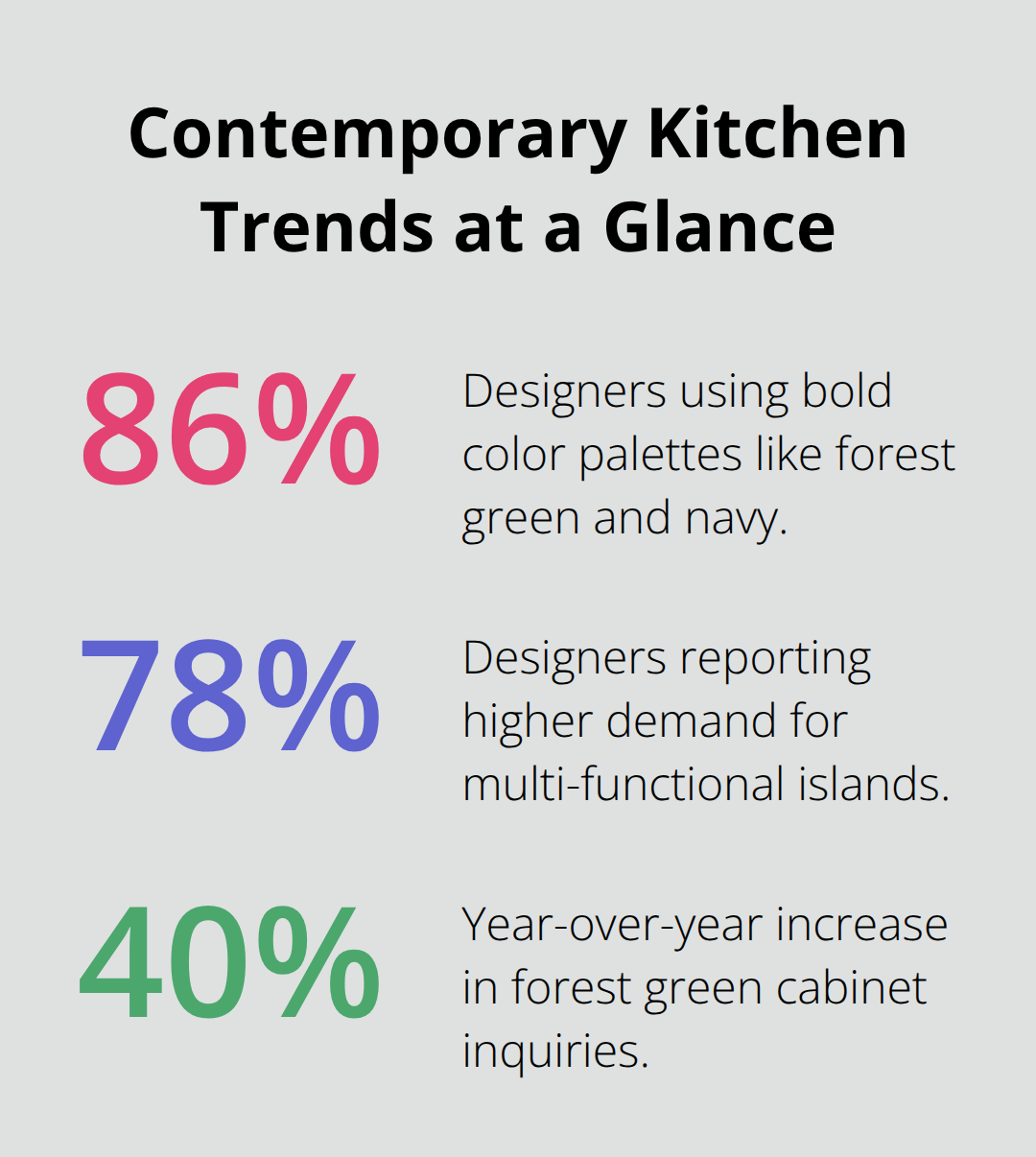
These aren’t passing fads-they reflect how homeowners in Arlington, Vienna, and Tysons actually live and cook today.
Open Shelving Demands Commitment
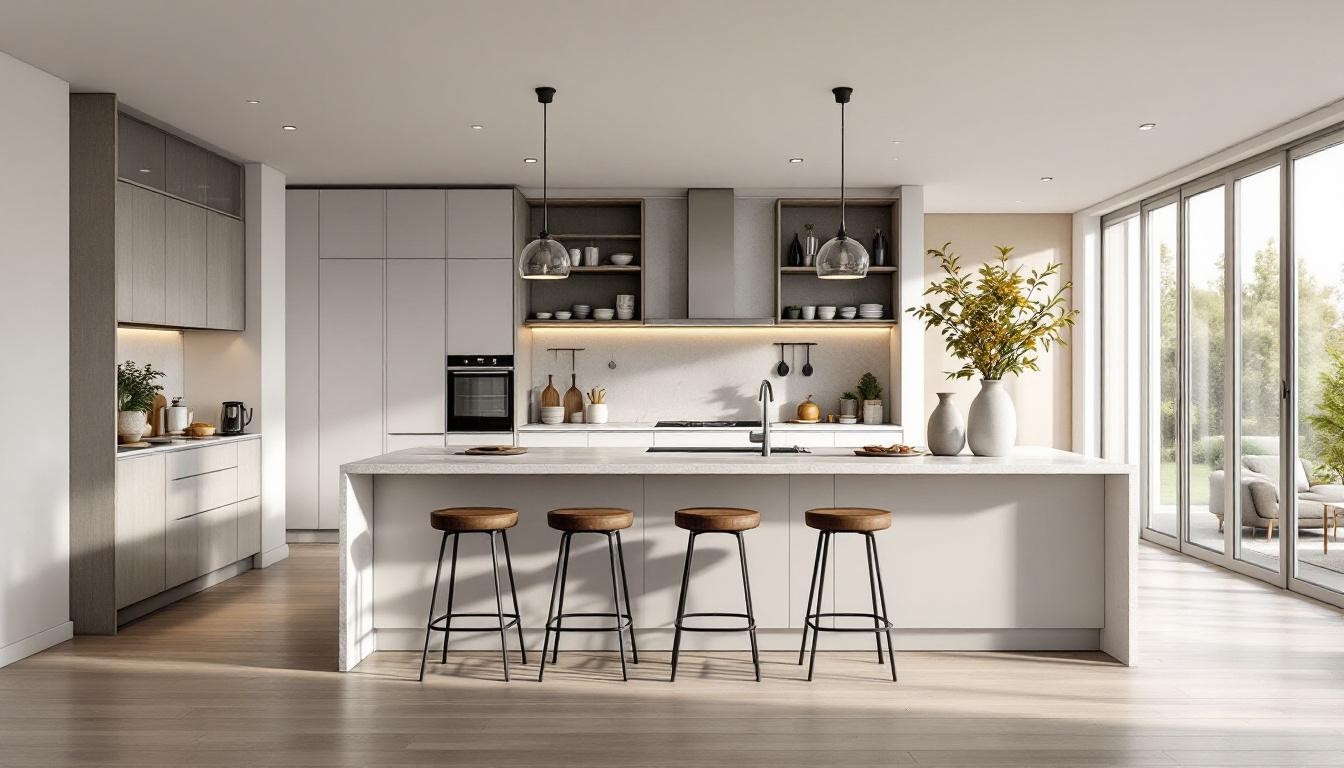
Open shelving paired with minimalist cabinetry works best when you commit to it fully. Half-measures create visual chaos. Handleless flat-panel cabinets keep sightlines clean, but they require discipline. You cannot leave clutter on counters. If you live with three coffee makers and a bread box, open shelving will expose that daily. Quartz countertops dominate the region with roughly 62% market share and installed costs around $70–$120 per square foot. Porcelain slabs represent the fastest-growing premium option, with showroom inquiries rising about 150%, driven by heat resistance and durability. Two-tone cabinetry remains popular in the Arlington area, with island-perimeter contrasts like forest green islands paired with alabaster perimeters or navy islands with white uppers creating visual depth.
Smart Technology Transforms Daily Routines
Smart appliances serve a practical purpose, not just aesthetics. The Houzz Kitchen Trends Study confirms kitchens have evolved into sophisticated command centers that fuse timeless design with cutting-edge innovation. Energy Star appliances reduce utility costs noticeably. Integrated smart refrigerators, ovens, and coffee makers add convenience without dominating the visual space. Coffee stations with built-in filtration, beverage refrigerators, and USB ports now appear standard in premium remodels, positioned away from main prep areas so mornings don’t collide with dinner prep. Statement lighting with layered illumination becomes an architectural feature. The NKBA data shows 87% view decorative lighting as desirable, and 95% plan for natural light early in design.
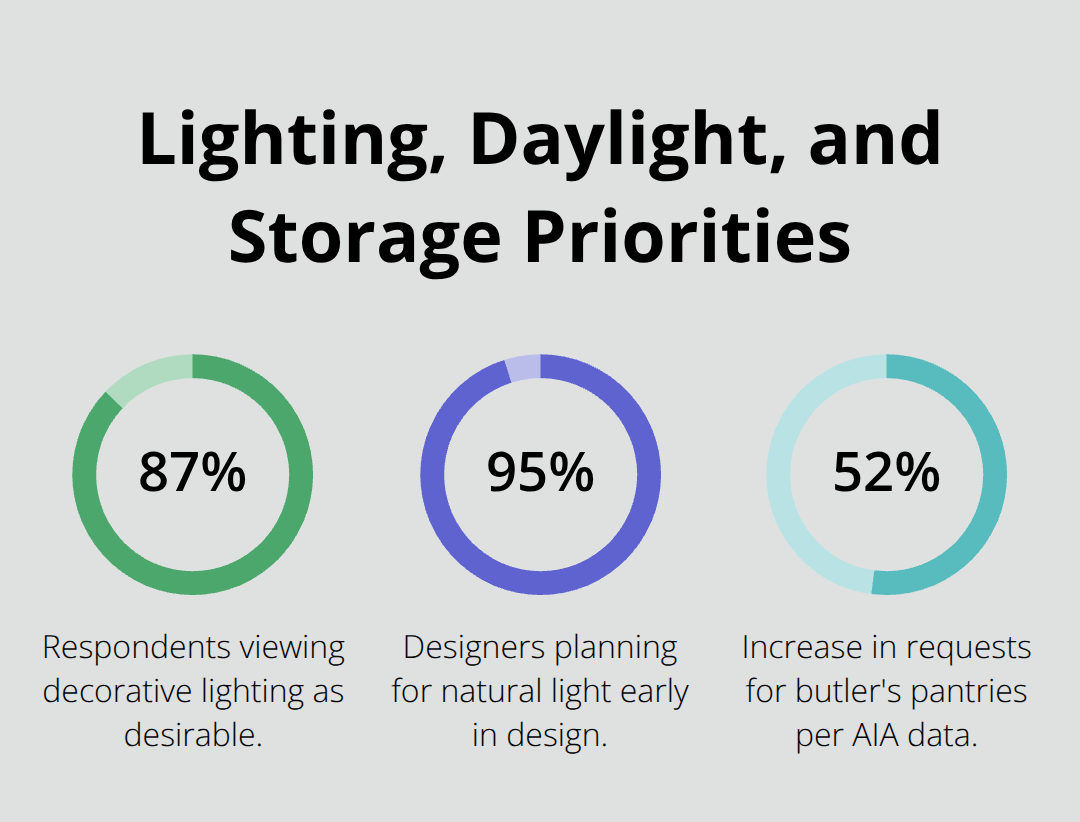
In Vienna homes especially, where older floor plans often compartmentalize spaces, abundant natural light from large windows and skylights transforms the kitchen’s feel. Innovative storage solves the real problem kitchens face: clutter. Walk-in pantries, butler’s pantries (which saw a 52% increase in requests per the American Institute of Architects), appliance garages, and pull-out systems optimize spaces so daily tools stay hidden until needed.
Materials That Perform and Look Contemporary
Mixed materials create depth without feeling chaotic. Natural wood, visible stone veining, and abundant natural light form a biophilic design strategy gaining traction in Tysons kitchens. Large-format tiles (24×48 inches or wider) in warm tones ground the space and make small kitchens feel larger. Backsplash aesthetics have shifted to artful statements. Full-height slab-style stone installations, handcrafted tiles, and curved edge profiles replace basic subway tile. Textured backsplashes in herringbone or mixed materials add dimension without overwhelming the space. Sustainable materials are mainstream now, not optional. 52% of professionals demand sustainability according to industry data. FSC-certified woods, bamboo, cork flooring, recycled countertops, and low-VOC finishes reduce environmental impact while improving indoor air quality. Energy Star appliances pair with these choices to create a kitchen that performs efficiently for decades.
These design choices set the foundation for your remodel, but turning them into reality requires careful planning and realistic budgeting.
Planning Your Kitchen Remodel
Set a Realistic Budget for Your Space
Budget honesty separates successful remodels from regrettable ones. In Arlington, Vienna, and Tysons, a typical mid-range kitchen remodel costs between $105,000 and $120,000, with projects that include structural changes or larger square footage reaching $135,000 to $150,000. If you keep the existing footprint and select quality finishes-tile backsplash, stainless steel appliances, quartz or stone countertops, and durable flooring-you can land in the low-to-mid $90,000 range. The biggest cost drivers are cabinetry type, countertop material, and whether you relocate plumbing or electrical work.
Stock cabinets cost far less than semi-custom or full-custom options, but semi-custom offers better flexibility without the premium price tag. Quartz runs $70 to $120 per square foot installed, while porcelain slabs-the fastest-growing premium option with showroom inquiries up 150%-typically cost more but deliver superior heat resistance. When planning your budget, prioritize your top 2–3 priorities like cost, durability, maintenance, and aesthetics, then compare them against your overall remodel budget. Budget for contingencies at 10 to 15 percent above your base estimate to absorb surprises like hidden structural issues or material delays.
Scope creep happens constantly. Homeowners expand into adjacent spaces, add fireplace refacing nearby, or upgrade HVAC alongside kitchen work, easily adding $4,500 to $15,000. High-end projects involving custom cabinetry, waterfall-edge countertops, built-in appliance panels, specialty appliances like ice makers or beverage centers, and smart-home integration start around $160,000 to $180,000 and climb beyond $200,000 when structural work expands the footprint.
Optimize Layout and Workflow
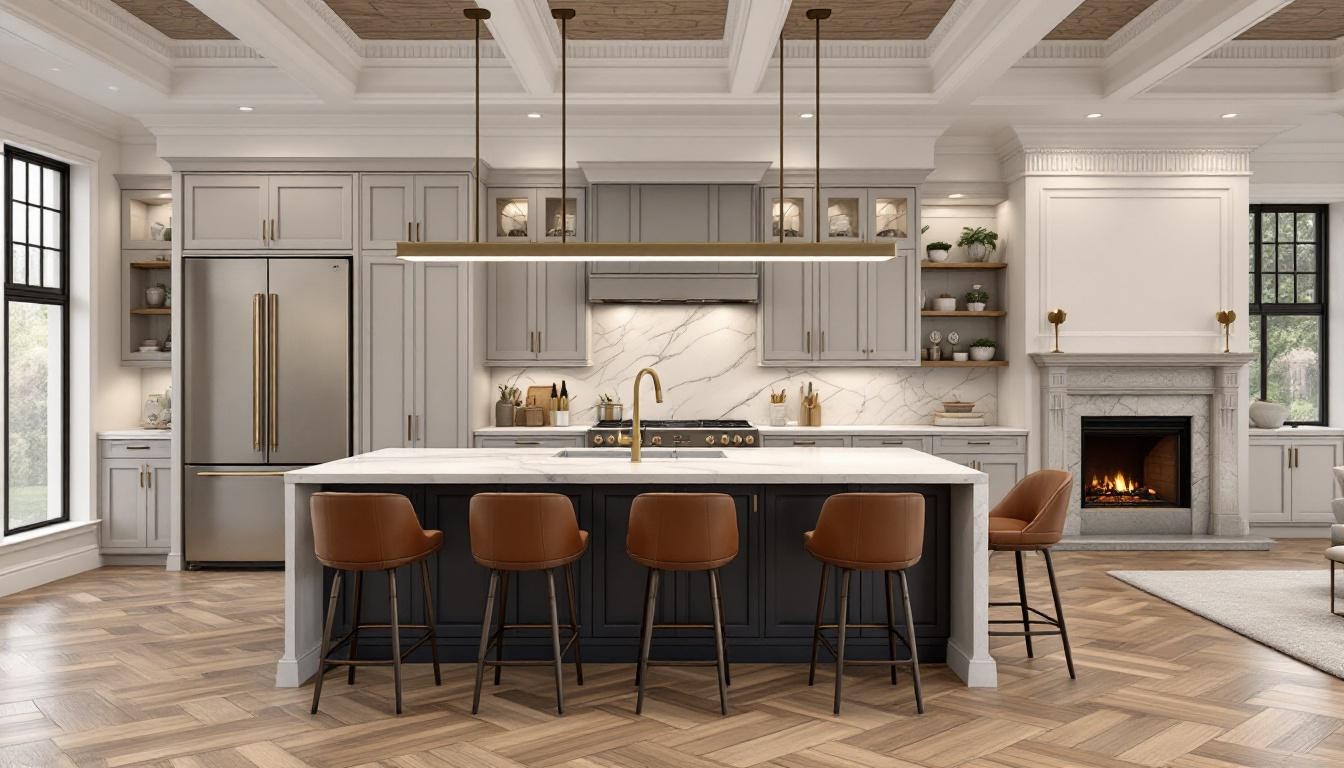
Layout decisions determine whether your remodel solves real workflow problems or simply looks prettier. Open layouts work well in Arlington and Vienna homes where older floor plans compartmentalize spaces, but they require intentional zones for prep, cooking, and cleanup so traffic doesn’t collide. The kitchen work triangle-the path between sink, cooktop, and refrigerator-remains the most reliable way to plan your layout, even in open kitchens. Multi-functional islands serve prep, dining, and storage simultaneously, which the NKBA 2025 Design Trends Report confirms 78 percent of designers now recommend. Position islands to create natural traffic flow without blocking kitchen entry or sightlines.
Choose Countertops That Perform
Quartz dominates the region with 62 percent market share because it resists stains, requires minimal maintenance, and performs well in busy households. Porcelain slabs represent the fastest-growing alternative, offering durability comparable to quartz with superior heat resistance for professional-grade cooktops. Both materials anchor your kitchen’s functionality while delivering the contemporary aesthetic you want.
Select Flooring and Backsplash Materials
Large-format tiles in warm tones ground the space and make smaller kitchens in Tysons homes feel more expansive, while wide-format vinyl or SPC flooring provides warmth and cost-effectiveness if you prefer not to manage grout lines. Backsplash aesthetics have shifted toward statement installations rather than basic subway tile. Full-height slab-style stone, handcrafted tiles, and curved edge profiles add dimension without overwhelming the space. Mixed materials like herringbone patterns or alternating tile types create visual interest that feels intentional rather than cluttered. These material selections anchor your remodel’s aesthetic while delivering the durability and performance contemporary kitchens demand, and they set the stage for the execution phase where professional contractors transform your vision into reality.
Executing Your Kitchen Remodel
Select a Contractor Who Handles Permits and Coordination
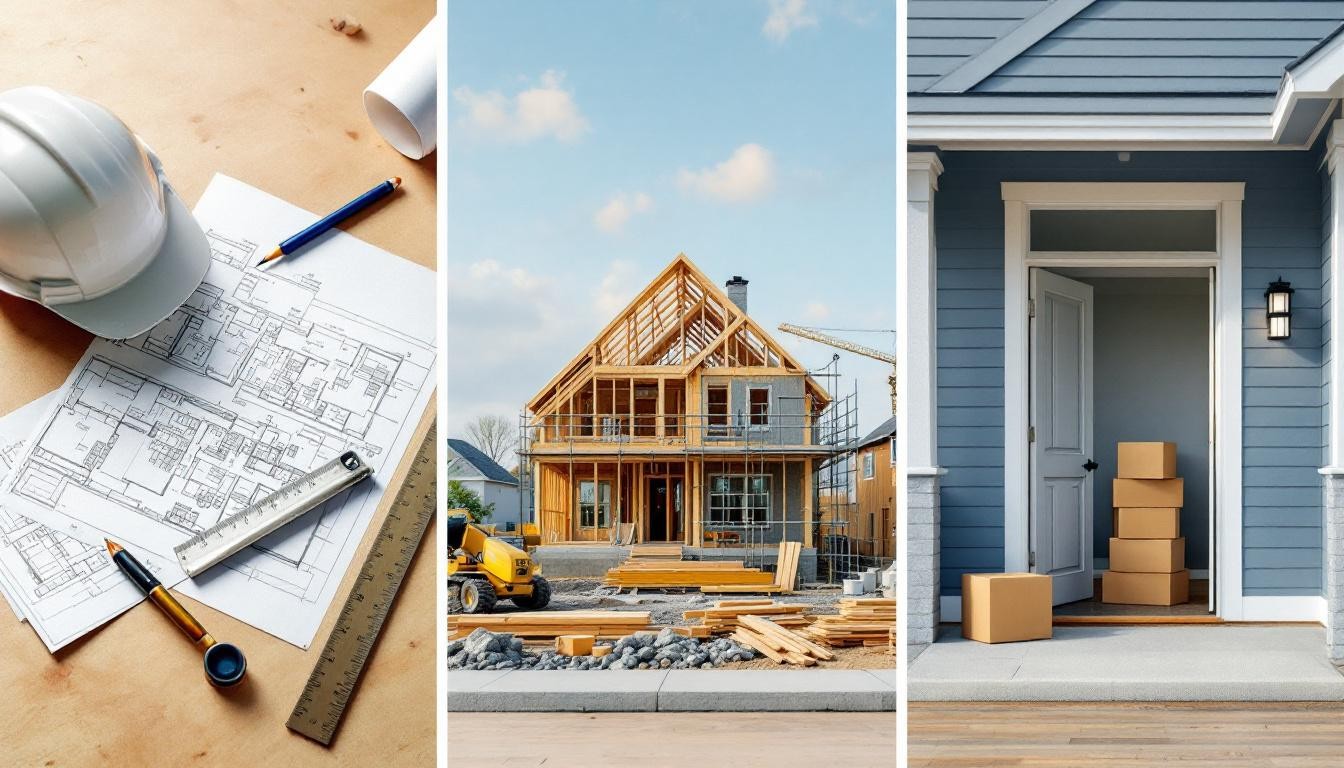
Hiring the right contractor makes or breaks your remodel. The design-build approach centralizes everything-layout decisions, material orders, permits, and construction coordination-into one relationship rather than juggling architects, designers, and builders separately. This matters because structural changes, electrical work, plumbing relocations, and HVAC updates typically require permits in Arlington and Fairfax counties, and coordinating those approvals takes 2 to 4 weeks minimum. A contractor experienced in your specific neighborhood understands local codes and inspection patterns, which accelerates permitting.
When you meet with contractors, ask directly about their approach to permits and timelines. Some firms handle permitting themselves; others expect homeowners to manage it. At Dzala General Contractor, we handle permits, material orders, and site preparation to eliminate bottlenecks on your end. Request references from three recent kitchen remodels completed in your area-Arlington kitchens differ from Vienna kitchens in terms of older floor plans and electrical infrastructure, so local experience matters. Ask those references specifically whether the contractor delivered on schedule and budget, responded to questions promptly, and handled surprises professionally.
Prepare for the Construction Timeline and Disruptions
Your kitchen becomes a construction zone for 4 to 8 weeks depending on scope. Structural changes, plumbing relocations, and electrical work extend timelines significantly beyond cabinet and countertop installation. Establish a project schedule with clear milestones: demolition, rough-in work (electrical, plumbing, HVAC), cabinetry delivery and installation, countertop fabrication and installation, flooring, backsplash, appliance installation, and final inspections.
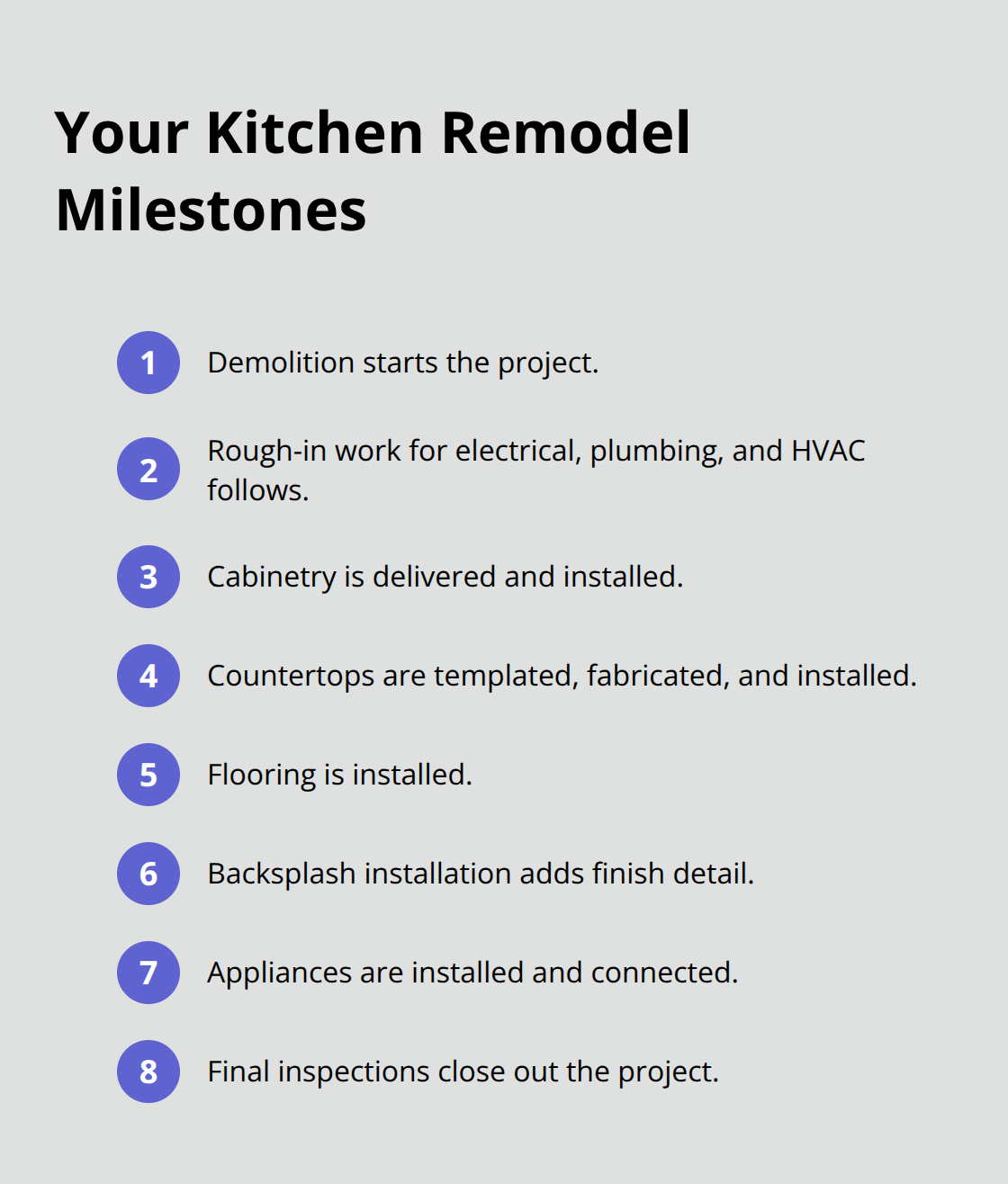
A dedicated project manager provides regular updates and keeps work on track-this person becomes your single point of contact rather than fielding calls to multiple subcontractors.
Discuss how disruptions will be managed: dust containment, daily cleanup protocols, and access to bathrooms and living spaces during work. Kitchen remodels produce substantial dust and debris, and professional firms use plastic barriers and HEPA filtration to contain it. Establish clear expectations about work hours-most contractors operate 7 a.m. to 4 p.m. on weekdays, with limited weekend work.
Inspect Work Throughout Each Phase
Quality control happens throughout the project, not just at the end. Inspect work after each major phase: cabinetry installation alignment and hardware function, countertop seams and edges for gaps or chips, backsplash grout lines for consistency, flooring for levelness and gaps, and appliance connections for proper operation. Request a final walkthrough before paying the final invoice. Check cabinet doors for smooth operation, countertops for stains or damage, all electrical outlets and lighting for function, plumbing connections under sinks for leaks, and appliances for proper installation and operation. Document any issues in writing and establish a timeline for corrections before final payment. A two-year labor warranty protects you against defects after completion, and post-completion follow-up maintains continued satisfaction.
Final Thoughts
A successful kitchen remodel in Arlington, Vienna, or Tysons rests on three core decisions: committing to contemporary kitchen remodel ideas that match how you actually live, budgeting honestly for quality materials and skilled labor, and partnering with contractors who handle permits and coordination so you don’t manage chaos alone. The trends we covered-bold color palettes, multi-functional islands, smart appliances, and mixed materials-work because they solve real problems. Forest green cabinetry paired with alabaster perimeters creates visual depth, butler’s pantries eliminate clutter, Energy Star appliances reduce utility costs, and statement lighting transforms the kitchen’s atmosphere.
Return on investment varies by scope, with minor remodels yielding roughly 75 to 96 percent ROI, mid-range projects returning 60 to 76 percent, and luxury remodels returning 30 to 54 percent. For high-end homes in Arlington and Tysons, lifestyle ROI and long-term value often matter more than short-term percentages. You’ll use your kitchen daily for years, so a remodel that functions beautifully and reflects your style delivers value beyond resale numbers.
Start by visiting local showrooms to see contemporary finishes in person-quartz and porcelain samples feel different under your hand than they appear online, and tile and wood samples reveal textures that photographs miss. Schedule consultations with experienced contractors who understand your neighborhood’s specific challenges, whether Arlington’s older electrical infrastructure, Vienna’s compartmentalized floor plans, or Tysons’ space constraints. Contact Dzala General Contractor to discuss how contemporary kitchen remodel ideas can transform your space and your home’s value.