Your kitchen counter is one of the most visible and functional parts of your home. Whether you’re looking to refresh the look or upgrade durability, kitchen counter remodel ideas range from budget-friendly options to high-end materials that transform your space.
We at Dzala General Contractor have guided hundreds of homeowners through this process. This guide walks you through material choices, current design trends, and what to expect during installation.
What Material Works Best for Your Kitchen Counter
Granite and natural stone remain popular choices, but they demand commitment. Granite costs between $70–$175 per square foot and lasts 25+ years, yet it requires sealing every 12–18 months to prevent staining and etching. Marble sits at the luxury end, ranging from $100–$250 per square foot, but it’s genuinely high-maintenance-scratches and acidic spills etch the surface permanently, and you’ll need sealing every 2–6 months. Quartzite offers a middle ground at $90–$250 per square foot with superior heat and scratch resistance; it needs yearly sealing but delivers 30+ years of performance. These natural stones add undeniable character and resale value, but only choose them if you’re willing to maintain them consistently. Soapstone provides a low-maintenance alternative with its dark tone and heat resistance, though it requires regular oiling to maintain its appearance.
Quartz Stands Out for Most Homeowners
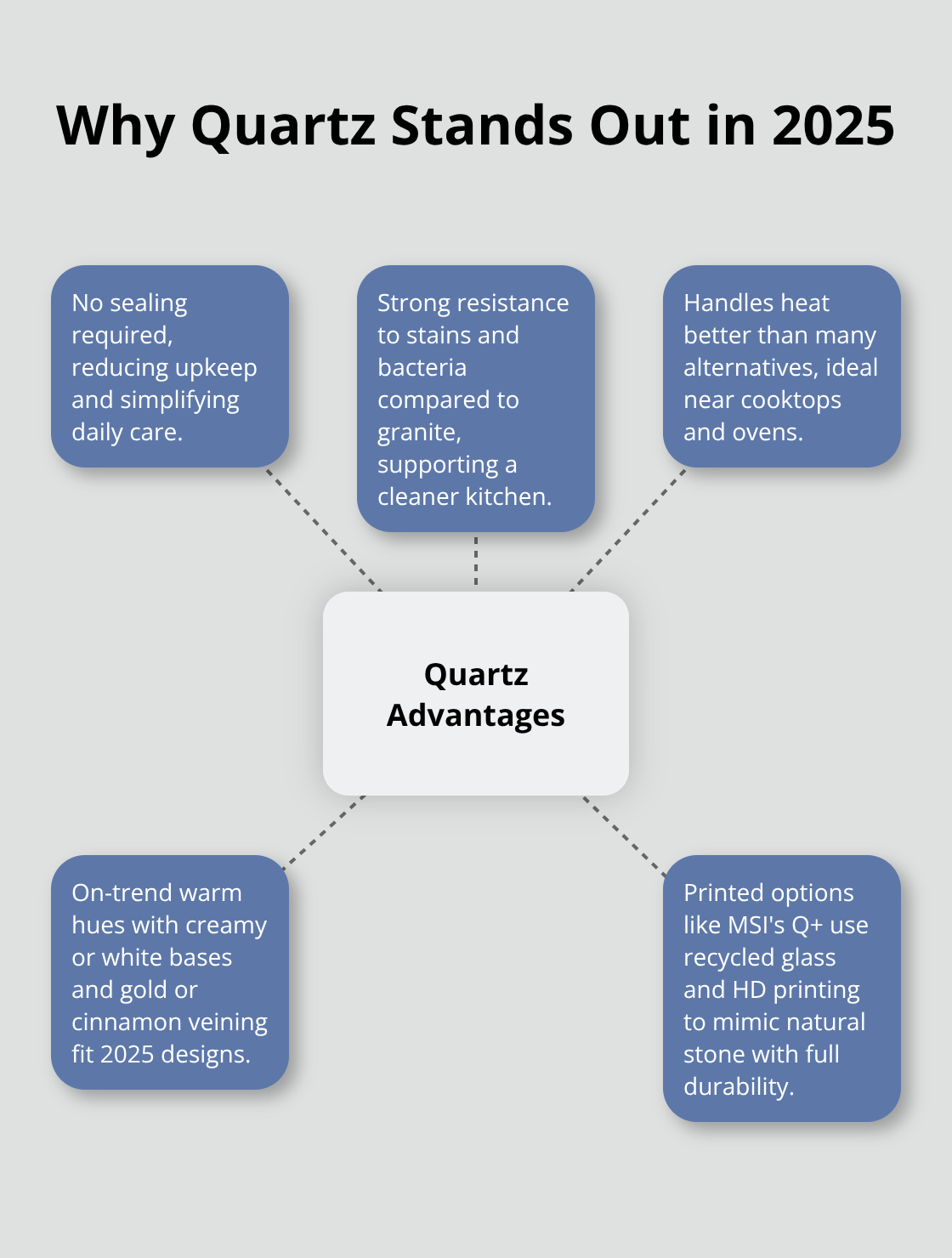
Quartz engineered stone costs $75–$200 per square foot and lasts 25+ years without any sealing required-this is the decisive advantage. Quartz resists stains and bacteria better than granite, and it handles heat more effectively than many alternatives. The 2025 design trend favors warm hues with creamy or white bases paired with gold or cinnamon veining, making quartz feel both modern and timeless. Printed quartz through MSI’s Q+ Collection uses recycled glass and high-definition inkjet printing to replicate intricate natural stone patterns while maintaining full durability. For busy families and anyone unwilling to maintain stone surfaces regularly, quartz eliminates the maintenance burden entirely while delivering the aesthetic you want.
Budget Options Exist but Have Trade-Offs
Laminate costs $20–$60 per square foot and works well for renters or temporary solutions, but it lasts only 10–15 years and lacks the durability of stone. Laminate has improved significantly in appearance, convincingly mimicking higher-end surfaces now. Tile runs $25–$75 per square foot with unlimited pattern options, though grout requires sealing every six months and typically lasts 10–20 years. Butcher block wood costs $30–$100 per square foot, adds warmth, and lasts 10–20 years with monthly oiling, but it’s sensitive to heat and water damage. Concrete offers industrial appeal at $65–$135 per square foot and lasts 20+ years, though it can crack and needs sealing every 1–3 years.
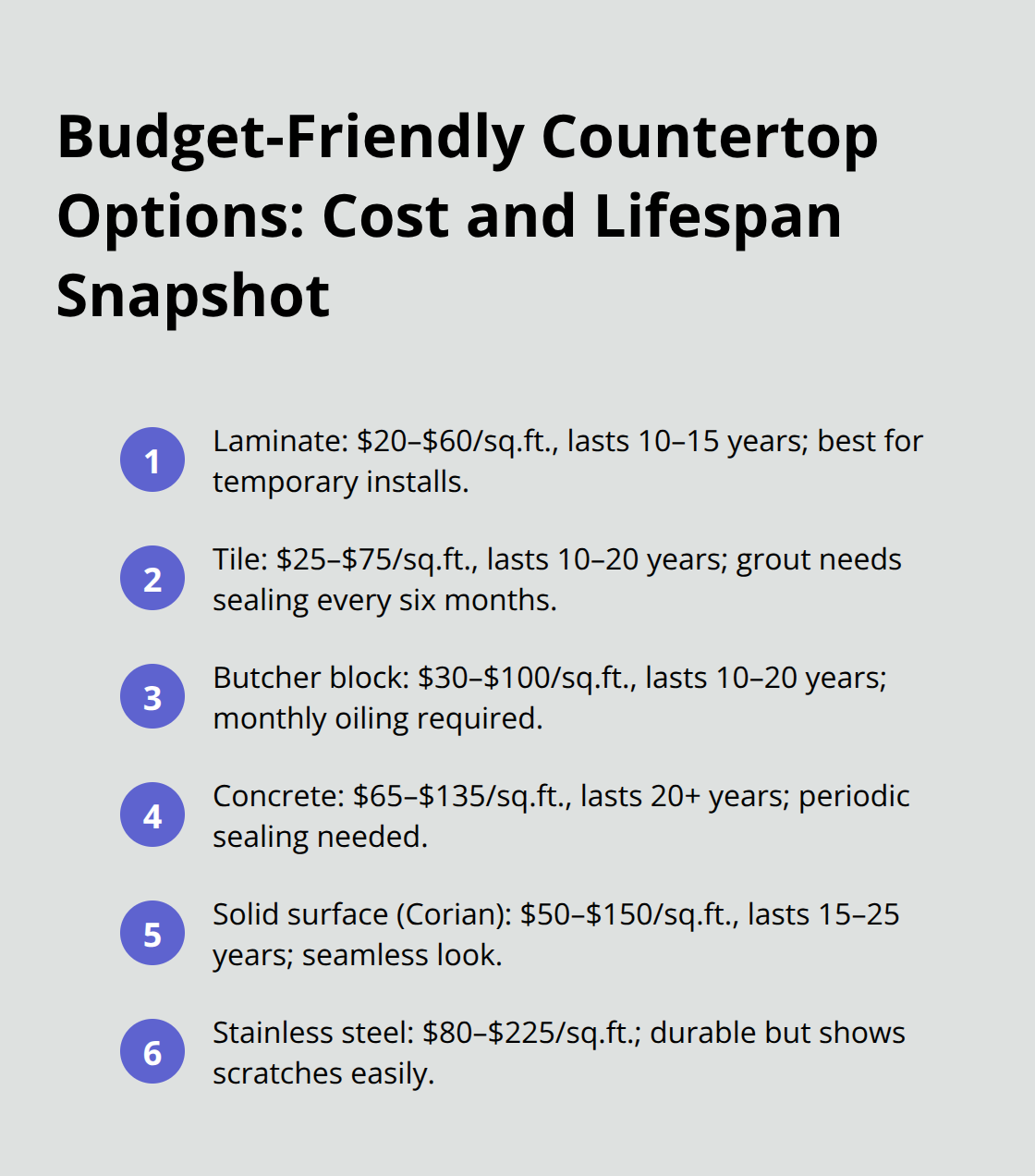
For the most budget-conscious approach, countertop coating on existing laminate costs under $50 and transforms outdated surfaces into a modern look without full replacement-multiple thin coats and 72 hours of curing time produce surprisingly durable results. Solid surface materials like Corian range $50–$150 per square foot with a seamless look and 15–25 year lifespan, making them a practical middle option. Stainless steel delivers industrial durability at $80–$225 per square foot but requires frequent cleaning and scratches easily.
How to Prioritize Your Decision
Durability and maintenance should guide your selection against your budget. Quartz balances cost, longevity, and ease of care better than any other option for most situations. Try listing your top 2–3 priorities (cost, durability, maintenance, aesthetics) and compare them against your overall remodel budget. This framework helps you narrow down which material actually fits your lifestyle and financial goals. Once you’ve selected your material, the next step involves measuring your space accurately and understanding what installation truly costs.
Design Trends That Actually Work for Kitchen Counters
Warm Tones Lead 2025 Kitchen Design
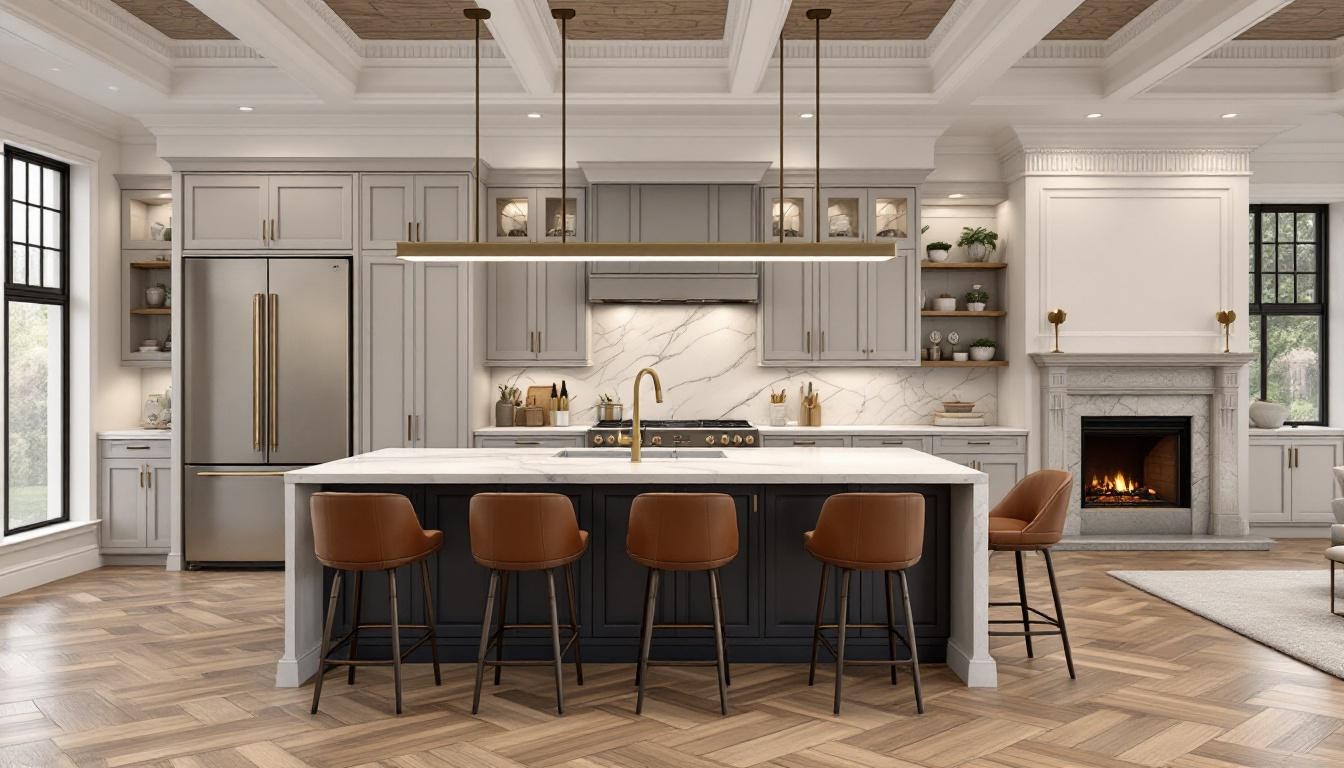
Warm tones dominate 2025 kitchen design, and this shift matters because it changes how your countertop interacts with your entire space. Creamy or white bases paired with gold or cinnamon veining move away from the cool grays that dominated previous years. Calacatta Miraggio Cove, a warm golden quartz, and Calacatta Premata, blending creamy white with gold accents, represent this trend precisely. The practical benefit: warm countertops pair naturally with both natural wood cabinetry and painted finishes, giving you flexibility when refreshing other kitchen elements. Specialty colors like greens and blues emerge as statement pieces, particularly Calacatta Viraldi with green and brown veining or Calacatta Miraggio Cielo with dusky blue tones. These colors work best when you commit to them as focal points rather than treating them as subtle background elements.
Mixed Materials Create Function and Style
Two-tone countertops combine different materials strategically-stainless steel paired with a wood base creates balance between industrial and warm aesthetics, while a wood bar with matching open shelving adds cohesion throughout the kitchen. Mixed material designs work because they serve function alongside style: a butcher block section provides dedicated prep space while quartz handles the main cooking zone, each material doing what it does best. This approach costs more than a single material but eliminates the compromise of choosing one surface for tasks it wasn’t designed for.
Statement Features Transform Your Island
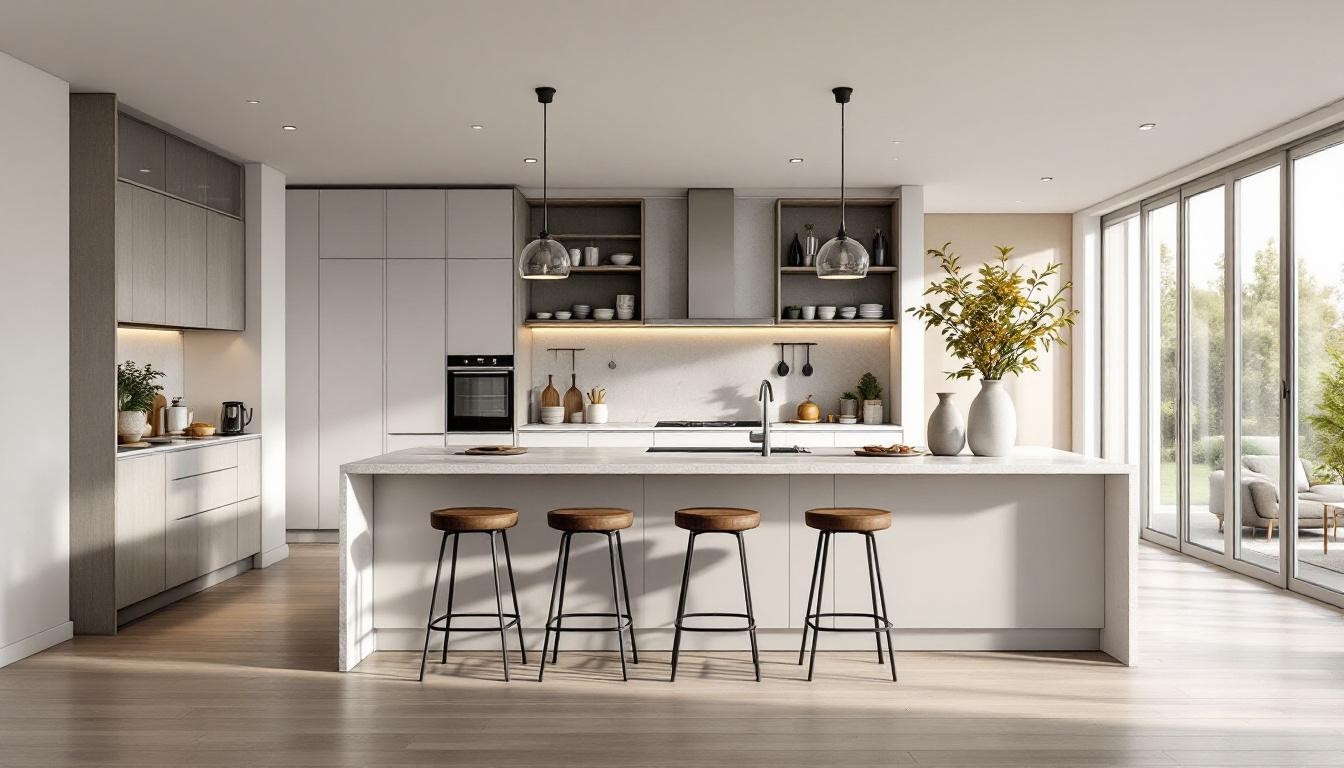
Waterfall island edges extend countertops vertically down to the floor, creating a dramatic statement that costs significantly more due to increased material and installation complexity. This design choice works best in open-concept kitchens where the island stands as a visual anchor rather than hidden against walls. If your budget doesn’t accommodate a full waterfall, extending your countertop to create additional seating transforms the space into a social hub where family and guests gather naturally.
Personalization Details Improve Daily Use
Personalization details separate functional counters from ones you actually enjoy using daily: integrated cutting boards, hidden power strips underneath surfaces, and built-in trash chutes streamline workflow for serious cooks. A custom-cut glass top can protect delicate surfaces like marble while preserving the look underneath, extending longevity during entertaining. Stand-alone carts or counters add flexible workspace and extra storage where permanent installation isn’t feasible, particularly valuable in smaller kitchens.
Prioritize Function Over Trends
When selecting among these design approaches, prioritize what your kitchen actually needs rather than what looks impressive in photos. A waterfall edge adds nothing if your island doesn’t function as a gathering space, and mixed materials create visual interest only if each section serves a distinct purpose. Sketch your daily kitchen routine and identify friction points-places where you wish you had more space, better materials, or improved access-then design around those realities rather than aesthetic trends alone. This practical foundation sets the stage for the next critical decision: measuring your space accurately and understanding what installation truly costs.
Getting Your Measurements Right and Understanding Real Costs
Accurate measurements determine whether your new countertop fits properly and whether your budget survives contact with reality. Measure your counter length, depth, and any angles or cutouts for appliances, sinks, and cooktops-do this twice and have someone verify your numbers. Most fabricators require measurements within one-eighth inch of accuracy, so use a metal tape measure rather than a cloth one, and photograph your current layout from multiple angles. If your kitchen has uneven walls or cabinets that aren’t perfectly square, the fabricator needs to know this before cutting your material.
Account for Overhang and Material Costs
Overhang dimensions matter significantly since island countertops typically extend 12 to 15 inches on seating sides, and this additional material adds directly to your final cost. Once you have accurate dimensions, request quotes from at least three fabricators and compare not just material costs but also edge profiles, seam placement, and installation fees. Quartz fabricators typically charge between $75 and $200 per square foot installed, while granite runs $70 to $175 per square foot, but these figures vary significantly by region and material availability. Get itemized quotes that separate material, fabrication, and installation labor so you understand exactly where your money goes and can identify areas to adjust if the total exceeds your budget.
Why Professional Installation Matters
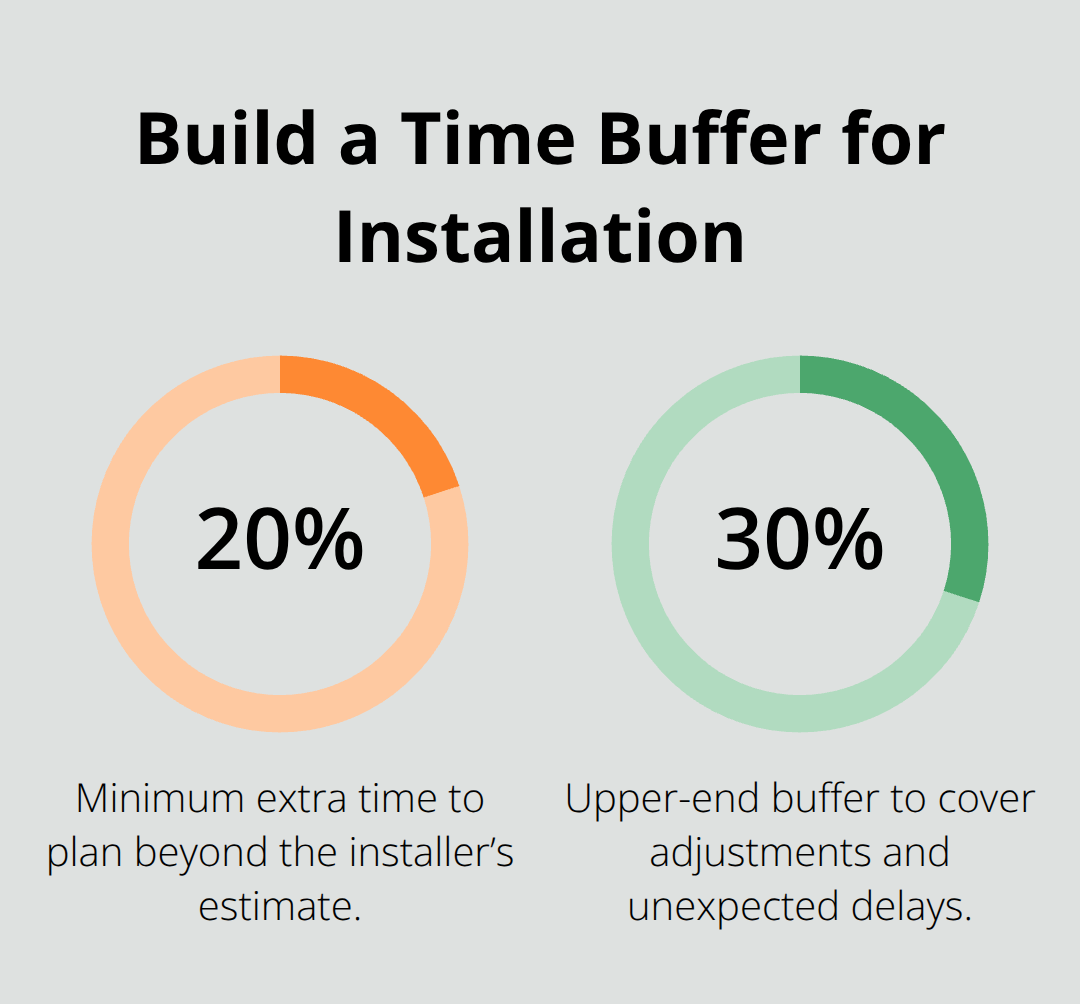
Professional installation almost always outweighs DIY attempts, particularly for natural stone or quartz where mistakes are expensive and irreversible. Fabricators handle template creation, precision cutting, seaming, and edge finishing with equipment and expertise you cannot replicate at home. Installation typically takes one to three days depending on complexity, and your kitchen remains partially unusable during this window-plan meals accordingly and clear your countertops completely beforehand. Budget 20 to 30 percent additional time beyond the installer’s estimate for any unforeseen issues like cabinet adjustments or plumbing relocations that surface once work begins.
Prepare for Cabinet and Installation Challenges
If your cabinets are older or uneven, installation costs increase as fabricators may need to shim or level surfaces before setting your new countertop. Laminate or butcher block allow for DIY installation if you have basic carpentry skills and proper tools, but even these materials benefit from professional seaming and finishing. The disruption window matters more than most homeowners expect-without a functioning kitchen counter for three days, takeout costs and inconvenience add up quickly, so coordinate installation timing with your household schedule and plan for simple meals during this period. When selecting who will handle your installation, choosing the right contractor ensures the work meets your standards and protects your investment.
Final Thoughts
Your kitchen counter remodel involves three interconnected decisions: material selection, design approach, and installation method. Quartz remains the strongest choice for most homeowners because it eliminates maintenance burden while delivering durability and aesthetic flexibility that justifies its cost. Natural stones like granite and quartzite work if you commit to regular sealing, while budget options like laminate or countertop coating serve temporary needs without breaking your budget. The design trends for 2025 favor warm tones and mixed materials that balance function with visual interest, but these choices matter only when they solve actual problems in your kitchen workflow rather than simply following what looks good in photos.
Professional installation separates successful kitchen counter remodel ideas from costly mistakes. Fabricators bring precision equipment, expertise in seaming and edge finishing, and accountability that protects your investment in ways DIY approaches cannot match. The three-day disruption window is temporary, but the countertop you live with daily for the next 20 to 30 years demands quality installation from the start. Mistakes in cutting, seaming, or edge finishing become permanent problems that cost far more to fix than getting it right initially.
Your next step involves measuring your space accurately and requesting itemized quotes from multiple fabricators so you understand exactly where your budget goes. Once you have those numbers, you can make informed decisions about material and design that align with both your lifestyle and financial reality. Contact us today to discuss your kitchen counter remodel and let our team guide you toward a space that functions beautifully for years to come.