Galley kitchens are notoriously tight, but that doesn’t mean you’re stuck with a cramped, outdated space. We at Dzala General Contractor have helped countless homeowners transform their galley kitchens with smart kitchen remodel ideas that maximize every inch.
The right design choices, materials, and layout adjustments can turn your narrow kitchen into a functional and stylish room you actually enjoy cooking in.
Planning Your Galley Kitchen Remodel
Assess Your Current Layout and Constraints
Before you spend a dime on your galley kitchen remodel, take a hard look at what’s actually limiting your space. Walk through your kitchen and measure the exact dimensions of your galley, including the distance between parallel counters, the length of each wall, and the height of your ceiling. This matters because galley kitchens typically feature two parallel counters with a walkway between them, and that walkway width determines everything about your layout options. If your aisle measures less than 42 inches wide, you’re dealing with a tight constraint that rules out certain appliance sizes and workflow patterns. Document which appliances currently work and which ones create bottlenecks. For instance, if your refrigerator door swings into the walkway and blocks movement, that’s a problem worth solving in your remodel.
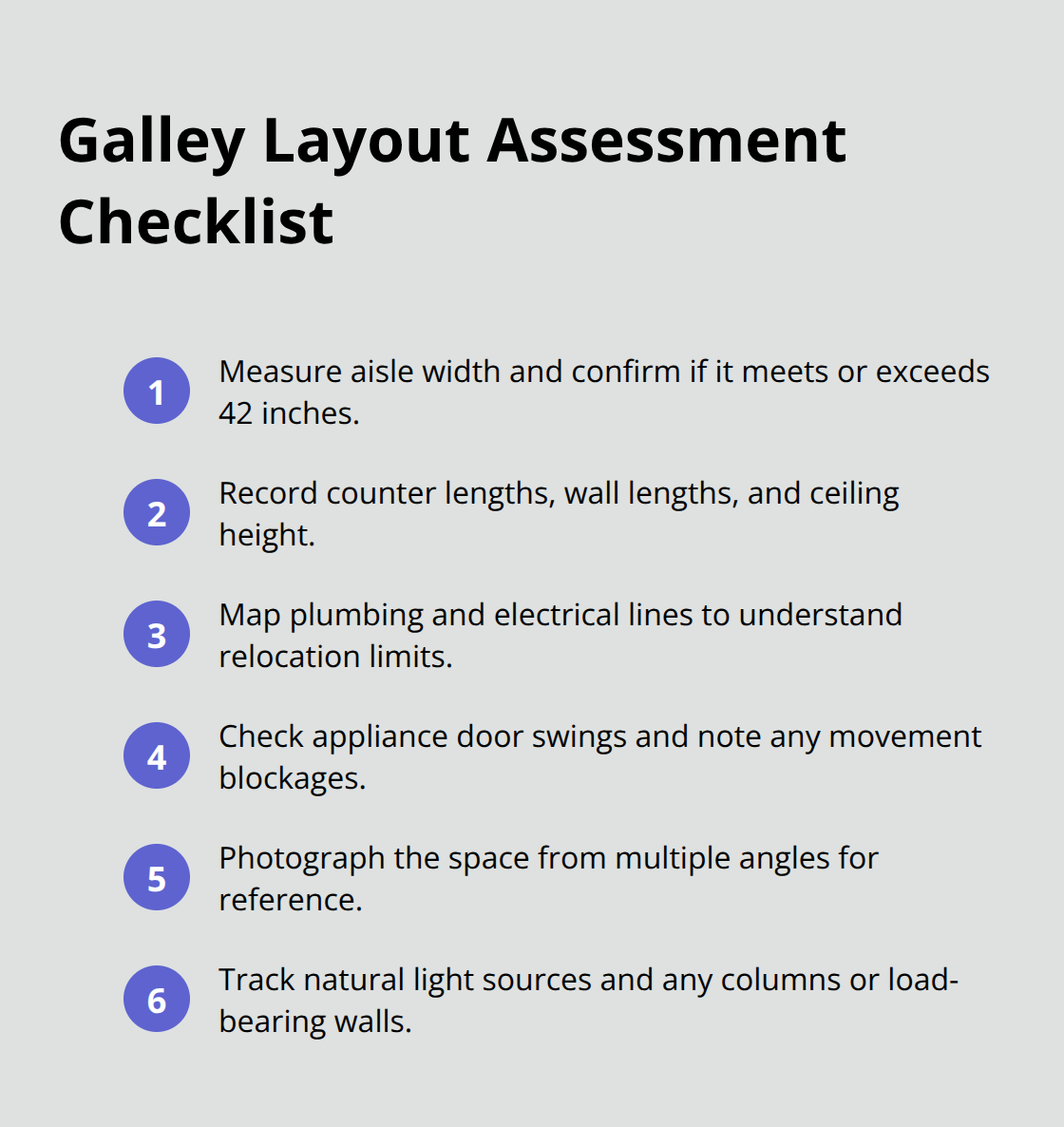
Take photos from multiple angles and note where natural light enters, where plumbing and electrical lines run, and whether any structural elements like columns or load-bearing walls limit your flexibility. Many homeowners discover they can gain usable space simply through repositioning the kitchen wall or relocating the sink, but you won’t know your options without understanding your constraints first.
Set a Realistic Budget and Timeline
Galley kitchen remodels typically cost between $15,000 and $50,000 depending on scope and finishes, but your budget should prioritize high-impact upgrades over cosmetic changes. Countertops and backsplash materials account for roughly 15 to 25 percent of most renovation budgets, and choosing durable materials like quartz or soapstone pays dividends because galley kitchens see heavy traffic and concentrate cooking activity in a tight footprint. Lighting deserves 10 to 15 percent of your budget because poorly lit galleys feel smaller and more cramped, while layered lighting with task fixtures over work zones and ambient ceiling fixtures dramatically improves both functionality and perception of space. If you reuse existing cabinets and appliances, allocate the savings toward fixtures, hardware, and countertop materials that create visual impact.
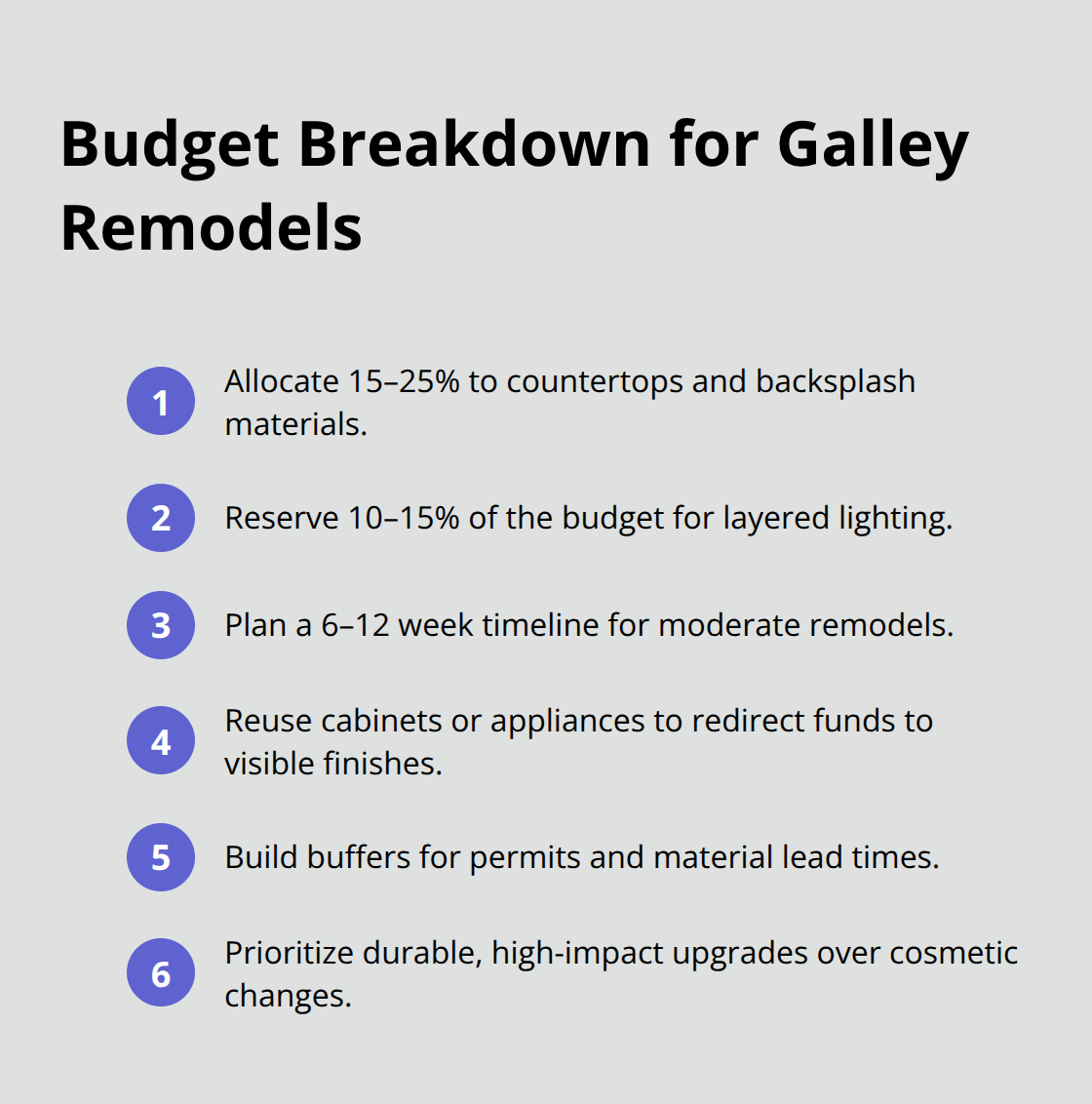
Set your timeline realistically at 6 to 12 weeks for a moderate remodel, understanding that moving walls or adding structural changes extends that window significantly. Work backward from your desired completion date and build in buffer time for permit approvals and material lead times, which often stretch longer than expected.
Identify Your Must-Have Features and Style Preferences
Identify the three to five features that matter most to your daily cooking life before you start designing. Some homeowners desperately need more storage and will prioritize floor-to-ceiling cabinetry, while others value efficient workflow and want a specific appliance arrangement that minimizes steps between the refrigerator, sink, and stove. If you entertain frequently, a peninsula or extended counter that doubles as a serving surface might rank higher than additional storage. Write down your style preference honestly (whether that’s modern, farmhouse, or something else entirely) because this choice guides every material decision downstream. Communicate these priorities clearly with your contractor because they help focus decisions when tradeoffs arise and budget constraints force choices. With your constraints mapped, budget allocated, and priorities set, you’re ready to explore the design solutions that actually work in tight galley spaces.
Smart Design Solutions for Galley Kitchens
Build Upward to Maximize Storage
Go vertical or go home. This principle separates successful galley remodels from disappointing ones. Install cabinets that reach the ceiling rather than stopping at the standard 36 inches, and you instantly gain 40 to 50 percent more storage without widening your footprint. Pair ceiling-height cabinetry with open shelving on at least one wall to break up visual weight and prevent the space from feeling like a storage closet. Place your refrigerator on one end of the galley and your stove on the opposite end with the sink positioned between them on the facing wall. Use the wall space above the sink for a window if possible, or floating shelves if not.
Optimize Appliances and Counter Space
Over-the-range microwaves save counter space compared to countertop models and provide ventilation in one move. Install handleless cabinets or minimal hardware to reduce visual clutter, then add hooks or rods under upper cabinets for mugs and kitchen towels. Choose a counter-depth refrigerator rather than standard depth to keep your aisle clear and maintain that critical 42-inch minimum walkway. Slide-in ranges combine stovetop and oven in a narrower footprint than separate units, freeing precious counter space for prep work.
Use Light Colors and Reflective Surfaces
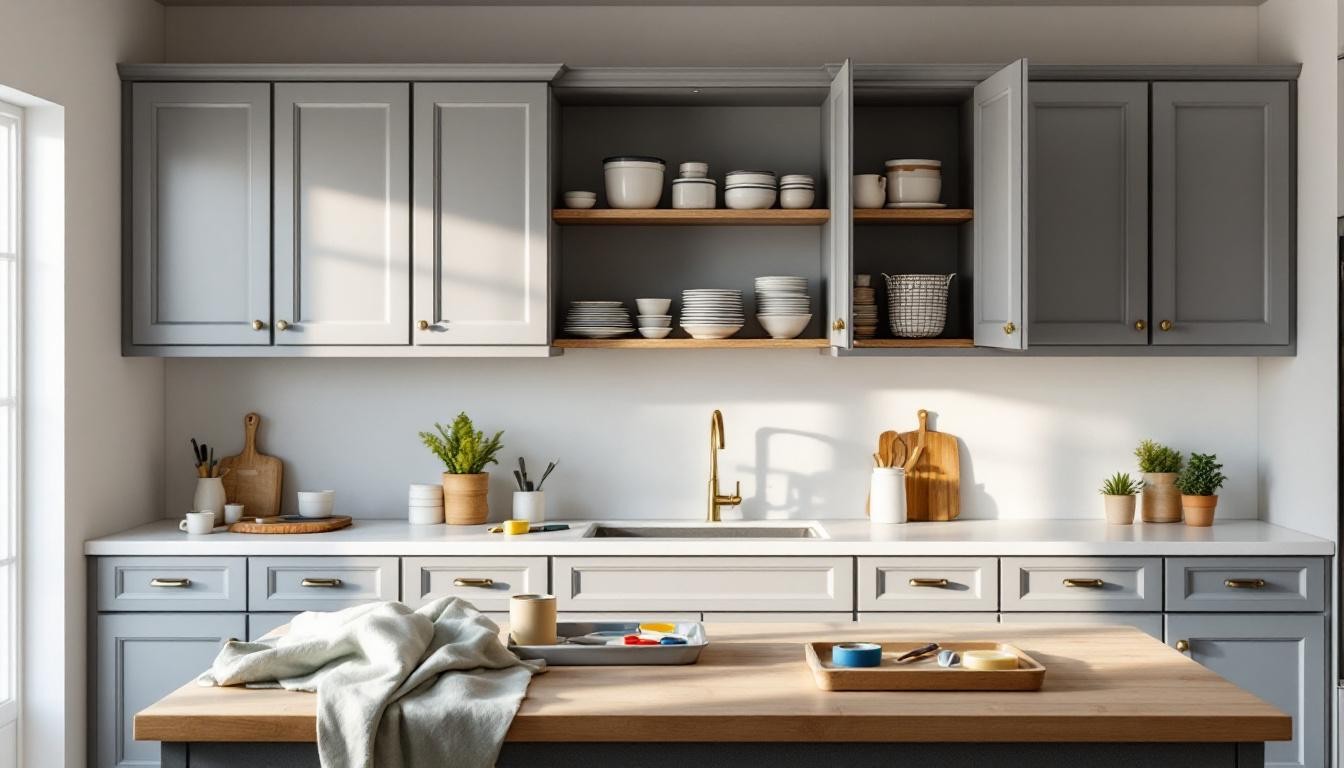
Light colors and reflective surfaces make galley kitchens feel larger than they actually are, but only if you apply this principle consistently throughout the space. White or cream cabinets paired with light countertops like soapstone or pale quartz reflect light and visually widen the galley, while dark finishes compress the space and make narrow kitchens feel like corridors. Gloss finishes on cabinetry and polished hardware bounce light around the room more effectively than matte surfaces. If you want contrast without sacrificing brightness, use dark lower cabinets paired with white uppers and light countertops, which adds depth without darkening the entire space.
Layer Your Lighting Strategy
Install layered lighting with task lights focused on work zones, ambient ceiling fixtures for overall brightness, and recessed lights spaced 4 to 6 feet apart to eliminate shadows. Flush-mount fixtures work better than pendant lights in low-ceiling galleys because they don’t hang down and crowd the space. Add a window at the end of your galley if structural constraints allow, or replace upper cabinets above the sink with a wall of windows to capture natural light and create a sense of openness that no artificial light can match. These design choices set the foundation for selecting materials that reinforce your layout and amplify the sense of space throughout your remodel.
Materials and Finishes That Work Best
Countertops That Stand Up to Galley Demands
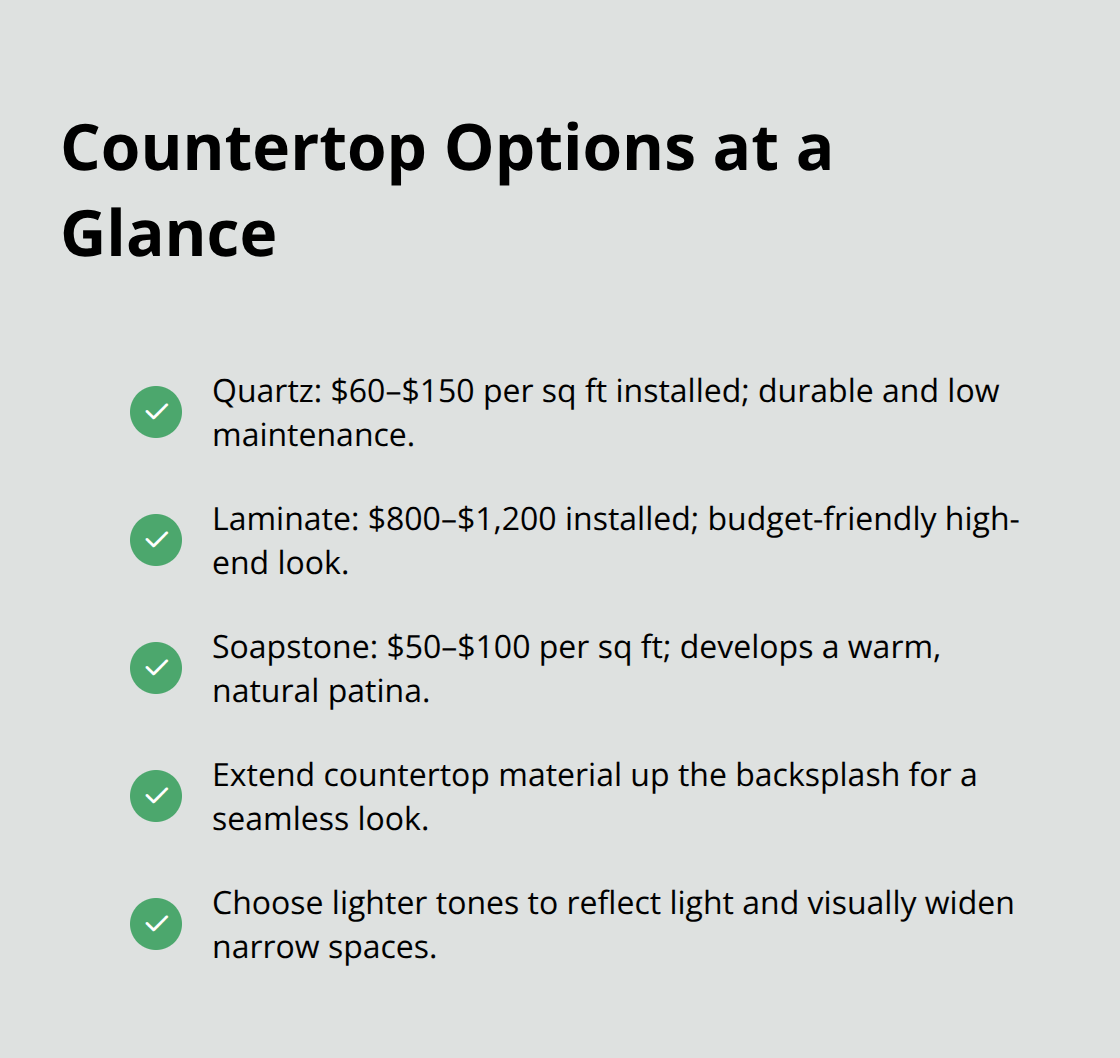
Quartz countertops dominate galley kitchen remodels for one reason: they handle the abuse that narrow kitchens dish out. Because galley layouts concentrate cooking activity in a tight footprint, your countertops absorb more impact, spills, and heat than in open kitchens. Quartz resists stains, scratches, and heat better than granite or marble, and it requires virtually no maintenance beyond soap and water. Solid quartz products like Cambria cost between $60 and $150 per square foot installed, which lands in the mid-range for kitchen counters but delivers durability that lasts 15 to 20 years without degradation.
If budget constraints tighten, laminate countertops offer a practical alternative at $800 to $1,200 installed and deliver high-end appearance without premium pricing. Soapstone also works well at $50 to $100 per square foot and develops character through patina over time, which many homeowners prefer to the uniform appearance of quartz. One design choice that costs nothing but pays dividends: extend your countertop material onto the backsplash. This seamless approach reduces seams, simplifies cleaning, and creates visual continuity that makes tight spaces feel intentional rather than cramped.
Flooring That Handles High Traffic
Flooring in galley kitchens should prioritize grip and durability over aesthetics alone. Tile with textured or matte finishes prevents slipping when water spills during cleanup, and large-format tiles minimize grout lines that trap dirt and bacteria. Herringbone or penny tile patterns add personality without overwhelming the narrow space, though they cost 20 to 40 percent more to install than standard layouts because of the complexity.
Wood-look porcelain tile mimics hardwood warmth while delivering the durability of ceramic, making it practical for high-traffic galleys where real hardwood would warp and stain easily. Pale, silver-toned finishes brighten the space and complement modern fixtures, while darker tones compress the visual footprint.
Cabinetry and Hardware for Durability
Cabinets demand the same durability focus as countertops because galley kitchens require frequent opening and closing of doors and drawers. White or cream flat-panel cabinetry keeps the space feeling open and reflects light effectively, but solid wood construction with quality hinges costs $150 to $250 per linear foot compared to $80 to $120 for particleboard boxes with veneer. Handleless or minimalist hardware reduces visual clutter and eliminates snag points that catch sleeves and kitchen towels.
If you want contrast, reserve dark finishes for lower cabinets only, pairing them with light uppers to add depth without darkening the entire galley. This two-toned approach became popular in modern farmhouse kitchens for exactly this reason: it adds dimension while keeping the upper half of the room bright and spacious.
Final Thoughts
A successful galley kitchen remodel hinges on three core principles: understanding your physical constraints, prioritizing high-impact materials over cosmetic upgrades, and committing to vertical storage and light-reflecting finishes. Kitchen remodel ideas for galley spaces that actually work share a common thread-they respect the narrow footprint while maximizing every usable inch through smart appliance placement, ceiling-height cabinetry, and intentional material choices. Quartz countertops, layered lighting, and light-colored cabinetry aren’t trendy add-ons; they’re practical solutions that address the specific demands of cooking in a tight space.
Measure your galley precisely, document your constraints, and list your three to five must-have features before meeting with a contractor. This preparation prevents costly design changes mid-project and keeps your budget focused on upgrades that matter. Sketch your ideal layout, gather inspiration from finishes and fixtures you actually like, and be honest about your timeline and budget limits.
We at Dzala General Contractor understand that galley kitchens demand specialized knowledge because the margin for error shrinks when you work with tight dimensions and concentrated workflow. Our team handles every aspect of your remodel, from initial design through final walkthrough, ensuring that your layout functions smoothly and your material choices deliver durability in a high-traffic space. Contact Dzala General Contractor to discuss your galley kitchen remodel and transform your narrow space into a kitchen you genuinely enjoy using.