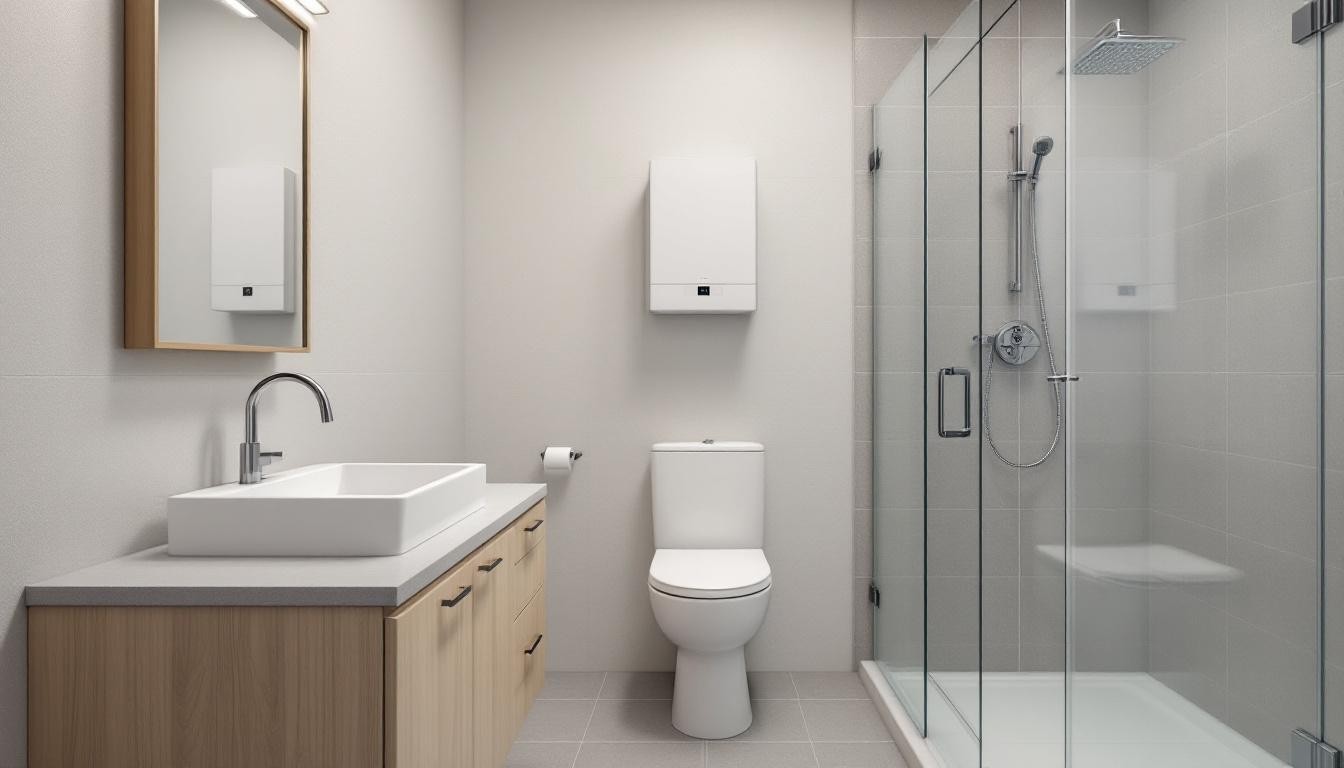
Bungalow kitchens have a timeless charm, but they often need updates to work for modern living. We at Dzala General Contractor have helped homeowners in Arlington, Vienna, and Tysons transform their compact kitchen spaces into functional, beautiful rooms.
Whether you’re looking for bungalow kitchen remodel ideas or ready to start planning, this guide covers everything from layout decisions to material choices. You’ll find practical advice to make your project run smoothly and stay on budget.
Starting Your Bungalow Kitchen Remodel
Measure Your Space and Understand Fixed Points
Before you spend a dollar on your bungalow kitchen, measure your kitchen precisely and photograph the current layout from multiple angles. Note where plumbing, electrical outlets, and gas lines are located-these fixed points determine whether you can move your sink, stove, or appliances without major expense. In Arlington, Vienna, and Tysons, most bungalows were built between 1920 and 1960, which means many have outdated electrical systems that can’t handle modern kitchen demands. You’ll likely need to upgrade your electrical service, which typically costs between $1,500 and $3,000 depending on the scope.
Check Permits and Timeline Requirements
Contact your local building department now to understand what permits you’ll need. Fairfax County requires permits for structural changes, electrical work, and plumbing relocations, and these typically add 2 to 4 weeks to your timeline. Planning ahead prevents costly delays later in your project.
Evaluate Your Work Triangle
Sketch your kitchen’s current work triangle-the distance between your sink, refrigerator, and stove. Keep this total distance practical; the National Kitchen & Bath Association recommends a combined distance of 12 to 26 feet. If your triangle is broken or inefficient, that’s your biggest opportunity to improve functionality in a compact space.
Build a Realistic Budget
Don’t guess at your budget. Minor kitchen remodels typically cost $15,000 to $30,000 and return 75 to 96 percent of your investment when you sell. Mid-range projects cost $30,000 to $60,000 and return 60 to 76 percent. Upscale renovations run $60,000 and up but return only 30 to 54 percent.
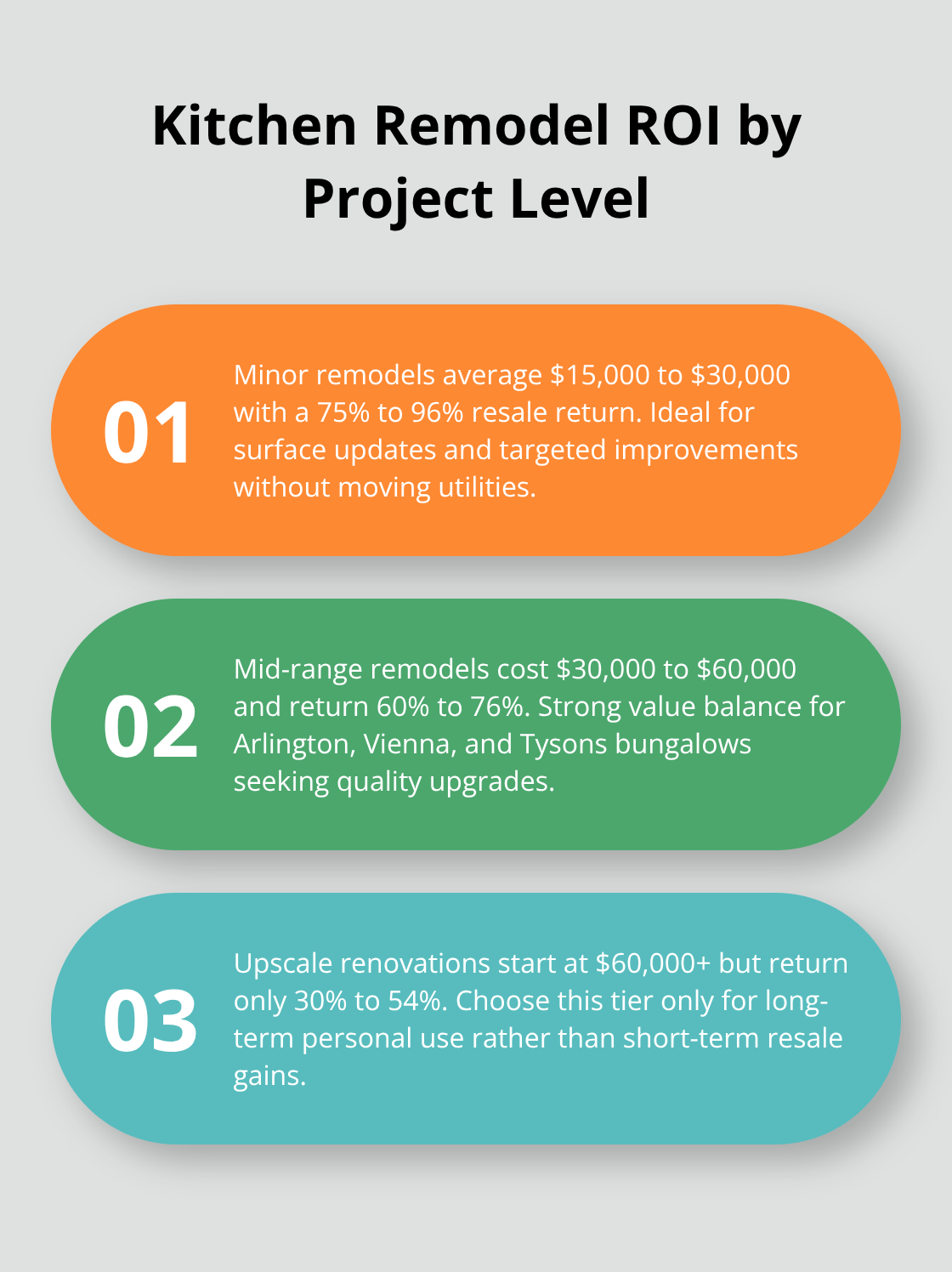
For bungalow kitchens in Arlington, Vienna, and Tysons, a mid-range project is usually your best move-you get quality improvements without overspending on luxury finishes that won’t return on investment.
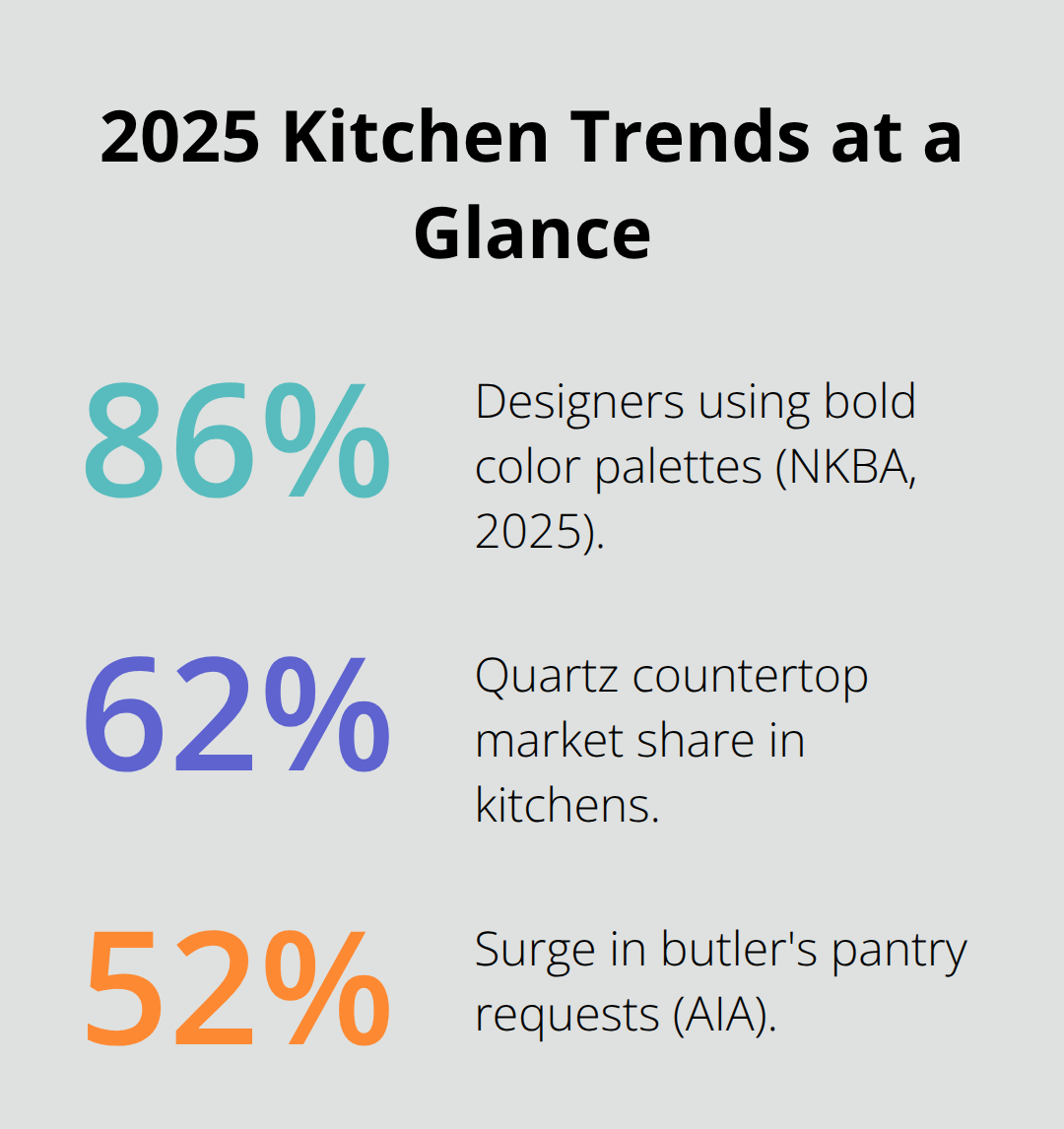
Build a contingency of 10 to 20 percent into your budget for unexpected costs; in older homes, this money gets used. Quartz countertops dominate the market at roughly 62 percent market share and cost $70 to $120 per square foot installed. Cabinetry typically runs 40 to 50 percent of your total budget. Get quotes from at least three licensed contractors before committing to a number; contractors familiar with bungalow homes in your area understand local permit requirements and can spot hidden costs early.
Identify Your Style and Priorities
Your style preference drives every other decision. Forest green cabinetry inquiries are up 40 percent year-over-year according to Fairfax showroom data, reflecting a national shift toward warm, nature-inspired colors in kitchens. If you’re drawn to this trend, commit to it early so your contractor can source materials and plan your layout accordingly. Two-tone cabinetry-light uppers with a darker island, for example-creates visual depth in a small space without overwhelming it. White kitchens remain timeless and work especially well in bungalows; pair white cabinetry with a blue or aqua backsplash for coastal style or butcher block countertops for farmhouse appeal.
The National Kitchen & Bath Association reports that 86 percent of designers are using bold color palettes in 2025, so don’t settle for beige if that’s not your preference. List three non-negotiable features you want: perhaps a multi-functional island, open shelving, or a dedicated beverage center. The American Institute of Architects reports a 52 percent surge in butler’s pantry requests, signaling a shift toward hidden prep spaces even in smaller homes. If storage and keeping your main kitchen uncluttered matters to you, prioritize a walk-in pantry or appliance garage. Identify which features matter most and which you can compromise on when budget constraints appear-because they always do. With your space measured, budget set, and priorities clear, you’re ready to explore design ideas that transform your bungalow kitchen into a space that works for how you actually live.
Design Your Bungalow Kitchen Around What Actually Works
The best bungalow kitchen design starts with honest acknowledgment of your space’s constraints, not Pinterest inspiration. Open shelving looks beautiful in photos, but it demands discipline-everything on those shelves becomes visible clutter if you don’t maintain it obsessively. Open shelving works only for items you genuinely use weekly and don’t mind displaying: everyday dishware, frequently grabbed cookbooks, or attractive kitchen equipment. If you have children, pets, or a busy household, skip open shelving above work areas and reserve it for display zones away from cooking mess. Glass-front upper cabinets offer the visual lightness of open shelving with protection from dust and splatters, making them a practical compromise for Arlington, Vienna, and Tysons bungalows where cooking happens daily.
Hardware and Finishes That Last
Vintage hardware-brass pulls, bin handles, or cup hinges-adds character without sacrificing function. Choose hardware that’s easy to grip and clean; ornate designs trap grease and fingerprints. Matte black or brushed brass finishes hide wear better than polished chrome and complement both traditional and modern bungalow aesthetics. These finishes require less frequent cleaning and maintain their appearance through years of daily use.
Storage That Fits Your Actual Stuff
Bungalow kitchens fail when storage planning ignores reality. Inventory what you actually store: small appliances, serving dishes, pantry overflow, cleaning supplies. The American Institute of Architects reports a 52 percent surge in butler’s pantry requests because homeowners discovered that hidden prep zones keep main kitchens functional and presentable. A walk-in pantry, even a narrow one carved from adjacent space, transforms a cramped kitchen by moving bulk items and appliances out of sight. If a full pantry isn’t possible, an appliance garage-a cabinet with a roll-up door that hides your coffee maker, toaster, and mixer-reclaims counter space instantly. Deep drawers with pull-out organizers beat traditional cabinets for accessibility; you see everything without reaching to the back. Corner cabinets with lazy susans or pull-out systems eliminate dead space that wastes square footage in compact layouts.
Countertops and Color Strategy
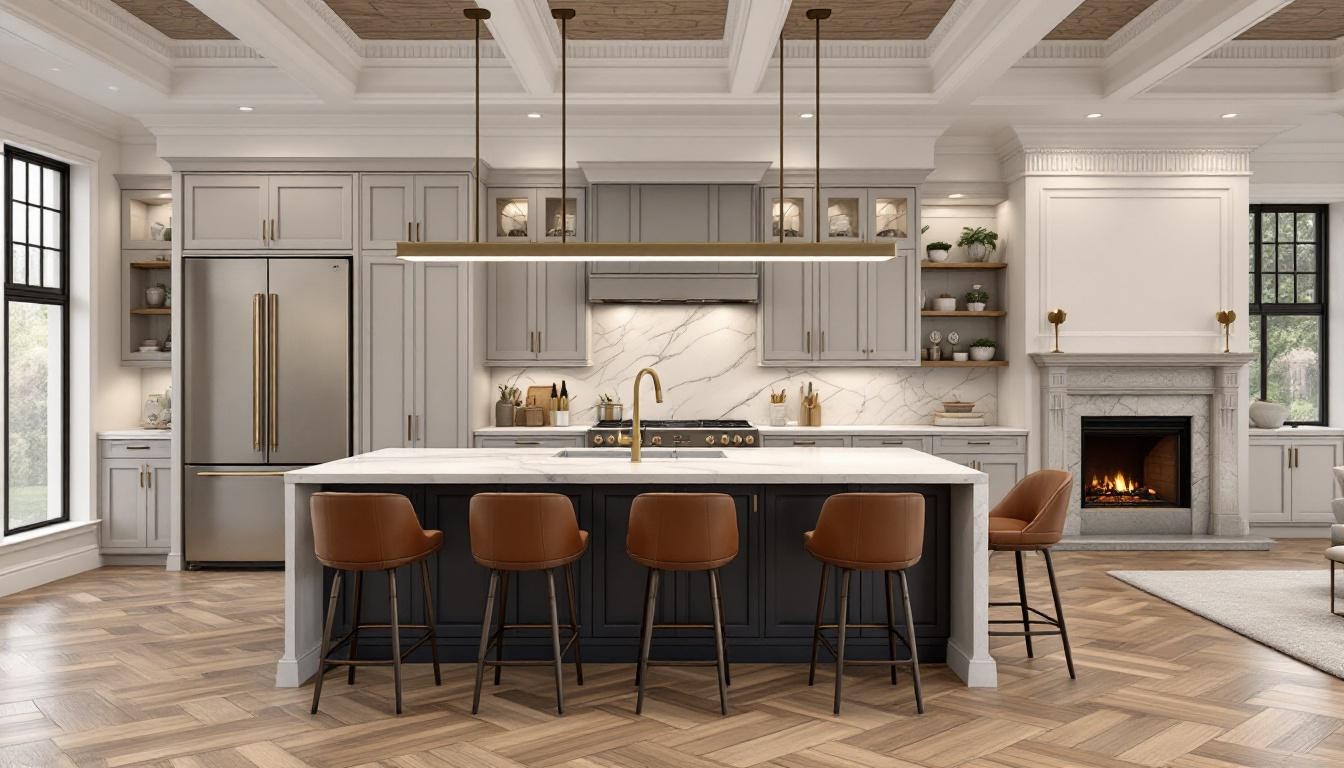
Quartz countertops hold 62 percent market share and cost $70 to $120 per square foot installed, making them the dominant choice for durability and low maintenance. These surfaces pair well with integrated storage solutions because their seamless appearance works with modern cabinetry systems. Forest green and navy dominate 2025 kitchen design according to the National Kitchen & Bath Association, with forest green cabinet inquiries up 40 percent year-over-year in Fairfax showrooms. These colors work beautifully in bungalows when applied strategically: paint lower cabinets or an island forest green and keep uppers white or light oak to prevent the space from feeling cave-like. Two-tone cabinetry creates perceived depth without overwhelming a small footprint. Pair warm neutrals with your bold accent color rather than mixing multiple bold tones, which fragments visual space.
Layouts That Maximize Compact Spaces
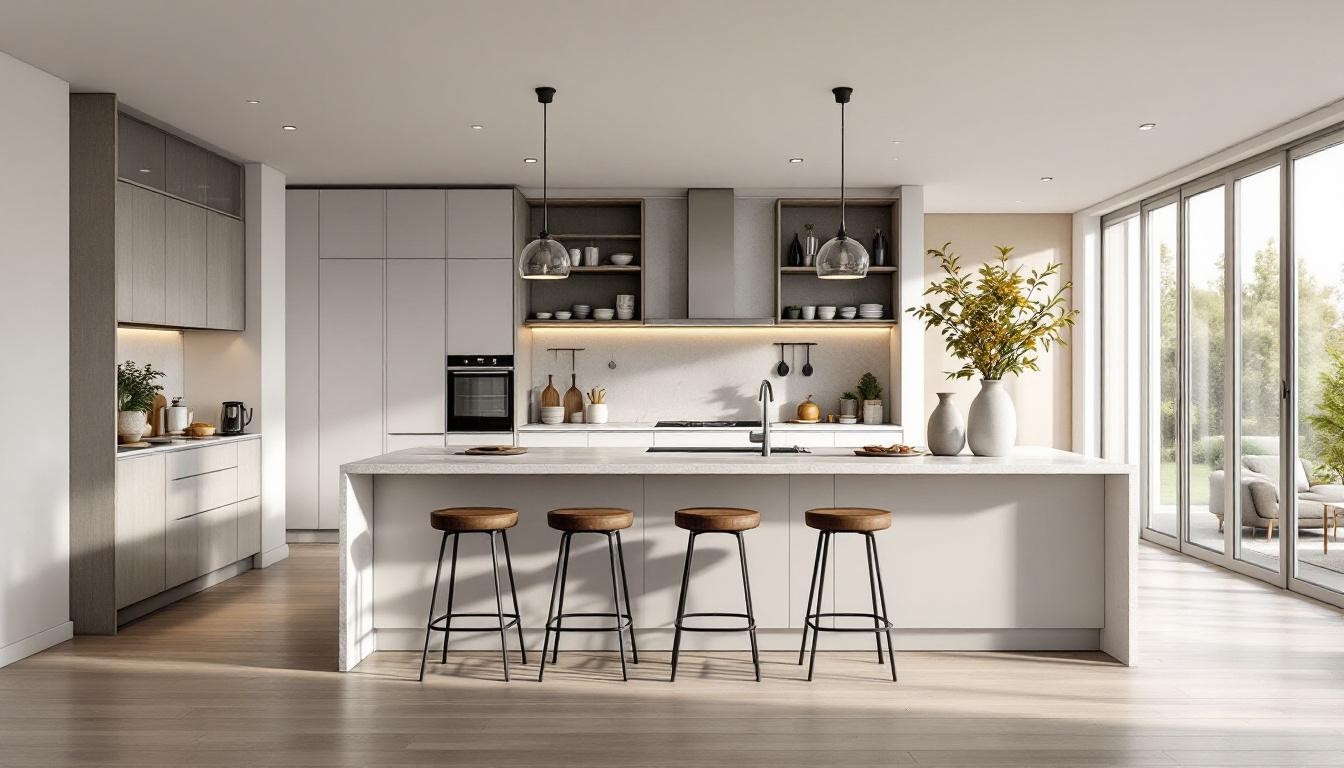
For layout, galley kitchens work exceptionally well in narrow bungalows because they minimize wasted movement and position you efficiently between sink and stove. An L-shaped layout works if you have a corner to spare, allowing a small island or peninsula for additional prep space and seating. Multi-functional islands matter more in bungalows than spacious homes-yours should include storage drawers, a cooktop or sink, seating for two to three people, and perhaps a beverage refrigerator.
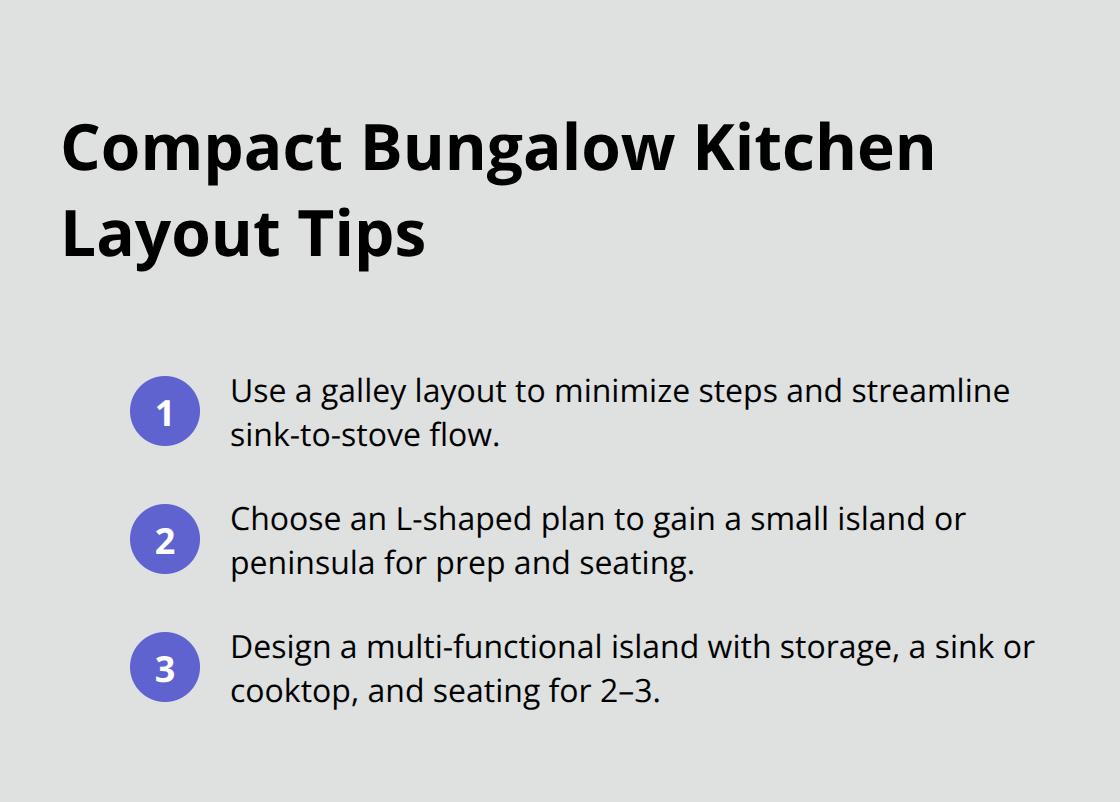
This concentrates function in one footprint rather than spreading it across disconnected zones. With your design direction set, the next step involves selecting materials and finding the right contractor to execute your vision without surprises.
Executing Your Remodel Without Surprises
Select Materials That Withstand Time and Use
Material choices directly impact how your bungalow kitchen performs over the next decade. Quartz dominates for countertops at 62 percent market share because it resists staining, scratching, and moisture better than laminate or solid surface alternatives-critical for older homes where water damage risk runs high. Porcelain slabs rise as a premium option, costing roughly 20 to 30 percent more than quartz but offering superior heat resistance if you plan built-in cooktops.
For backsplashes, full-height slab-style stone eliminates grout lines that trap grease and require constant cleaning; this matters more in bungalows where compact kitchens concentrate cooking mess in tight quarters. Flooring should be large-format porcelain or luxury vinyl plank that mimics wood or stone-these resist water damage far better than traditional tile with extensive grout and cost roughly $8 to $15 per square foot installed.
Cabinet materials matter equally: plywood construction with soft-close hinges costs more upfront but outlasts particleboard by 15 to 20 years. Low-VOC finishes on cabinetry and paint protect indoor air quality, particularly important in bungalows with limited ventilation. Choose hardware finishes that hide wear: matte black and brushed brass show fingerprints and grease far less than polished chrome, reducing your cleaning burden permanently.
Hire a Contractor Who Knows Your Neighborhood
Your contractor selection determines whether you stay on budget or face constant change orders and delays. In Arlington, Vienna, and Tysons, hire someone who has completed at least five bungalow kitchen remodels in your neighborhood-they understand local permit requirements, know which suppliers stock materials reliably, and can estimate costs accurately because they’ve priced similar projects recently. Request references from homeowners who completed projects within the last two years, then call them and ask specifically whether the contractor stayed within budget and timeline.
Fairfax County permits typically add 2 to 4 weeks, so any contractor quoting faster timelines cuts corners or lacks familiarity with local requirements. Insist on a fixed-price contract with detailed specifications for materials, labor, and timeline rather than time-and-materials arrangements that incentivize slower work. Build a contingency reserve of 10 to 20 percent of your contract price and keep it separate-this covers the plumbing line that runs where nobody expected or the electrical panel that needs upgrading.
Maintain Weekly Communication and Oversight
Schedule weekly check-ins with your contractor every Friday afternoon to review progress, identify emerging issues before they become expensive problems, and adjust timelines if delays appear. Unexpected costs in older homes are inevitable-outdated wiring, hidden plumbing, structural issues-but a contractor experienced with bungalows anticipates these and flags them early rather than discovering them mid-project when fixing them costs exponentially more. A dedicated project manager provides regular updates to keep your project on schedule and within budget, eliminating surprises that derail timelines and drain resources.
Final Thoughts
Your bungalow kitchen remodel succeeds when you measure twice, budget realistically, and hire someone who understands your neighborhood. The three critical decisions you’ve made throughout this guide-assessing your actual space constraints, setting a budget that matches your priorities, and selecting materials built for daily use-determine whether your remodeled kitchen functions beautifully for the next fifteen years or becomes a source of frustration within months. Forest green cabinetry, multi-functional islands, and hidden pantries matter only if they solve real problems in your space.
The best bungalow kitchen remodel ideas come from honest evaluation of how you cook and live, not from design trends that look good in magazines. Two-tone cabinetry creates visual depth, quartz countertops resist staining and scratching, and glass-front cabinets balance openness with practicality. These choices work because they address the specific constraints of compact bungalow kitchens in Arlington, Vienna, and Tysons.
Your contractor makes or breaks the execution-someone who has completed five previous bungalow kitchen remodels in your area understands permit timelines, anticipates hidden costs, and communicates weekly about progress and emerging issues. Contact us at Dzala General Contractor to discuss your bungalow kitchen remodel and transform your space into a kitchen that actually works for how you live.