Small kitchens in Arlington, Vienna, and Tysons don’t have to feel cramped or inefficient. We at Dzala General Contractor have helped countless homeowners transform tight kitchen spaces into functional, beautiful rooms through smart compact kitchen redesign tips.
The right storage solutions, layout strategy, and materials make all the difference. This guide shows you exactly how to maximize every inch.
How to Organize Compact Kitchens for Real Functionality
Maximize Vertical Space with Floor-to-Ceiling Cabinetry
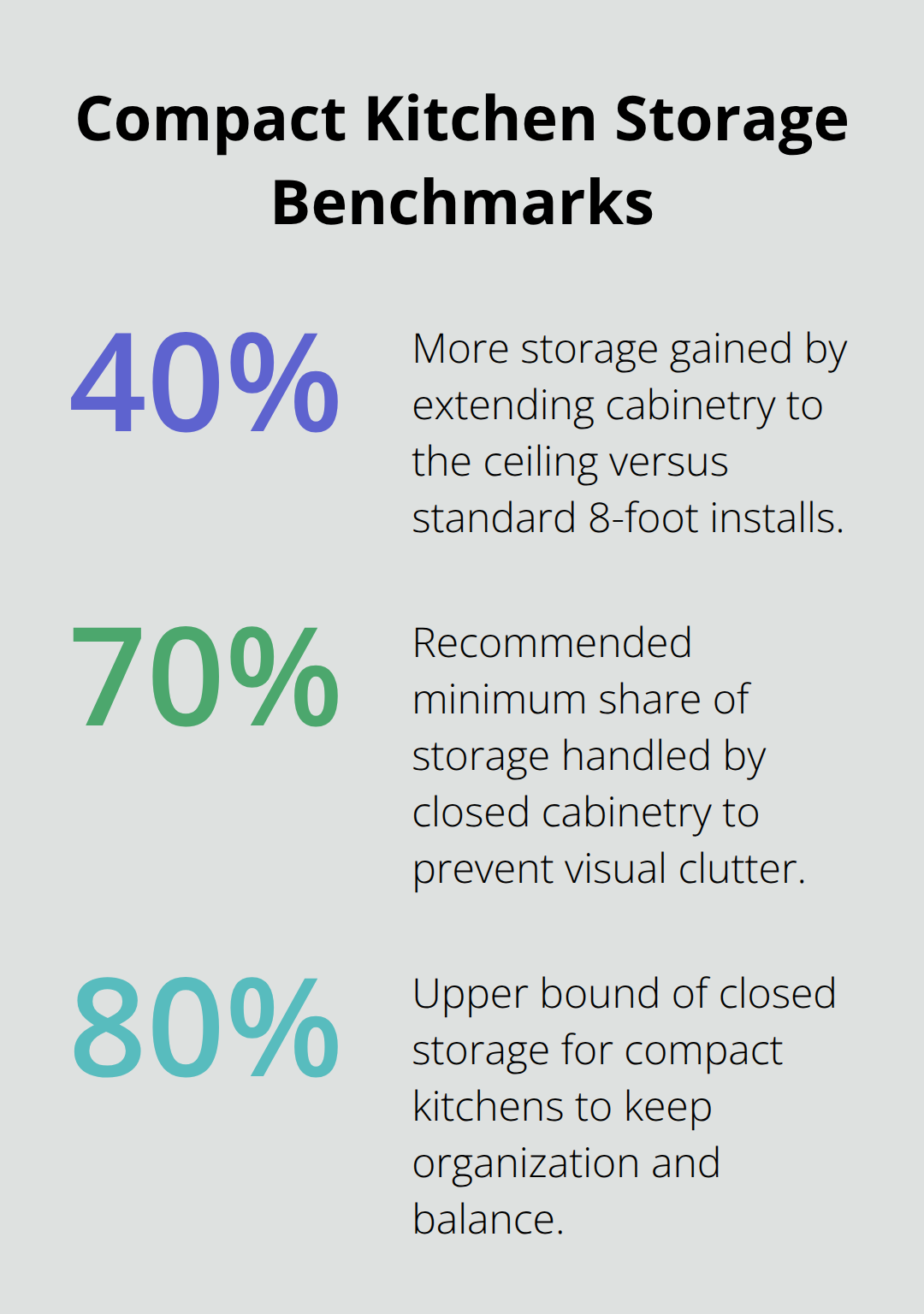
Vertical storage transforms small kitchens. Floor-to-ceiling cabinetry frees up floor space and delivers dramatically more storage than traditional upper and lower cabinet combinations. Homeowners who extend cabinets to the ceiling gain roughly 40% more storage capacity compared to standard 8-foot installations. Wall-mounted cabinets should start 15 to 18 inches above countertops to maintain comfortable workspace and sightlines. Glass cabinet doors on at least some upper units prevent the space from feeling boxed in while keeping frequently used items visible and accessible.
Access Everything with Pull-Out Drawers and Organizers
Pull-out drawers and organizers eliminate the frustration of reaching into deep cabinets and losing items in the back. A standard 24-inch deep cabinet wastes significant space when you can only access the front portion. Tiered pull-out organizers for spices, utensils, and small appliances keep everything within arm’s reach and visible at a glance. Custom drawer dividers maximize every inch of cabinet depth in compact kitchens. These solutions transform wasted space into functional storage that you actually use.
Use Open Shelving Strategically, Not Everywhere
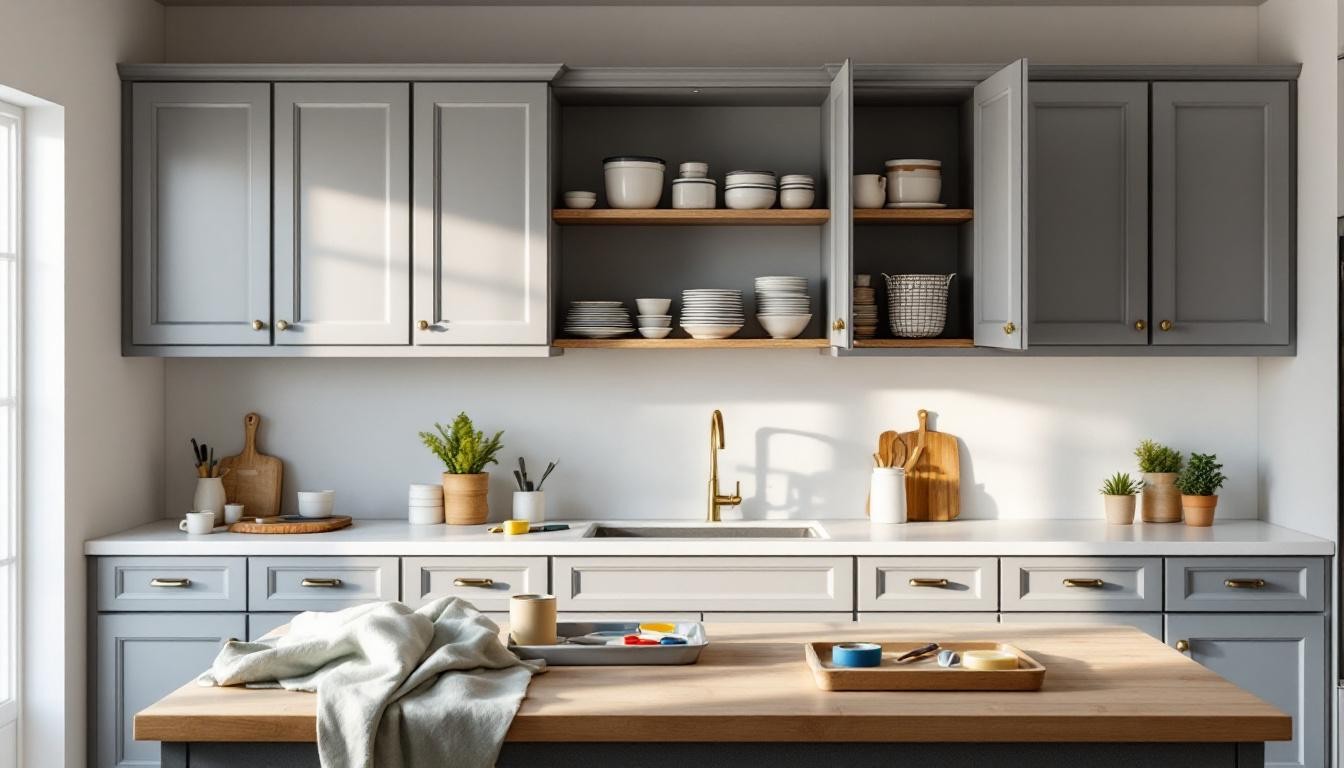
Open shelving works best when used sparingly and strategically. Try limiting open shelves to one wall section or above an island rather than replacing all upper cabinetry. Open shelves demand constant organization since everything is visible, making them impractical as primary storage in compact spaces. Instead, use them to display frequently used items like everyday dishes or cookbooks. Install open shelves at eye level or slightly above for visual balance and easy access.
Balance Closed and Open Storage
Closed storage should handle 70% to 80% of your kitchen storage needs, with open shelving serving a secondary role for both function and aesthetics. This ratio keeps your compact kitchen organized and prevents visual clutter. The combination of hidden storage and strategic open display creates a kitchen that feels both spacious and intentional.
A well-planned work triangle that minimizes movement between your sink, stove, and refrigerator directly improves how your storage layout functions in daily life. When you plan your storage strategy this way, you set the foundation for a layout that actually works for daily life-which brings us to how you arrange that storage within your kitchen’s footprint.
Layout and Design Strategies That Work
Galley kitchens and single-wall layouts dominate compact kitchen redesigns in Arlington, Vienna, and Tysons because they work with tight footprints rather than against them. A galley kitchen positions appliances and counters along two parallel walls, creating a narrow corridor that minimizes wasted movement. This layout reduces your work triangle distance to just 8 to 12 feet, compared to 26 feet in poorly designed kitchens.
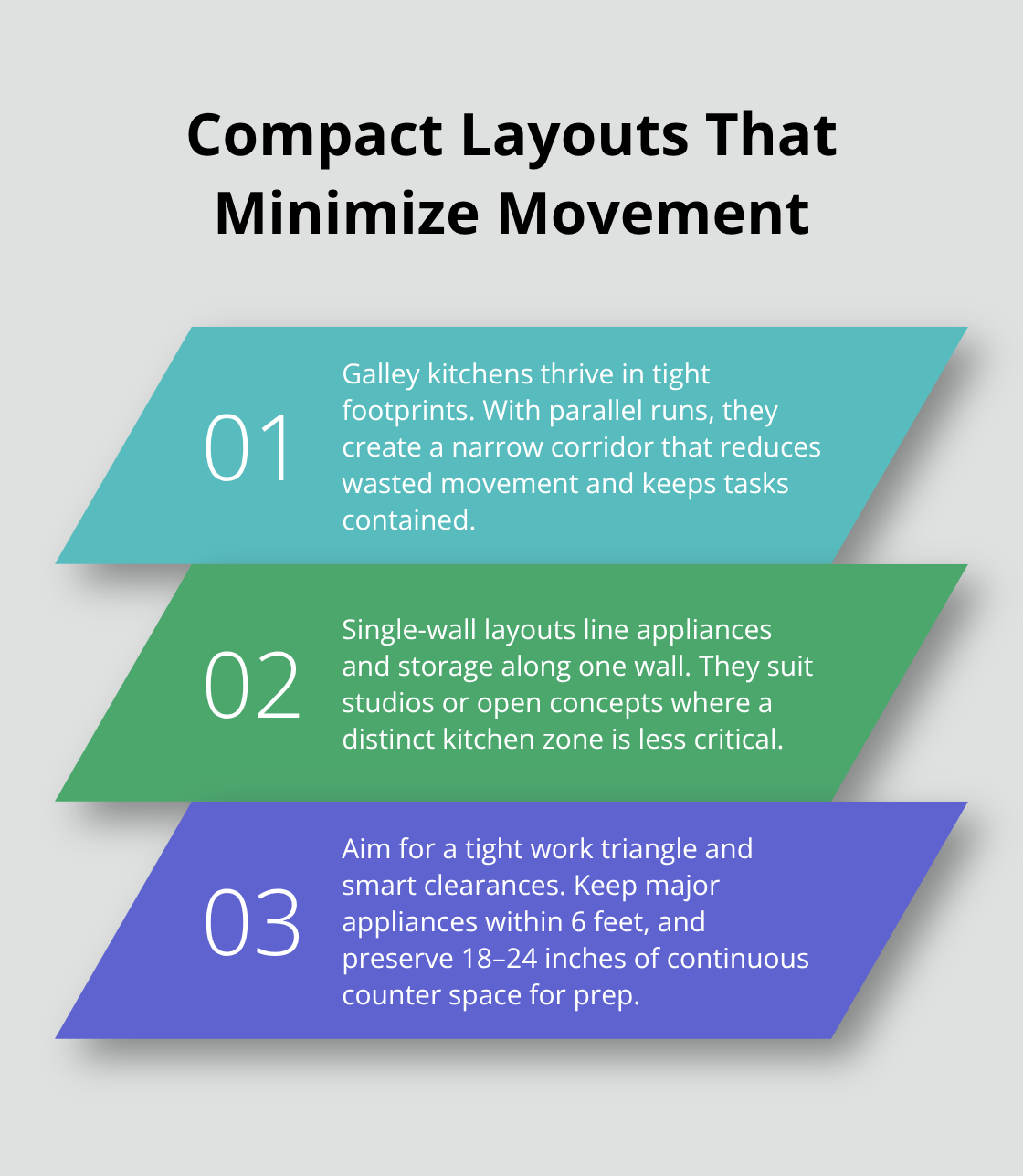
Single-wall kitchens line everything along one wall, ideal for studio apartments or open-concept spaces where a separate kitchen zone matters less.
Position Your Appliances for Maximum Efficiency
Both layouts demand ruthless efficiency with your appliance placement. Your refrigerator, stove, and sink should sit no more than 6 feet apart in compact spaces to eliminate unnecessary steps during meal prep. Placing your sink in the center between refrigeration and cooking creates the tightest, most functional work pattern. Countertop space becomes precious, so position your stove and refrigerator to leave at least 18 to 24 inches of continuous counter space for food preparation. Many Arlington homeowners overlook this detail and end up with unusable sliver counters that frustrate daily cooking.
Prioritize Lighting Over Paint Color
Light colors and reflective surfaces physically expand how your compact kitchen feels, though the effect matters far less than people assume. White, cream, and soft gray cabinetry reflect light and prevent walls from closing in visually, but a dark cabinet color in a well-lit kitchen outperforms pale cabinets in dim spaces. Prioritize lighting over paint color. Install task lighting above your sink and cooktop with bright white or cool white bulbs rated 4000K or higher for visibility during food prep. Recessed lights spaced 4 to 6 feet apart eliminate shadows that make small kitchens feel cramped.
Use Reflective Surfaces and Strategic Backsplashes
A mirrored or light-colored backsplash opposite a window bounces natural light throughout the space more effectively than any paint choice. Quartz countertops in lighter shades reflect light while offering durability that granite or laminate can match only at higher cost. The backsplash deserves real attention in compact kitchens because it covers substantial wall area. White subway tile or light quartz backsplashes work, but consider a bold color or pattern that adds personality without overwhelming the space. A statement backsplash draws the eye upward and outward, making the kitchen feel larger than its square footage suggests.
Maintain Visual Sightlines with Strategic Cabinet Choices
Glass cabinet doors on 30 to 40 percent of your upper cabinetry maintain sightlines and prevent the visual weight that solid cabinets create in tight spaces. This balance between open and closed storage keeps your compact kitchen from feeling boxed in while preserving the functionality you need for daily life. The materials you select and the work zones you establish work together to shape how light moves through your space. Your next decision involves which specific materials and fixtures actually deliver on the promise of a functional compact kitchen.
Materials and Fixtures That Actually Fit Compact Kitchens
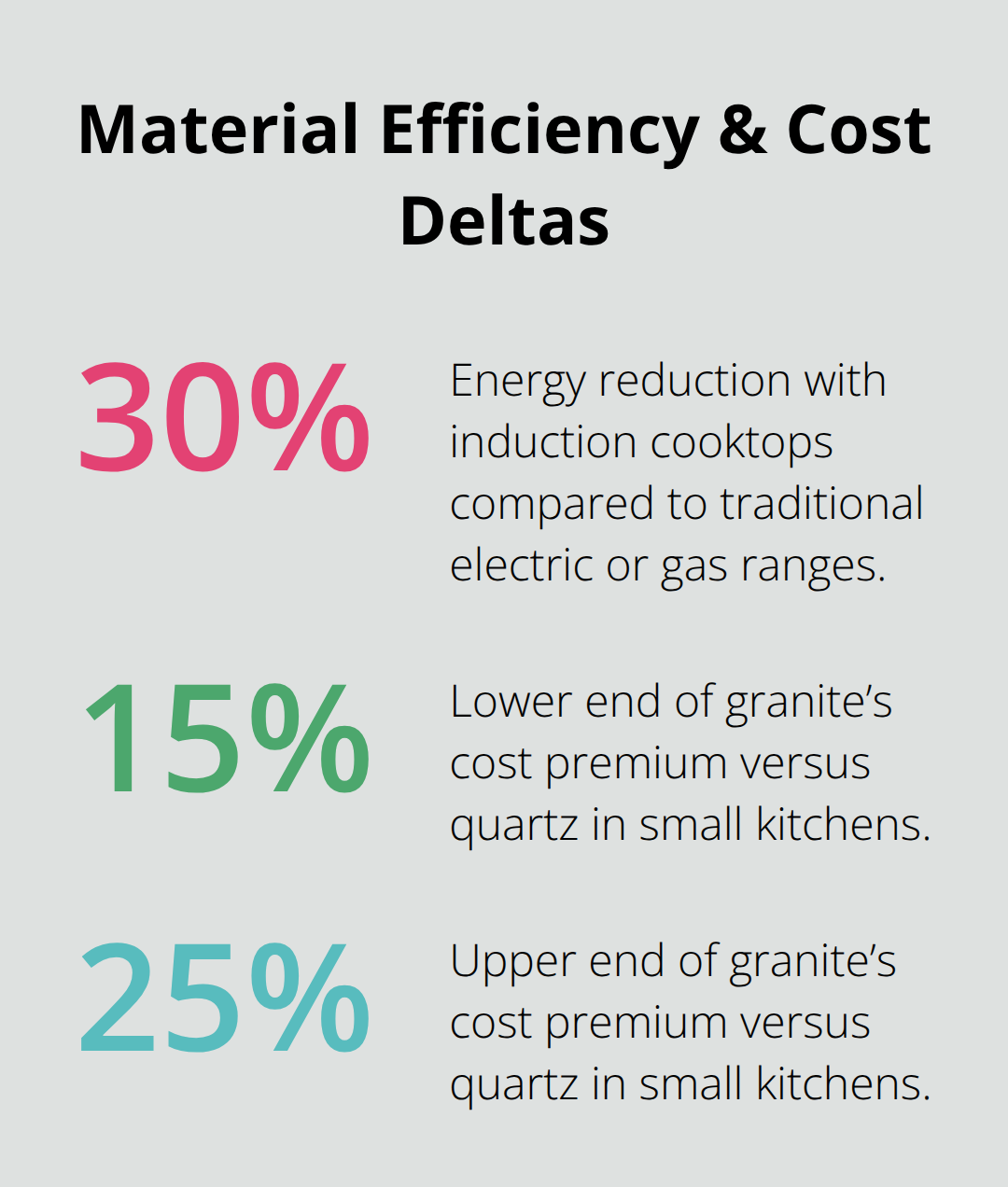
Compact kitchens demand appliances and fixtures that earn their space through genuine versatility, not marketing hype. A standard refrigerator occupies roughly 30 cubic feet of your kitchen footprint, while a cabinet-depth refrigerator reduces that footprint by 6 to 8 inches and creates a seamless line with your cabinetry. This seemingly small difference opens sightlines dramatically and makes your compact kitchen feel less cluttered. Induction cooktops use 30% less energy than traditional electric or gas ranges and require only 21 inches of depth compared to 24 inches for conventional models. Compact dishwashers measure 18 inches wide versus the standard 24-inch model, and they handle the same load capacity for most Arlington and Vienna households. Appliance depth reduction matters far more than brand names because the physical space you recover transforms how your compact kitchen functions daily.
Choose Quartz Over Granite for Small Spaces
Countertops in compact kitchens should prioritize durability and light reflection over trend-following aesthetics. Quartz countertops deliver superior performance in small spaces because they resist staining without sealing, require minimal maintenance, and come in 40+ color options that reflect light effectively. Granite demands regular sealing and costs 15 to 25% more than quartz while offering no functional advantage in compact kitchens. A light quartz surface opposite a window bounces natural light throughout your space more effectively than any paint color or backsplash choice.
Design Backsplashes That Draw the Eye Upward
For backsplashes, white subway tile or light quartz work well, but a bold-colored or patterned backsplash actually performs better visually because it draws the eye upward and makes ceilings feel higher. The backsplash covers substantial wall area in compact kitchens, so this choice shapes how light and attention move through the space. A statement backsplash adds personality without overwhelming tight square footage.
Eliminate Visual Clutter with Recessed Hardware
Hardware selection matters more than most homeowners realize: skip visible cabinet handles entirely and instead install touch-to-open cabinet doors or recessed pulls that eliminate visual clutter. This single choice removes hundreds of small visual interruptions that make compact kitchens feel chaotic. Recessed pulls cost roughly $8 to $15 per cabinet compared to $3 to $5 for standard handles, but the visual payoff justifies the investment in spaces under 100 square feet (especially when combined with quality countertops and strategic lighting).
Final Thoughts
A compact kitchen redesign transforms how you cook, eat, and live in Arlington, Vienna, and Tysons homes. The compact kitchen redesign tips throughout this guide work because they address real constraints: limited floor area, tight storage, and visual clutter. Vertical cabinetry, pull-out organizers, strategic lighting, and quality materials like quartz countertops deliver measurable improvements in both function and aesthetics.
Professional redesign accelerates this transformation because contractors handle the details that homeowners often overlook. We at Dzala General Contractor manage everything from initial design through final installation, eliminating coordination headaches that derail DIY projects. Our team handles permits, material selection, appliance placement, and the precise measurements that separate functional kitchens from frustrating ones (and protect your investment through proper installation that lasts decades).
Contact Dzala General Contractor for a free design consultation where you can discuss your vision and see how professional redesign transforms small spaces. We serve Arlington, Vienna, Tysons, and surrounding Northern Virginia communities with the craftsmanship that compact kitchens demand.