Kitchen remodels in Arlington, Vienna, and Tysons often spiral over budget because homeowners skip the planning phase. We at Dzala General Contractor have seen projects derail when people don’t establish clear kitchen remodel budget tips upfront.
This guide walks you through realistic budgeting, smart cost-saving strategies, and how to work with contractors to keep your project on track. You’ll learn exactly where your money goes and how to avoid expensive surprises.
What Should You Budget for a Kitchen Remodel in Your Area?
Understanding Local Costs in Arlington, Vienna, and Tysons
Kitchen remodels in Arlington, Vienna, and Tysons cost significantly more than national averages. Arlington’s cost of living sits at 168.7 on Sperling’s Best Places index versus the national average of 100, which directly inflates remodeling prices. Expect quotes 15% to 25% higher than national averages due to regional labor costs and material pricing.
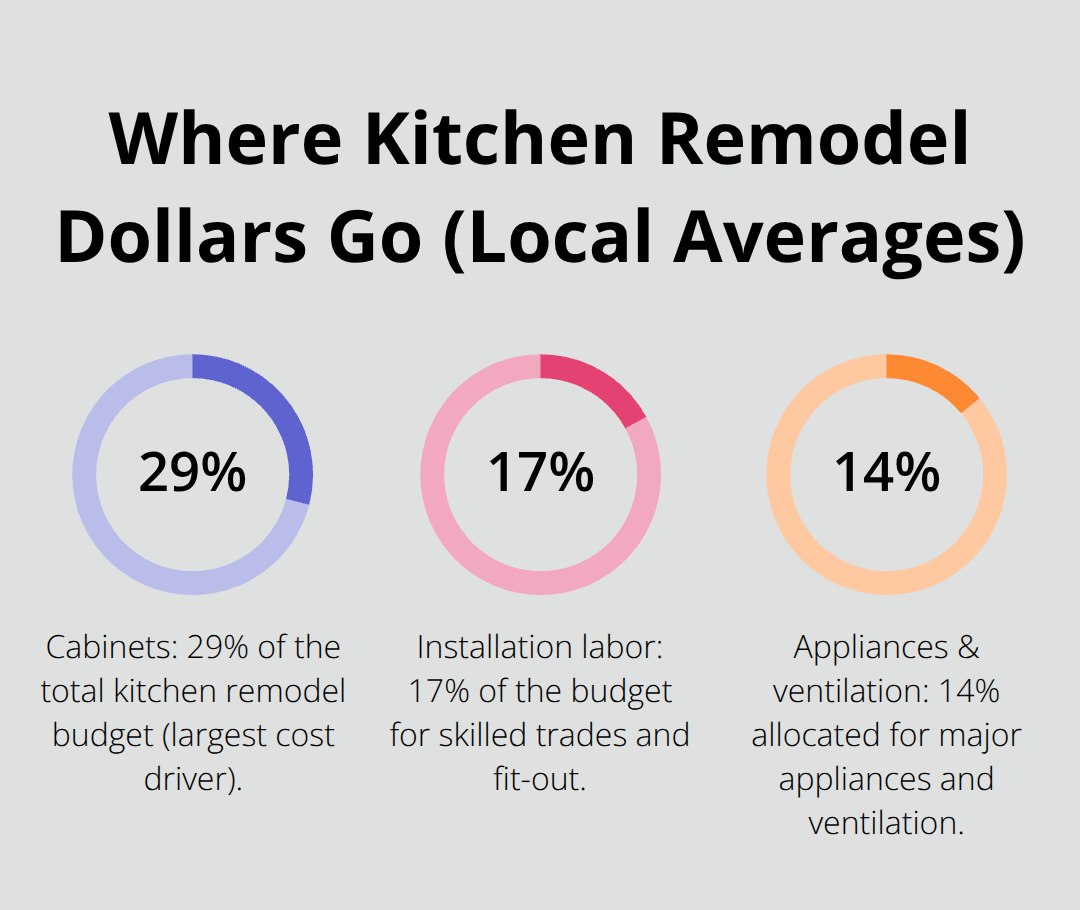
Cabinets consume roughly 29% of your total budget, making them the single largest expense at around $6,670 on average. Appliances and ventilation run about 14% or $3,220, while countertops account for 10% at approximately $2,300. Flooring typically represents 7% of costs at $1,610, and lighting makes up 5% at roughly $1,150. Installation labor takes another 17% of your budget.
These percentages matter because they show where your money actually goes, not where marketing claims suggest it should go. The most common mistake homeowners make is setting a budget without understanding these local cost breakdowns, then panicking when contractors deliver realistic quotes.
Assess What Your Kitchen Actually Needs
Walk through your kitchen and honestly assess what works and what doesn’t. If your cabinets are structurally sound but visually dated, cabinet refacing costs significantly less than replacement. If your plumbing and electrical lines are in good condition and you can keep them where they are, you’ll save thousands immediately. Moving plumbing or electrical lines adds substantial costs that most homeowners underestimate.
Prioritize ruthlessly: new cabinets and appliances create the biggest visual impact, while a fresh backsplash or paint job costs far less but still refreshes the space. Decide what must happen versus what would be nice to have, then allocate your budget accordingly. This assessment prevents you from chasing cosmetic upgrades while essential repairs go unaddressed.
Set Your Total Budget with Real Numbers
Set your total kitchen remodel budget at 5% to 15% of your home’s value. For a $400,000 home in Arlington or Vienna, this means planning $20,000 to $60,000. Allocate 10% to 15% of your total budget as a contingency fund for unforeseen issues (like hidden water damage or outdated wiring discovered during demolition).
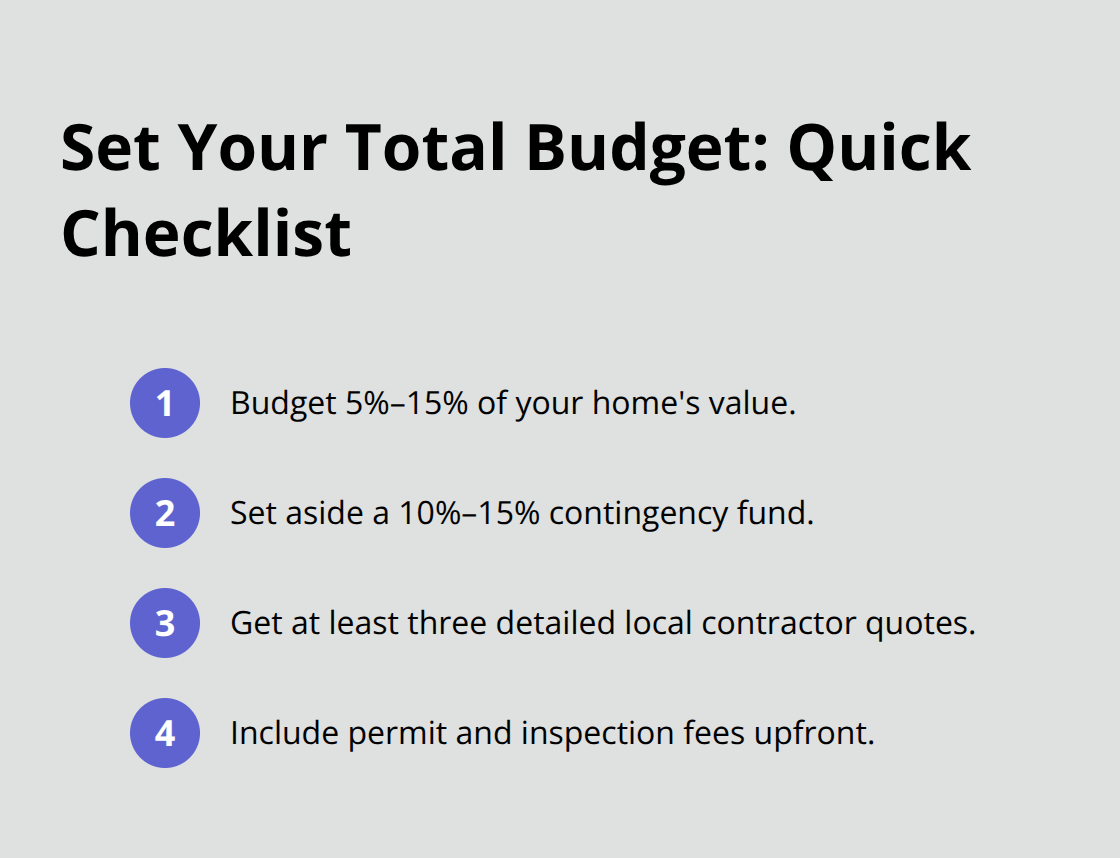
Get at least three detailed quotes from local contractors, ensuring each one specifies exactly what work is included and what materials will be used. Vague quotes hide cost surprises.
Once you have multiple quotes, you can benchmark pricing and identify which contractors offer genuine value versus inflated estimates. Include permit and inspection fees in your initial budget calculations, as Arlington County requires permits for most kitchen work under the Virginia Uniform Statewide Building Code. These upfront numbers form the foundation for everything that follows, so accuracy here prevents budget chaos later.
Where Your Money Actually Goes
Material Choices That Balance Cost and Performance
Material choices determine whether your kitchen remodel stays on budget or spirals into unexpected expenses. Laminate countertops cost roughly $25 to $40 per square foot, while granite runs $50 to $100 per square foot, yet both perform admirably in a kitchen when properly sealed and maintained. Vinyl or linoleum flooring at $2 to $5 per square foot handles kitchen spills and foot traffic just as reliably as ceramic tile at $5 to $15 per square foot, minus the installation complexity and labor costs. Cabinet refacing rather than full replacement saves 40% to 50% on your cabinet budget while delivering nearly identical visual results.
Homeowners often obsess over marble backsplashes costing $15 to $25 per square foot when ceramic subway tile at $1 to $3 per square foot creates the same modern aesthetic. Your material strategy should prioritize durability over prestige, which means choosing items that last longer rather than items that sound more expensive. Appliances represent your second-largest expense category at roughly 14% of budget, yet mid-range stainless steel models perform identically to premium brands on reliability metrics.
Splurge on the faucet alone-a quality faucet costs $200 to $500 but lasts 15 to 20 years without leaking or corroding, while cheap faucets fail within 5 to 7 years and require replacement during your ownership. This single investment pays dividends throughout your kitchen’s lifespan.
Layout Planning Prevents Expensive Infrastructure Changes
Layout decisions made during planning phase prevent the most expensive mistakes. Keep your sink, stove, and refrigerator in their current locations to save thousands because you avoid relocating plumbing and electrical lines. Moving plumbing alone adds $2,000 to $5,000 depending on complexity and wall access. Gas line installations, if unnecessary, add another $1,500 to $3,000 that many homeowners regret after the project concludes.
Plan your layout around existing infrastructure rather than against it. This approach respects both your budget and your timeline, allowing contractors to focus on visible improvements rather than hidden structural work.
Timing and Contractor Selection Shape Your Final Costs
Timing your project matters less than most contractors suggest, yet spring and early summer bring slightly higher labor costs because demand peaks. Late fall and winter see 5% to 10% lower contractor availability and potentially better negotiating power, though weather delays become a minor risk factor in Arlington, Vienna, and Tysons. Obtain quotes from at least three contractors and compare their material recommendations alongside pricing, because one contractor might specify premium finishes while another suggests durable mid-range alternatives that fit your budget better. This comparison reveals which contractors understand value-driven remodeling versus those who simply chase higher price points.
How to Compare Contractor Quotes and Protect Your Budget
Request Detailed Quotes That Enable Real Comparison
Comparing contractor quotes requires more than glancing at bottom-line numbers. Request detailed quotes from at least three local contractors serving Arlington, Vienna, and Tysons, and insist each quote breaks down labor costs separately from material costs, specifies exact appliance models and cabinet specifications, and lists every task included in the scope. A vague quote stating cabinets cost $6,000 tells you nothing, while a detailed quote specifying semi-custom maple cabinets with soft-close hinges and dovetail joinery at $6,000 lets you compare apples to apples across contractors. Many homeowners receive wildly different quotes not because one contractor is dishonest, but because they price different quality levels or material specifications. Request that each contractor use the same materials list so your comparison becomes meaningful.
Investigate Price Differences Before Committing
When one quote runs 30% higher than others, ask specifically what differs in their approach, materials, or timeline. Sometimes the premium reflects superior craftsmanship or faster completion, other times it reflects inflated pricing. Demand clarity before signing anything. A contractor who finishes in three weeks versus six weeks may justify higher costs through efficiency and minimal disruption to your home. Another contractor charging more simply because they operate with higher overhead deserves scrutiny. Your job is to understand what you actually receive for each dollar spent, not to chase the lowest number.
Structure Contracts and Payments to Protect Your Investment
Fixed-price contracts with itemized payment schedules protect you far better than time-and-materials agreements that encourage slow work. Structure payments so the contractor receives 30% upfront to purchase materials, 40% at project midpoint upon inspection, and 30% upon final completion and walkthrough. Never pay the full amount before work starts, and never withhold final payment until punch-list items are genuinely complete.
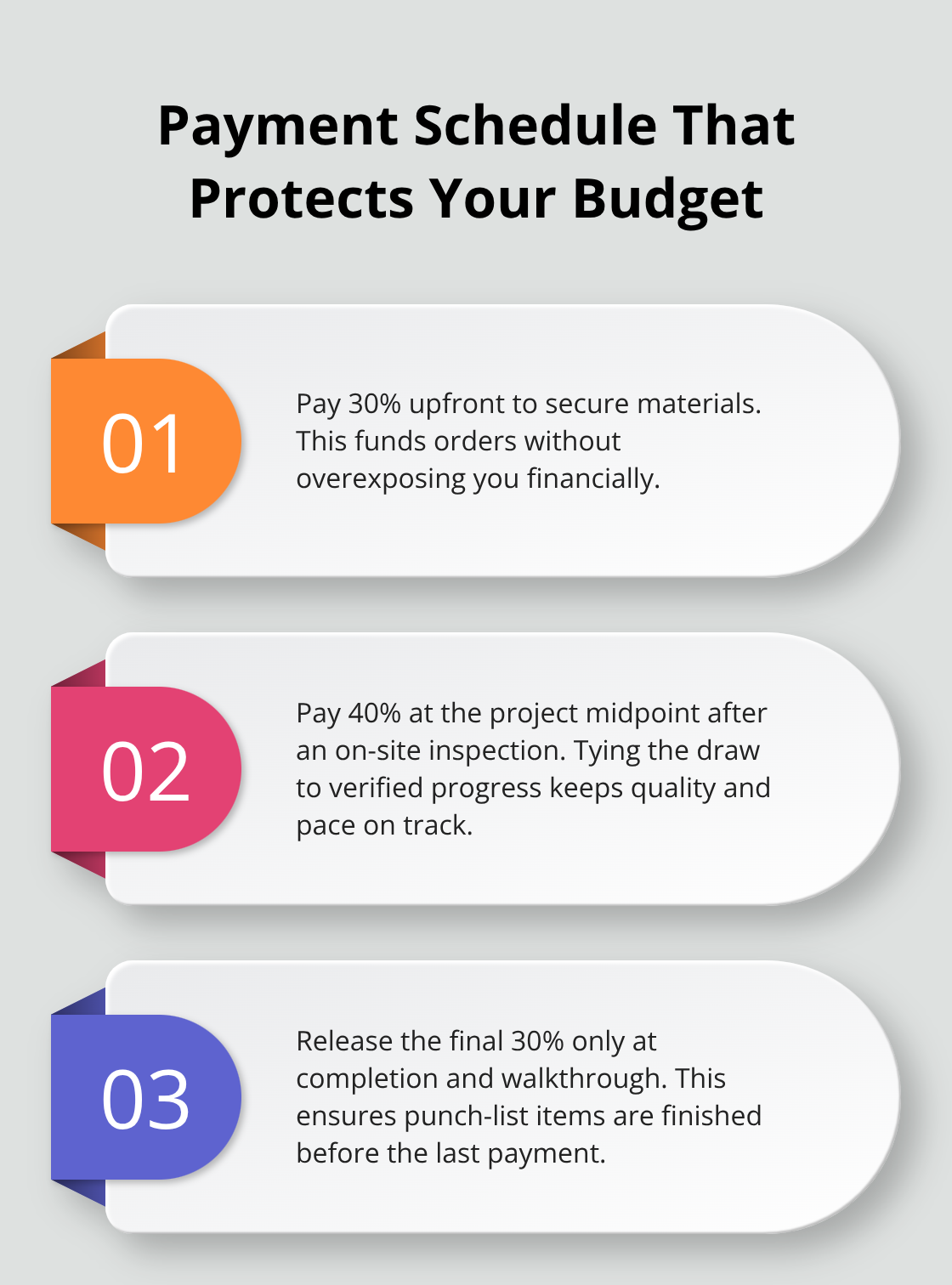
This payment structure aligns contractor incentives with your interests-they want to finish efficiently and maintain quality to receive their final payment.
Establish Clear Change Order Procedures
Establish a written change order process requiring your written approval and adjusted pricing before any scope modifications occur, because verbal agreements about small additions destroy budgets faster than any other factor. A contractor who suggests adding a window or relocating an outlet mid-project should provide a written change order showing the exact cost impact and timeline adjustment. You review it, approve it in writing, and only then does the work proceed. This discipline prevents scope creep that transforms a $35,000 project into a $50,000 project through accumulated small decisions.
Maintain Documentation and Regular Communication
Maintain regular communication through weekly check-ins where you walk the job site, review progress against the timeline, and address concerns immediately rather than letting them compound. Request photo documentation of work at each stage so you have visual records of what was completed and when. This documentation proves invaluable if disputes arise about work quality or payment timing. Clear contracts with explicit terms, detailed scopes, and structured payment schedules transform the contractor relationship from adversarial to collaborative, keeping your kitchen remodel on budget and on schedule.
Final Thoughts
Budget-friendly kitchen remodels succeed when you plan before you spend, and the kitchen remodel budget tips throughout this guide share one common theme: decisions made during planning prevent expensive mistakes during construction. Assess your kitchen honestly, set realistic numbers based on Arlington, Vienna, and Tysons pricing, and allocate contingency funds for surprises. Material choices matter far more than brand names, layout stability saves thousands compared to infrastructure changes, and contractor selection determines whether your project stays on track or spirals into frustration.
Professional guidance transforms kitchen remodeling from stressful guesswork into manageable execution, as experienced contractors understand local building codes, material performance, and realistic timelines in ways that homeowners cannot replicate through research alone. They identify cost-saving opportunities you’d miss, prevent expensive mistakes before they happen, and navigate permit requirements without delays. Starting your kitchen remodel journey means scheduling a consultation with contractors who serve your area and requesting detailed quotes that compare material specifications alongside pricing.
Request detailed quotes, compare what each contractor proposes, and ask questions until you fully understand the scope and costs involved. Review contracts carefully, establish clear payment schedules, and maintain regular communication throughout the project (these steps separate successful remodels from budget disasters). Contact us for a free consultation and a detailed quote tailored to your kitchen’s specific needs and your budget constraints.