Basement water damage costs homeowners in Arlington, Virginia, Vienna, and Tysons an average of $2,500 to $10,000 per incident, according to the National Association of Home Builders. Most of these problems are preventable with the right approach.
We at Dzala General Contractor have helped hundreds of homeowners stop leaks before they become expensive repairs. This guide covers basement waterproofing basics, from identifying what causes water intrusion to implementing solutions that actually work.
What Causes Water to Enter Your Basement
Foundation Cracks and Structural Movement
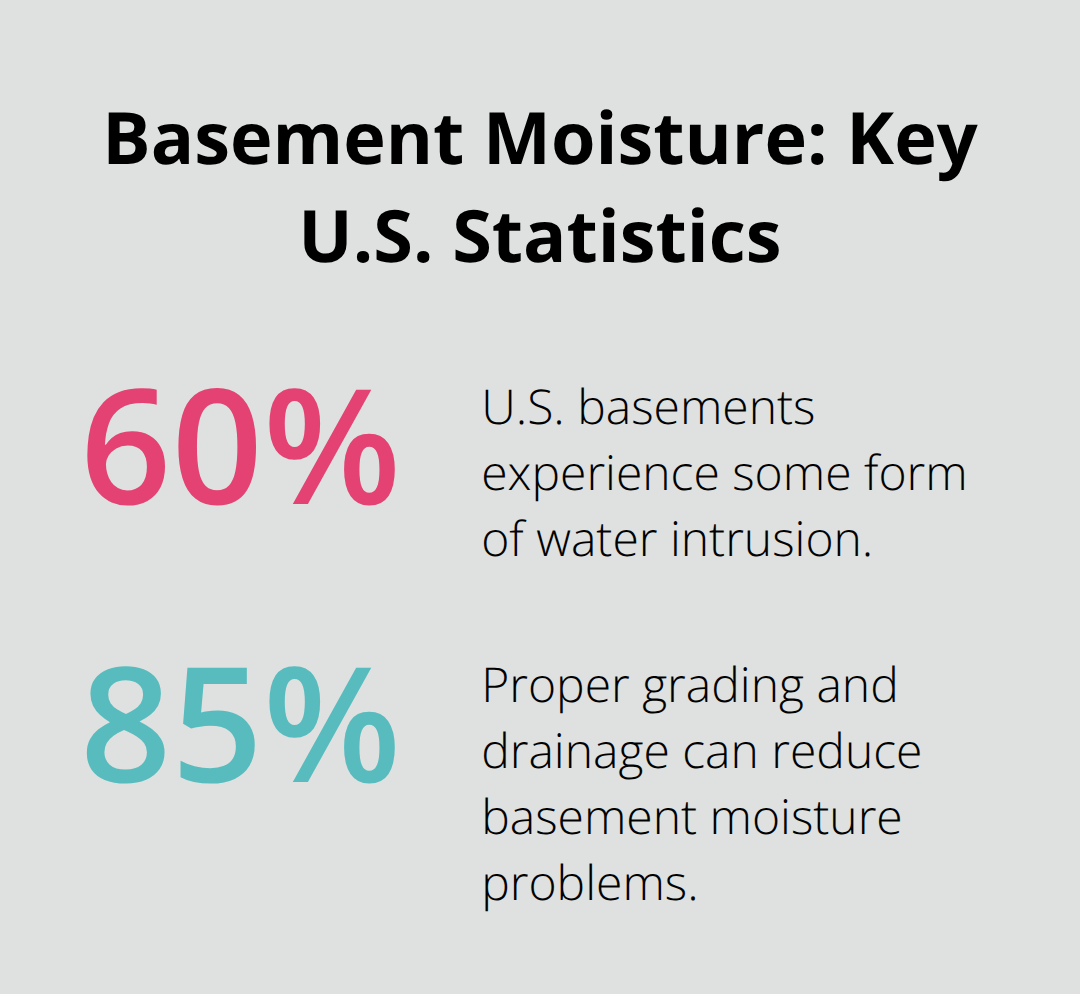
Foundation cracks are the most direct path water takes into your basement, and they’re far more common than homeowners realize. The American Society of Civil Engineers reports that roughly 60% of basements in the United States experience some form of water intrusion, with foundation cracks accounting for a significant portion of these cases.
Concrete settles, freeze-thaw cycles crack the material, and soil movement around your foundation creates stress on the structure. In Arlington, Vienna, and Tysons, the clay-heavy soil expands when wet and contracts when dry, creating pressure that widens existing cracks year after year.
Small hairline cracks you can barely see today become pathways for serious water damage within two to three seasons. Most homeowners don’t inspect their foundations regularly, so cracks go unnoticed until water already appears in the basement. This delay transforms a manageable repair into a costly emergency.
Poor Drainage and Grading Problems
Poor drainage around your foundation is equally destructive, though less obvious. When gutters overflow, downspouts empty too close to the foundation, or grading slopes toward your house instead of away from it, water pools against your foundation walls. This standing water exerts hydrostatic pressure, which is the force of water pushing against your foundation from all sides.
The U.S. Environmental Protection Agency indicates that proper grading and drainage can reduce basement moisture problems by up to 85%. In our region, many homes were built decades ago when drainage standards were less stringent, meaning the grading around older foundations often slopes inward. Fixing this means extending downspouts at least 4 to 6 feet away from the foundation and regrading soil to slope downward at least 6 inches over the first 10 feet (a standard that protects most residential properties).
These aren’t optional improvements; they’re the difference between a dry basement and one that floods every spring. Water that pools against your foundation doesn’t just sit there-it searches for cracks, gaps, and weak points in your structure.
Hydrostatic Pressure and Water Seepage
Hydrostatic pressure builds when water accumulates in the soil around your foundation, and this force pushes water through even tiny openings. The pressure increases with depth, meaning basements experience more force than crawl spaces. Homeowners often underestimate how powerful this pressure becomes during heavy rain or spring snowmelt.
Water seepage through foundation walls happens gradually at first, then accelerates once the initial barrier fails. You might notice damp spots on walls, efflorescence (white mineral deposits), or musty odors before you see actual pooling water. These warning signs indicate that water has already begun its journey through your foundation, and the next chapter covers the waterproofing methods that stop this intrusion before it causes structural damage.
Waterproofing Methods and Solutions
Interior Waterproofing: A Reactive Approach
Interior waterproofing works from inside your basement after water has already breached the foundation, making it a reactive solution rather than a preventive one. Interior sealants, epoxy injections, and interior drainage systems manage water that’s already present, but they don’t address the root cause. Water continues to find its way through your foundation walls if the exterior conditions remain unchanged. Interior waterproofing costs between $1,500 and $3,000 for an average basement, yet homeowners often discover they need exterior work afterward. Interior waterproofing serves best as a temporary measure or for managing minor seepage while you plan more comprehensive exterior solutions.
Exterior Waterproofing: The Superior Choice
Exterior waterproofing prevents water from reaching your foundation in the first place, which makes it the superior approach. This involves excavating around your foundation, applying waterproof membranes to the exterior walls, and installing perimeter drainage systems that channel water away from the structure. The upfront cost runs higher-typically $5,000 to $15,000 depending on your home’s size and soil conditions-but exterior waterproofing eliminates the problem rather than managing symptoms. In Arlington, Vienna, and Tysons, homes built on expansive clay soil especially benefit from this approach since the soil movement that causes foundation stress also increases water pressure against your basement walls.
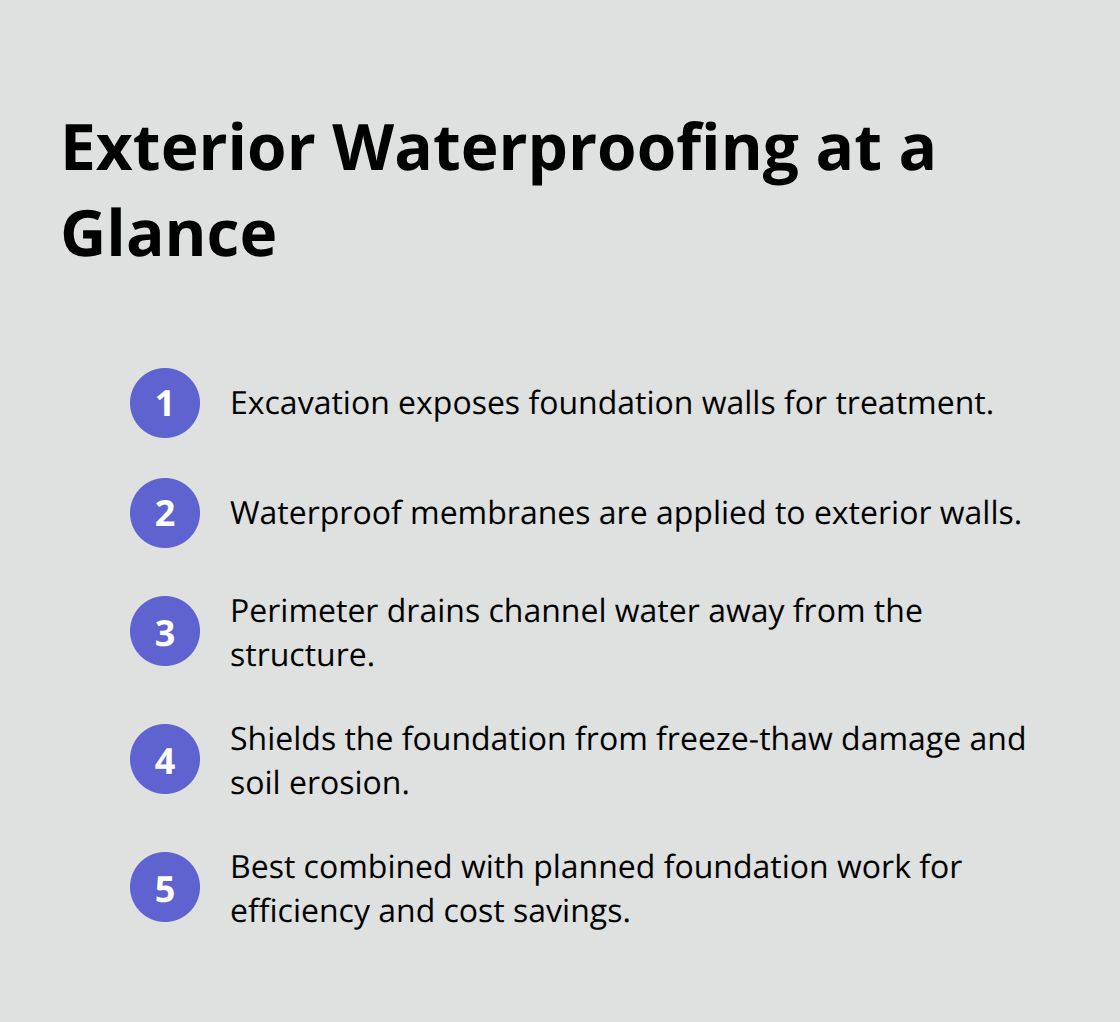
Exterior systems also protect your foundation from freeze-thaw damage and soil erosion, extending the life of your structure by decades. If you’re planning any foundation work anyway, combining it with exterior waterproofing makes financial sense.
Sump Pumps: Your Last Line of Defense
Sump pumps serve as your basement’s last defense against standing water, but they’re not a waterproofing solution. A sump pump removes water that has already entered your basement, typically activated when water levels rise in a collection pit. Quality sump pumps cost $400 to $800 installed and can move 2,000 to 3,000 gallons per hour depending on the model. The Home Improvement Research Institute reports that sump pumps typically last 7 to 10 years before requiring replacement. Homeowners who rely solely on sump pumps often discover during power outages that their basements flood within hours of heavy rain. Sump pumps work best as a complement to exterior waterproofing and proper grading, not as a substitute. If you install a sump pump, add a battery backup system costing $500 to $1,200, which keeps the pump operational during power failures.
Drainage Systems and Grading Work Together
French drains and perimeter drainage systems collect water before it reaches your foundation and direct it away from your home. These systems work by creating pathways for water to flow downhill or toward a sump pump rather than pooling against your foundation walls. Installation costs $1,500 to $4,000 depending on the perimeter length and soil conditions. Proper grading around your foundation-sloping soil away at the rate of 6 inches over the first 10 feet-works alongside drainage systems to prevent water accumulation. Many homeowners in our region have homes where original grading has settled or shifted, requiring professional regrading to restore proper slope. Combining regrading with downspout extensions and foundation drainage creates a comprehensive exterior system that addresses all three causes of basement water intrusion. Once your exterior defenses are in place, regular maintenance becomes the key to keeping water out for decades to come.
Maintenance Tips to Prevent Future Water Damage
Foundation Inspections Catch Problems Early
Waterproofing systems fail when homeowners stop paying attention after installation. The exterior membrane that cost $10,000 to install deteriorates silently under soil and weather exposure. A foundation inspection every two years catches problems before they compromise your system. Schedule these inspections in spring after freeze-thaw cycles and after heavy rain seasons when new cracks are most likely to form. Walk your basement perimeter yourself quarterly, looking for efflorescence, damp patches, or musty odors that signal moisture breakthrough. These early warnings give you time to address issues before water actually pools in your living space.
Gutter and Downspout Management
Your gutters and downspouts demand more attention than most homeowners realize. Gutters clogged with leaves and debris overflow during rain, dumping water directly against your foundation walls instead of channeling it away.
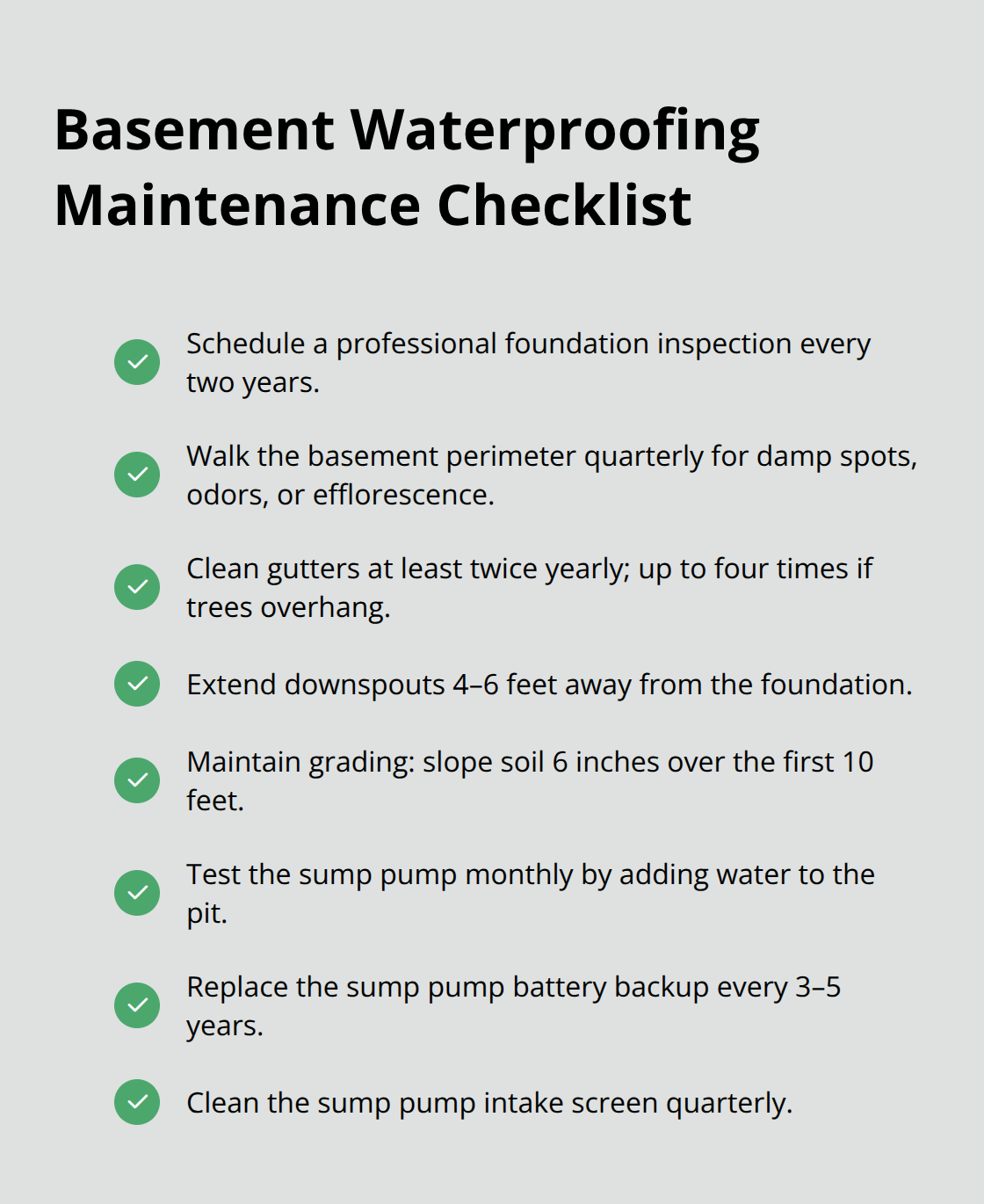
The National Association of Home Inspectors recommends gutter cleaning at least twice yearly, in fall after leaf drop and in spring before heavy rains. If trees overhang your roof, increase cleaning frequency to four times yearly.
Downspouts must extend 4 to 6 feet from your foundation, and this distance matters enormously in Arlington, Vienna, and Tysons where spring snowmelt and heavy thunderstorms concentrate water volumes. Check downspout extensions after storms to confirm they haven’t shifted or separated. Many homeowners install downspout extensions and forget about them, allowing soil movement or debris to misalign them back toward the foundation.
Basement Sealing and Caulking Best Practices
Basement caulking around windows, rim joists, and utility penetrations deteriorates faster than you’d expect. Inspect these areas annually and replace caulk that cracks, shrinks, or pulls away from the surface. Quality exterior-grade caulk costs $5 to $15 per tube and lasts 5 to 10 years before requiring replacement. Interior sealants on foundation walls also degrade, especially in basements that experience temperature fluctuations. If you notice hairline cracks reappearing in sealed areas, the sealant has failed and needs reapplication.
Sump Pump Maintenance and Testing
Sump pump maintenance is equally critical to your waterproofing system’s success. Test your pump monthly by pouring water into the pit to confirm it activates and drains properly. Replace the battery backup system every 3 to 5 years, and clean the intake screen quarterly to prevent clogs that disable the pump during heavy rain. A sump pump that fails during a storm leaves your basement defenseless, so these maintenance tasks directly protect your investment in waterproofing.
Final Thoughts
Basement waterproofing basics rest on three core principles: prevent water from reaching your foundation, manage water that breaches your defenses, and maintain your systems consistently. The 60% of American basements experiencing water intrusion didn’t fail overnight-they failed because homeowners treated symptoms instead of addressing root causes. Exterior waterproofing, proper grading, and functional drainage systems work together to prevent the $2,500 to $10,000 in damage that homeowners in Arlington, Vienna, and Tysons face per incident.
Your foundation remains structurally sound for decades longer when you protect it from water damage and freeze-thaw cycles. Mold growth stops before it becomes a health hazard, and your home’s resale value increases because buyers recognize a waterproofed basement as a solved problem rather than a liability. The $5,000 to $15,000 investment in exterior waterproofing pays for itself through avoided emergency repairs and preserved property value.
Walk your foundation perimeter and note any cracks, efflorescence, or damp spots you observe. Check whether your gutters overflow, your downspouts empty too close to the house, or your grading slopes inward-these observations tell you whether you need comprehensive exterior work or targeted maintenance. Contact Dzala General Contractor to discuss your basement waterproofing needs and protect your investment for decades to come.