A sunroom addition transforms how you use your home, adding valuable square footage and connecting you to natural light year-round. Whether you’re in Arlington, Vienna, or Tysons, we at Dzala General Contractor know that sunroom addition ideas need to balance aesthetics, functionality, and local building requirements.
This guide walks you through design styles, climate control strategies, and the permitting process specific to Northern Virginia. You’ll learn what it takes to build a sunroom that works for your lifestyle and your budget.
Which Sunroom Style Fits Your Home in Arlington, Vienna, or Tysons
Modern Minimalist Sunrooms
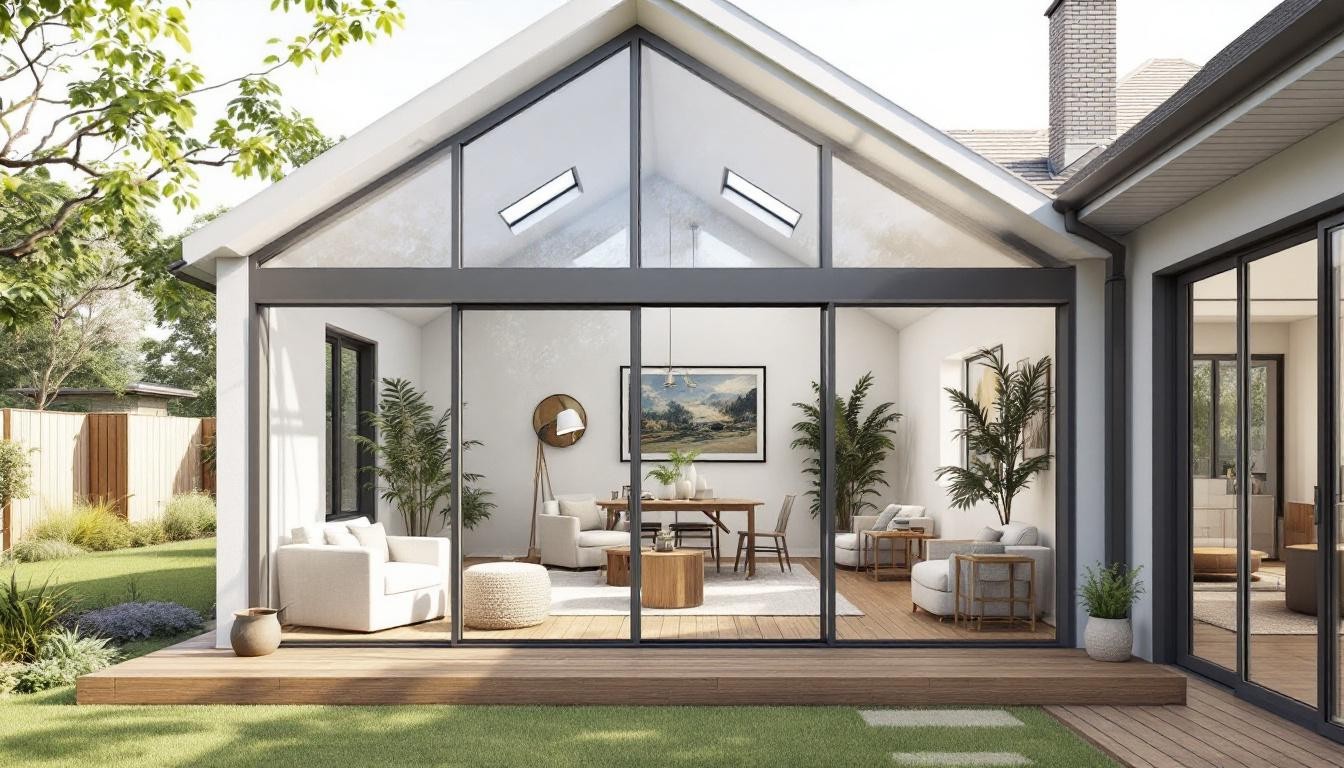
Modern minimalist sunrooms work best if your home features clean lines and open floor plans. These designs strip away excess ornamentation and rely on expansive glass walls, simple steel frames, and neutral color palettes. In Arlington and Vienna, where many homes blend contemporary and mid-century architecture, minimalist sunrooms create a seamless transition between interior and exterior spaces. The strength of this approach is efficiency: fewer materials mean faster construction timelines and lower labor costs.
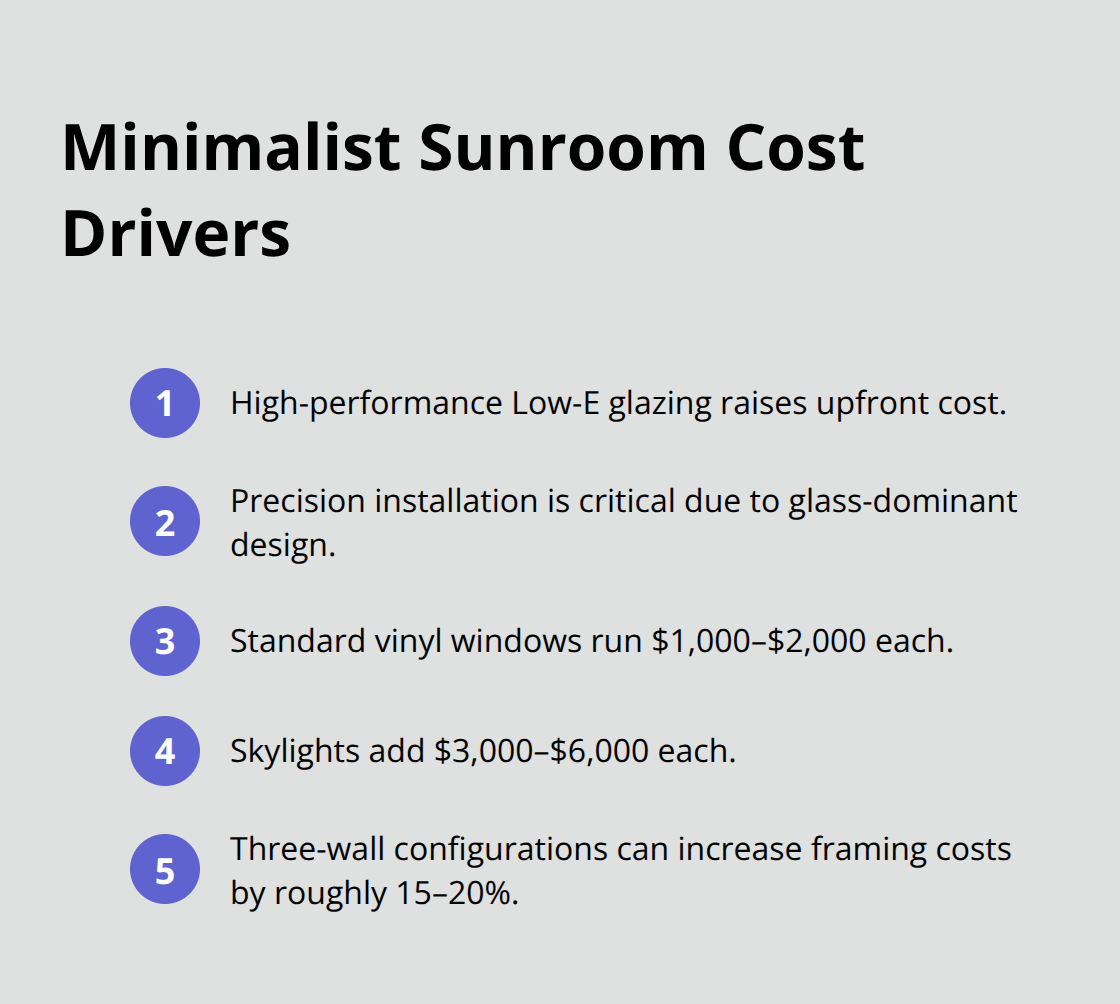
However, minimalist sunrooms demand high-quality glazing and precise installation because the glass becomes the design focal point. Energy-efficient Low-E glazing costs more upfront but reduces heating and cooling loads significantly in Virginia’s variable climate. Standard vinyl windows run $1,000–$2,000 per window, while skylights add $3,000–$6,000 each. If your sunroom includes minimal wall coverage, three new exterior walls replace two, which increases material and framing expenses by roughly 15–20%.
Traditional and Classic Designs
Traditional and classic designs anchor sunrooms to architectural heritage, making them ideal for Vienna’s established neighborhoods where homes feature pitched roofs, brick exteriors, and period details. These sunrooms incorporate sloped roofs, matching exterior materials, and interior finishes that echo the main house. Brick veneer costs $30–$50 per square foot compared to vinyl siding at $8–$12 per square foot, so material selection directly impacts your budget. Sloped roofs cost approximately $20–$30 per square foot to frame and shingle, while vaulted ceilings add $20–$40 per square foot due to extra framing labor.
Contemporary Glass-Enclosed Spaces
Contemporary glass-enclosed spaces occupy the middle ground, featuring large window walls with modern framing systems but retaining design flexibility. In Tysons and Arlington, where architectural diversity is common, contemporary designs appeal to homeowners wanting bright, open spaces without committing to either minimalist or traditional aesthetics. Flat roofs with membranes cost $25–$40 per square foot and suit contemporary additions.
Location and Structural Impact on Costs
The location of your sunroom matters significantly: ground-level additions typically run $350–$400 per square foot, while second-story expansions reach $400–$500+ per square foot due to structural demands and extended HVAC ductwork. If your sunroom connects on only one wall to the existing house, you build three new exterior walls, which raises per-square-foot pricing substantially compared to two-wall connections. These structural decisions directly influence your permitting requirements and construction timeline in Arlington, Vienna, and Tysons.
Making Your Sunroom Comfortable Year-Round
Climate Control Systems That Work in Northern Virginia
A sunroom that looks beautiful but feels uncomfortable in summer heat or winter cold wastes money and space. In Arlington, Vienna, and Tysons, where temperatures swing from below freezing to above 90 degrees Fahrenheit, climate control separates a usable addition from an expensive decoration. The decision between tapping into your existing HVAC system and installing a separate mini-split system determines both comfort and cost.
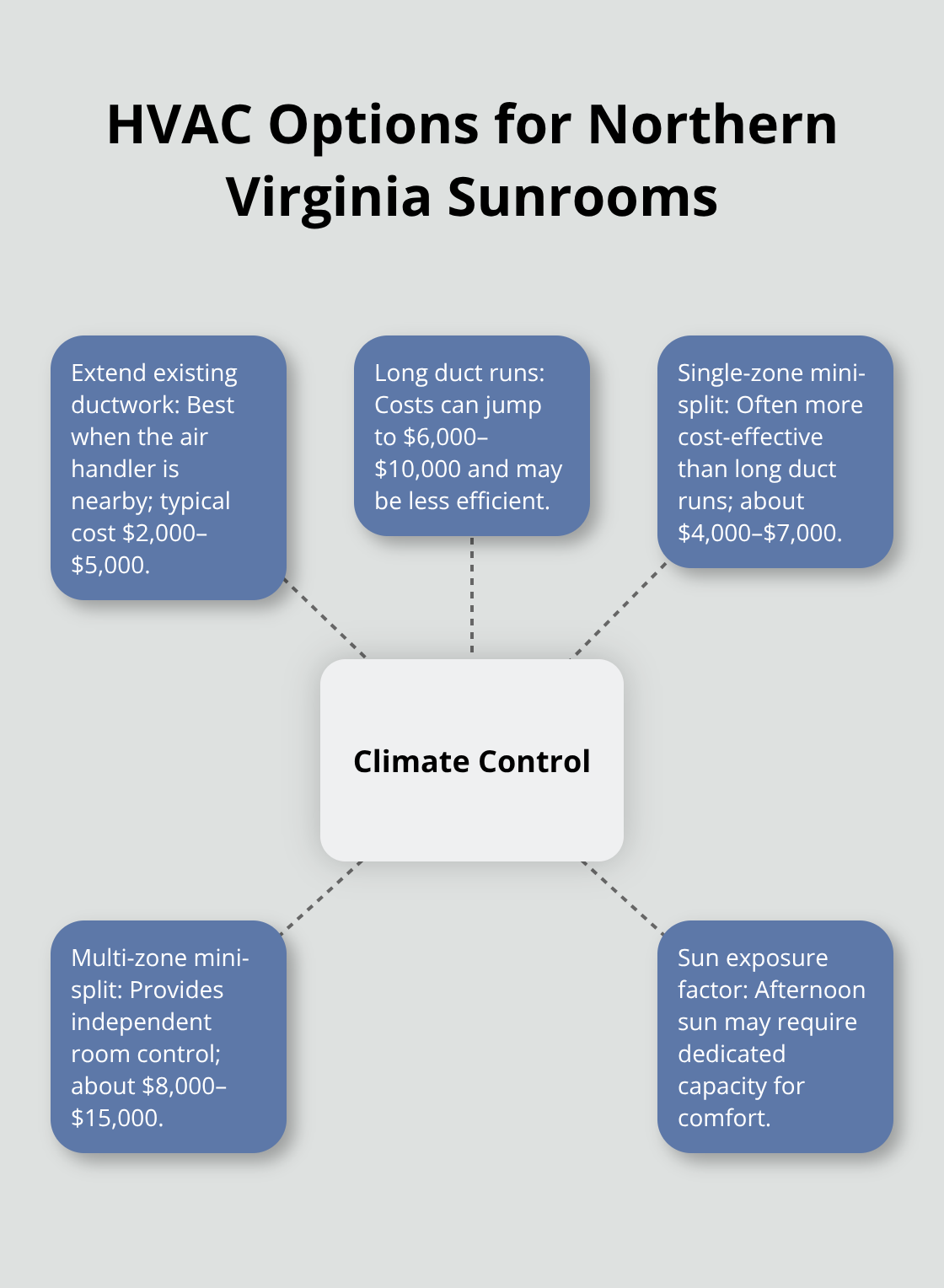
If your existing air handler sits nearby, extending ductwork typically costs $2,000–$5,000, making this the cheaper option. However, long runs from the handler to a distant sunroom quickly climb to $6,000–$10,000, at which point a single-zone mini-split system at $4,000–$7,000 becomes more cost-effective. Multi-zone mini-splits running $8,000–$15,000 give you independent temperature control, which matters if your sunroom receives intense afternoon sun while the rest of your home stays shaded.
Glazing and Insulation for Year-Round Comfort
Insulation quality directly impacts heating and cooling efficiency: Low-E glazing reduces solar heat gain by 30–50% compared to standard glass, meaning lower monthly energy bills year-round. When you add proper wall insulation and weatherstripping, a climate-controlled sunroom in Vienna can lower your overall electricity costs rather than increase them. This investment pays dividends across all four seasons, protecting your comfort without inflating utility expenses.
Furniture Layout and Natural Light Control
Furniture placement and natural light control work together to maximize both comfort and usability throughout the day. Position seating to face views rather than directly into morning or afternoon sun, which reduces glare and eye strain while working or relaxing. Casement windows and operable skylights provide cross-ventilation on mild spring and fall days, reducing HVAC runtime without opening the space to insects or weather.
Motorized roller shades or cellular shades block heat in summer and retain warmth in winter; expect to spend $500–$1,500 for a sunroom’s worth of motorized shading. In Arlington and Tysons, where many homeowners work from home, position your desk perpendicular to windows to minimize screen glare while keeping natural light on your workspace. Storage built into wall cavities or under seating keeps clutter hidden and maintains the open, airy feeling that makes sunrooms valuable.
Seasonal Flexibility and Adaptability
The layout should allow furniture rearrangement for different seasons: lightweight seating in summer for entertaining, heavier upholstered pieces in winter for warmth and coziness. Avoid oversized furniture that blocks sightlines to outdoor views, which defeats the purpose of adding a sunroom in the first place. Once your sunroom functions comfortably year-round, the next critical step involves navigating the permitting and construction requirements that Arlington, Vienna, and Tysons enforce to protect your investment and ensure structural integrity.
Permits and Timeline for Sunroom Additions in Arlington, Vienna, and Tysons
Why Permits Matter for Your Sunroom Project
Skipping permits invites code violations, failed inspections, and serious problems when you sell your home. Arlington, Vienna, and Tysons all require permits to protect structural integrity and ensure your addition complies with local building codes and zoning laws. A Residential Building Permit covers the structural framing and foundation of your sunroom addition.
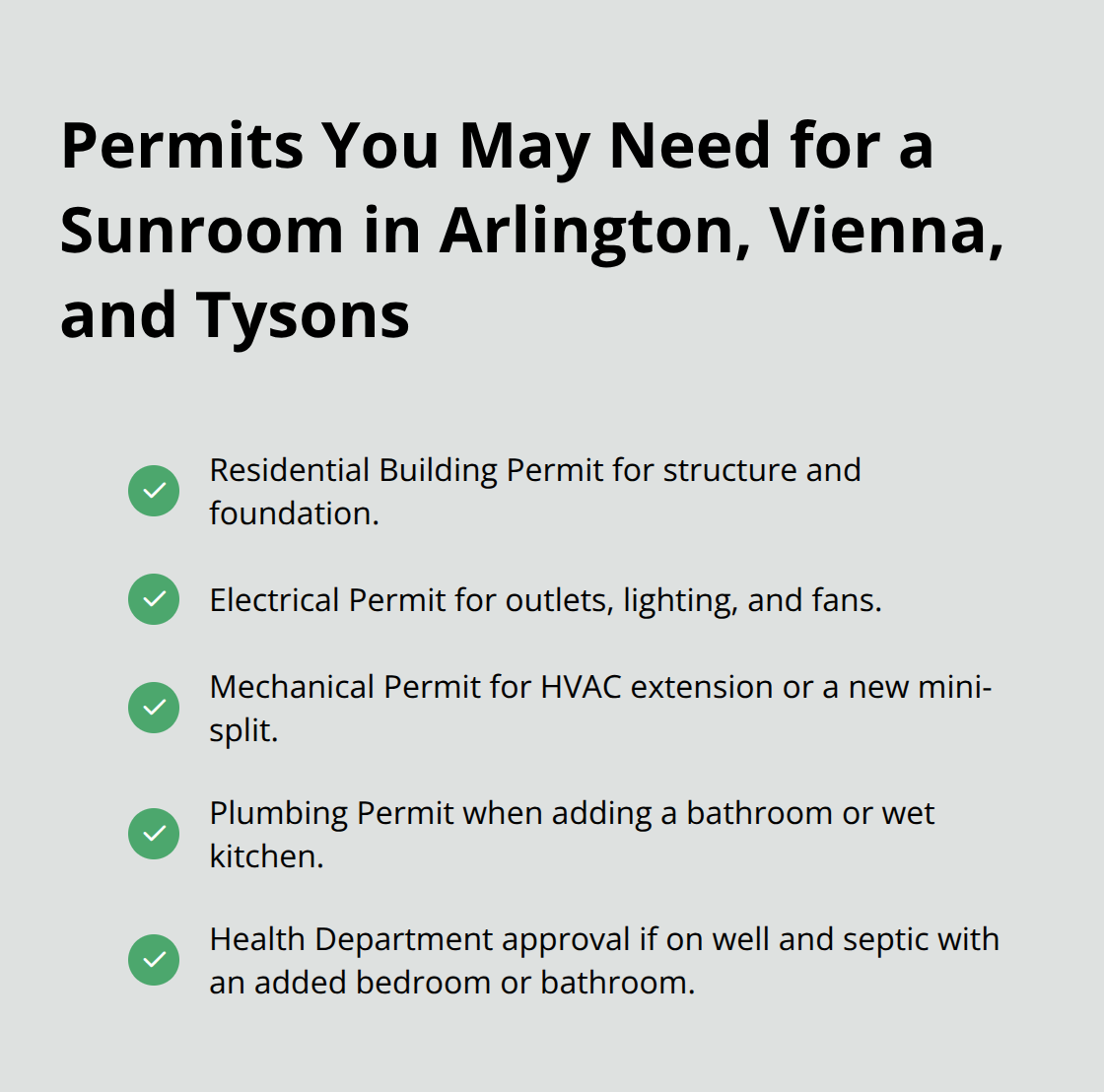
Electrical Permits become mandatory if you add outlets, lighting, or ceiling fans. If your sunroom includes climate control through HVAC extension or a new mini-split system, Mechanical Permits apply. When a sunroom adds a bathroom or connects to existing plumbing for a wet kitchen, Plumbing Permits are required. Health Department Approval becomes necessary only if your home uses a well and septic system and your sunroom adds a bedroom or bathroom, which occurs in some Vienna neighborhoods but rarely in Arlington proper.
Processing Times Across Northern Virginia Cities
Each city enforces permit requirements differently and maintains distinct processing timelines. Arlington typically processes permits within 2–4 weeks, Vienna follows similar timelines, and Tysons can stretch to 4–6 weeks depending on project complexity and submission completeness. A poorly prepared permit application costs you 3–4 weeks in resubmissions and corrections, effectively eating into your construction schedule before work begins. Starting the permitting process immediately after finalizing your design prevents costly schedule slips and keeps your project on track.
Construction Timeline and Cost Factors
The total construction timeline spans 8–12 weeks from permit approval to final walkthrough, but permitting delays compress your actual construction window significantly. Ground-level sunroom additions in Arlington and Tysons typically cost $350–$400 per square foot, while second-story additions reach $400–$500+ per square foot. These per-square-foot figures assume permits, site mobilization, design drawings, and utility setup proceed efficiently without delays. Fixed upfront costs like permits and site preparation hit harder on smaller projects-a 200-square-foot sunroom spreads those fixed costs over less area, raising your per-square-foot price above larger additions.
Material selection and site accessibility directly influence final costs: a rear addition on a sloped lot in Vienna costs 15–25% more than a side addition with driveway access due to labor intensity and material staging challenges. If structural work becomes necessary (underpinning, beam installation, or roof reinforcement), expect per-square-foot pricing to climb 20–30% beyond baseline estimates.
Working with Experienced Contractors
Contractors who understand Arlington, Vienna, and Tysons code requirements prevent costly mistakes and keep your project moving forward without surprise permit rejections or inspection failures. An experienced team handles permit applications, coordinates with local inspectors, and addresses any code questions before they delay your timeline. This expertise transforms the permitting process from an intimidating obstacle into a manageable step toward your finished sunroom.
Final Thoughts
Your sunroom addition transforms how you live in Arlington, Vienna, or Tysons when you align design choices with your lifestyle, budget, and local building codes. Modern minimalist designs cost less than traditional additions with matching brick and sloped roofing, yet both deliver real value when executed properly. Climate control separates a year-round living space from a seasonal decoration, so investing in quality glazing and appropriate HVAC solutions pays dividends across Northern Virginia’s variable weather.
Permitting protects your investment rather than slowing you down. Arlington, Vienna, and Tysons enforce building codes that guarantee structural integrity, electrical safety, and zoning compliance. Starting the permit process immediately after finalizing your design prevents costly delays that compress your construction timeline and inflate labor costs, while ground-level additions typically run $350–$400 per square foot with fixed costs like permits and site preparation hitting harder on smaller projects.
The path forward starts with connecting with contractors who understand your local market and guide you through design, permitting, and construction without surprises. Contact Dzala General Contractor to discuss your sunroom addition ideas and take the first step toward expanding your living space in Arlington, Vienna, or Tysons.