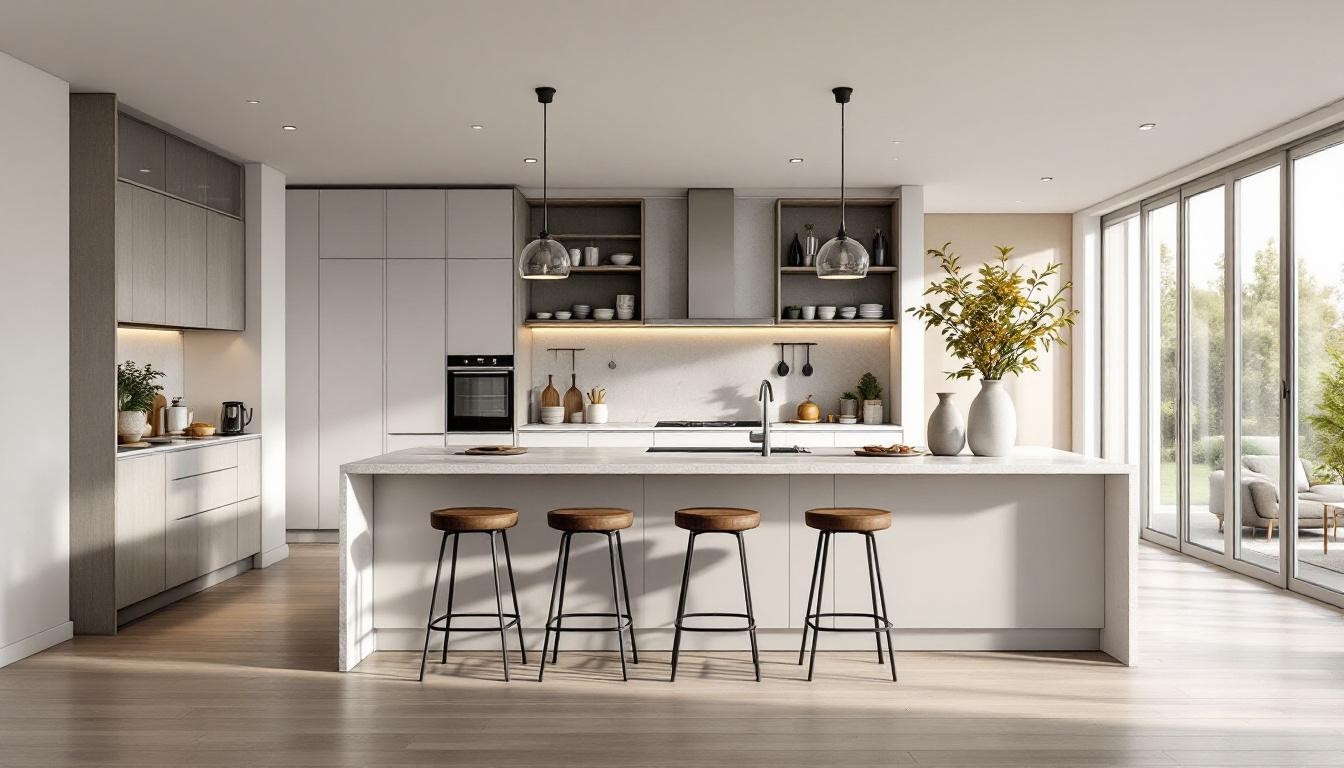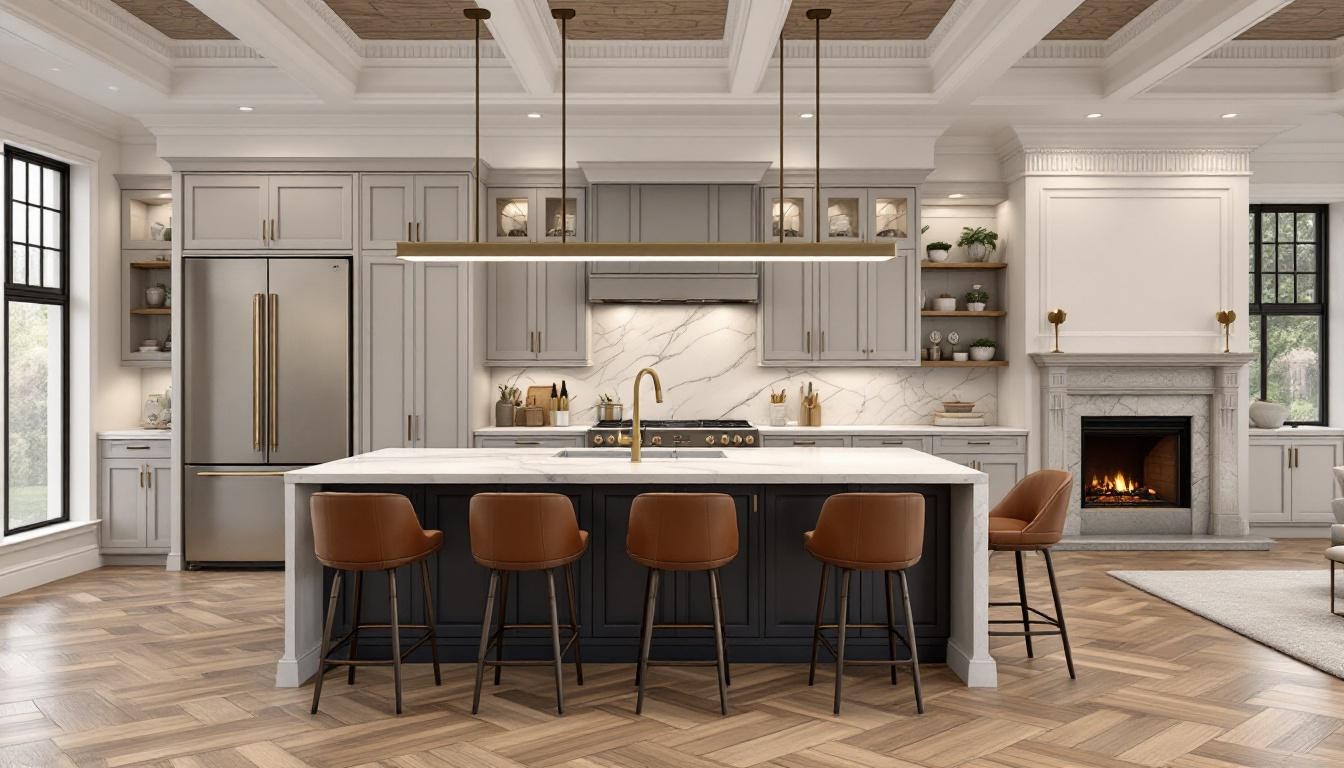
Retro kitchen remodel ideas are making a major comeback in Arlington, Vienna, and Tysons. Homeowners are choosing vintage styles because they add genuine character and often cost less than trendy modern designs.
We at Dzala General Contractor have helped dozens of families bring retro kitchens to life. This guide shows you exactly which styles work best and how to build your dream retro kitchen on any budget.
Which Retro Kitchen Styles Work Best in Northern Virginia
Mid-century modern design dominates retro kitchen remodels in Arlington, Vienna, and Tysons because it balances clean lines with functional warmth. This style emphasizes simplicity and purpose, avoiding unnecessary decoration while keeping spaces organized and livable. Homeowners in these areas choose mid-century elements like natural cherry cabinetry paired with durable granite countertops because they age beautifully and hold their value. White recessed panel cabinets form the modern base, while black granite countertops provide sleek contrast that highlights retro accents without overwhelming the space. Green subway tile backsplashes deliver immediate retro character, and Victorian-style pendant lamps serve as bold focal points. The combination works because it doesn’t require a complete kitchen overhaul-you layer retro details onto a modern foundation. Stainless steel appliances maintain a current look while vintage elements remain the stars of the show.
1950s Color and Material Choices
The 1950s retro approach leans heavily on color and pattern to transform your kitchen. Two-tone cabinetry (such as blue lower cabinets with white uppers) instantly evokes mid-century charm without replacing all your existing materials. Pastel hues like mint and powder blue paired with creamy whites and warm wood tones create an authentic 1950s atmosphere that feels both nostalgic and fresh. Butcher block countertops or warm wood surfaces balance retro styling with everyday practicality, while bold geometric tile patterns on backsplashes anchor the look.
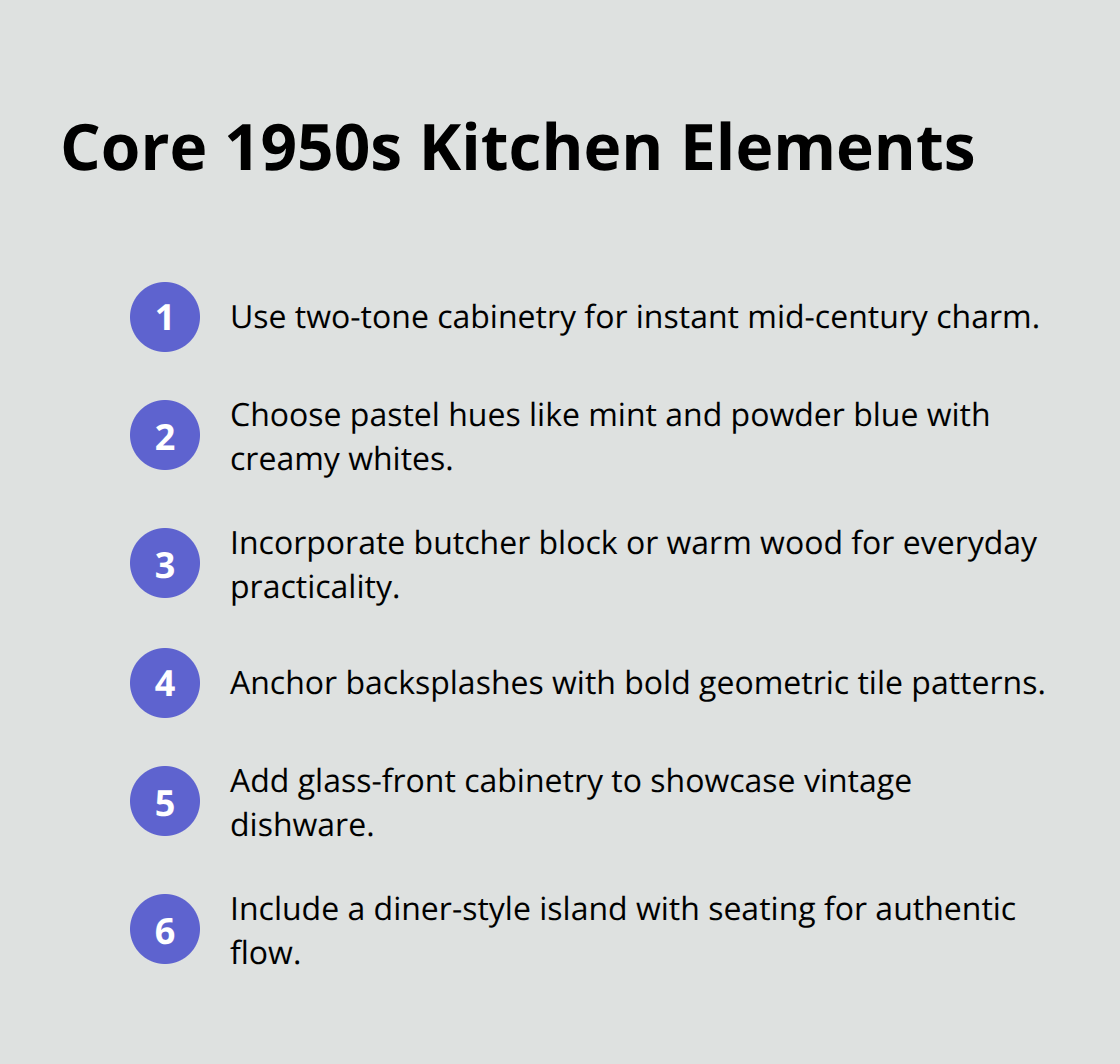
Glass-front cabinetry displays vintage dishware and brightens the space simultaneously. A central island with seating mimics classic 1950s diner layouts while preserving modern function. These choices work particularly well in Arlington and Vienna homes where square footage allows for statement pieces.
1970s Warmth and Texture
Seventies retro kitchens embrace earth tones-browns and greens-as their foundation, creating warmth that modern kitchens often lack. Corrugated metal or tin backsplashes deliver distinctive metallic texture, while beadboard backsplashes add cottage-style charm without expensive renovations. Formica countertops provide an authentic retro look and cost significantly less than marble or granite, making them ideal for budget-conscious homeowners in Tysons. Bold cabinetry colors like deep green or burnt orange serve as statement features rather than timid accents. Open shelving with chrome or brass supports displays glassware and enamelware while keeping the kitchen feeling airy. Patterned or retro flooring in subtle or bold patterns adds vintage energy, and macrame planters with greenery reinforce the warm, inviting atmosphere that defined the decade.
Selecting Materials That Last
The right materials determine whether your retro kitchen stands the test of time or fades quickly. Granite countertops pair beautifully with vintage-style cabinetry and resist daily wear far better than softer surfaces. Premium tile and surface brands like Porcelanosa offer authentic options for retro backsplashes and accents that won’t chip or crack after a few years. Tile specialists such as Mosaic Tile Company provide vintage-inspired patterns and color palettes specifically designed for retro transformations. When you coordinate cabinetry, countertops, and backsplashes with high-quality materials, you support an authentic retro look while ensuring long-term durability. Local Virginia-based remodelers have strong access to these cabinetry, tile, and countertop options essential for retro transformations.
Hardware, Appliances, and Materials That Define a Retro Kitchen
Vintage Appliances and Hardware Selection
Vintage appliances and authentic hardware transform a retro kitchen from ordinary to unmistakable, but choosing the right pieces requires strategy. Smeg appliances deliver genuine retro aesthetics with modern performance standards, making them the go-to choice for homeowners in Arlington, Vienna, and Tysons who want authenticity without sacrificing reliability. Retro hardware like cup pulls and ceramic knobs cost between $3 and $15 per piece, yet they instantly signal period authenticity to anyone entering your kitchen.
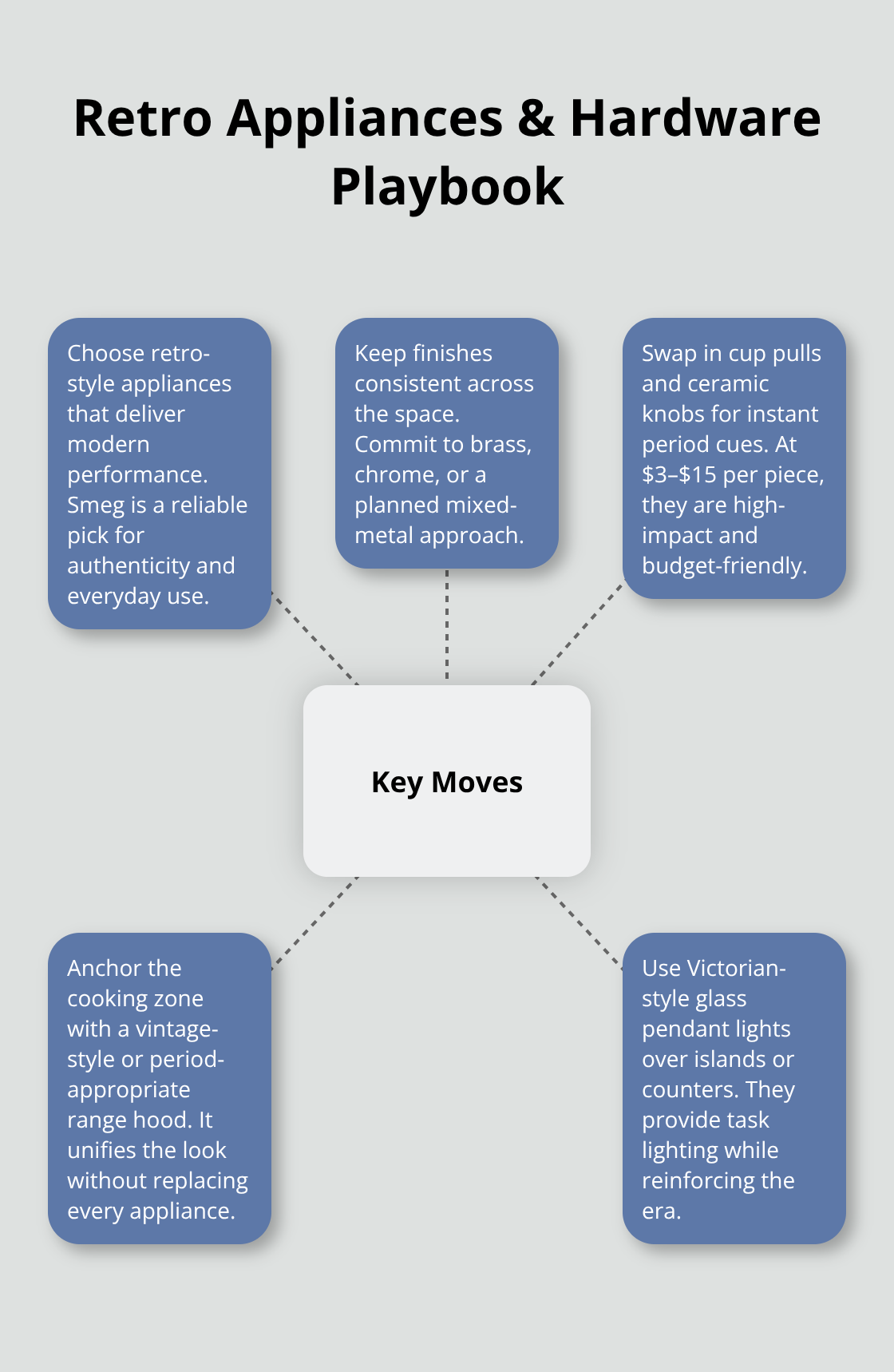
Brass and chrome hardware supports open shelving and glass-front cabinetry while providing functional durability that lasts decades. Victorian-style pendant lights with glass shades reinforce the era feel while serving as practical task lighting over islands or countertops. Vintage-style range hoods or modern hoods with period-appropriate silhouettes anchor the cooking zone and prevent the kitchen from feeling disjointed. The key mistake homeowners make is mixing hardware finishes randomly; instead, commit to either brass, chrome, or mixed metallics throughout, then layer in one accent finish for visual interest.
Flooring and Backsplash Choices
Black-and-white checkerboard tile flooring or pastel subway tiles create immediate retro character while remaining durable enough for high-traffic kitchens in busy Northern Virginia homes. Tin or corrugated metal backsplashes deliver distinctive texture that photographs well and cost significantly less than custom tile work, though they require regular maintenance to prevent rust staining. Reflective surfaces like glossy tile, stainless steel, and polished stone make small retro kitchens feel larger, a practical advantage for Arlington apartments and townhomes with limited square footage. Glass-front cabinetry brightens spaces while displaying vintage dishware, functioning as both storage and decor simultaneously.
Countertop Materials That Balance Budget and Style
Butcher block countertops warm up the space authentically and cost $40 to $80 per linear foot compared to granite at $60 to $100, making them ideal for budget-conscious remodels in Tysons. Formica countertops provide genuine 1970s authenticity and exceptional durability at $20 to $40 per linear foot, proving that retro does not require premium pricing. Granite countertops pair beautifully with vintage-style cabinetry and resist daily wear far better than softer surfaces. Premium tile and surface brands like Porcelanosa offer authentic options for retro backsplashes and accents that will not chip or crack after a few years. Tile specialists such as Mosaic Tile Company provide vintage-inspired patterns and color palettes specifically designed for retro transformations. When you coordinate cabinetry, countertops, and backsplashes with high-quality materials, you support an authentic retro look while ensuring long-term durability.
The materials you select determine whether your retro kitchen feels cohesive or chaotic, so these decisions deserve careful attention. Local Virginia-based remodelers have strong access to the cabinetry, tile, and countertop options essential for retro transformations. Your next step involves understanding how to source these materials affordably without compromising on quality or authenticity.
How to Build a Retro Kitchen Without Overspending
Retro kitchens don’t require deep pockets if you approach the project strategically. The biggest mistake homeowners in Arlington, Vienna, and Tysons make is treating a retro remodel as an all-or-nothing proposition where every surface must be period-perfect. Instead, anchor your design around one or two high-impact statement pieces, then fill in the rest with budget-friendly alternatives that deliver authentic character.
Focus Your Spending on High-Impact Materials
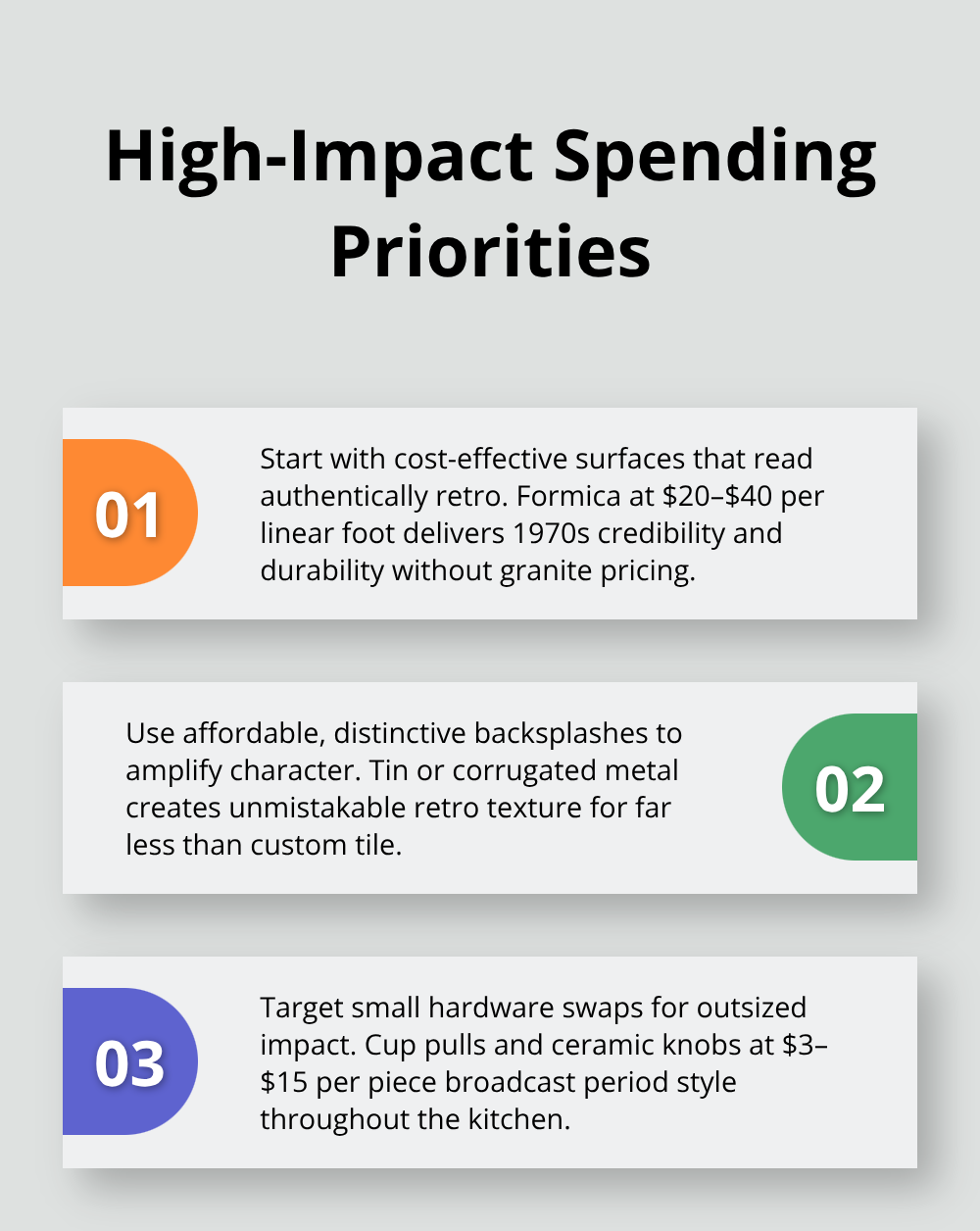
Formica countertops at $20 to $40 per linear foot provide genuine 1970s authenticity and exceptional durability without the granite price tag. Tin or corrugated metal backsplashes cost significantly less than custom tile work and create distinctive texture that reads unmistakably retro. Retro hardware like cup pulls and ceramic knobs run $3 to $15 per piece, yet they signal period authenticity throughout the kitchen.
Focus your premium spending on visible, high-wear surfaces like countertops and cabinetry, then use budget materials for backsplashes and accents where they deliver maximum visual impact. Smeg appliances deliver genuine retro aesthetics with modern performance, but if your budget is tight, a vintage-style range hood alone can anchor the cooking zone without replacing every appliance.
Choose One Cohesive Era
The key is committing to one cohesive era rather than mixing 1950s pastels with 1970s earth tones, which creates visual chaos and wastes money on pieces that clash. A single design direction keeps your material selections aligned and prevents costly purchasing mistakes. Homeowners who jump between decades end up with disconnected spaces that feel confused rather than intentional.
Source Materials at Competitive Prices
Floor and Decor Design Studio and Mosaic Tile Company stock vintage-inspired patterns and color palettes at competitive prices, allowing you to source materials without traveling between specialty shops. Local Virginia-based remodelers maintain established relationships with suppliers, which often translates to better pricing on cabinetry and tile than you’ll find ordering online. Thrifted vintage accessories and patterned dishware add authentic retro personality without renovation costs, and they work especially well in rental situations or homes where you want to test the style before committing fully.
Know When to Hire Professionals
DIY installation works for non-structural elements like open shelving, hardware swaps, and decorative backsplashes, but plumbing, electrical work, and countertop installation demand professional expertise to avoid costly mistakes. Many full-service remodelers in Northern Virginia offer free consultations and estimates, removing barriers to understanding your true project costs before committing. Promotions such as up to $2,500 off full kitchen and bathroom remodeling can substantially reduce your investment. At Dzala General Contractor, we handle every aspect of your project, from initial design through final installation, ensuring that your retro vision comes to life without budget surprises or quality compromises.
Final Thoughts
Retro kitchen remodel ideas deliver genuine character that modern designs simply cannot match, and homes in Arlington, Vienna, and Tysons are seeing measurable returns on these investments. A well-executed retro kitchen becomes the heart of your home, drawing family and guests into a space that feels intentional and warm rather than generic. Beyond aesthetics, retro kitchens hold their value because they represent timeless design choices rather than fleeting trends.
Your next step involves identifying which retro era resonates with your home’s architecture and your personal taste. Walk through your kitchen and note the natural light, ceiling height, and existing cabinetry style, then match these features to the retro approach that feels most authentic. Gather inspiration from real projects on Houzz and Pinterest, paying attention to material combinations that appeal to you rather than chasing every trend you encounter.
We at Dzala General Contractor understand that transforming your kitchen requires more than inspiration and a shopping list. Our team handles every aspect of your retro kitchen project, from initial design consultation through final installation, ensuring that your vision becomes reality without costly mistakes or timeline surprises. Contact Dzala General Contractor today to discuss how we can bring your retro kitchen vision to life.