A kitchen peninsula transforms how you cook, eat, and gather with family. Whether you’re in Arlington, Vienna, or Tysons, adding a peninsula gives you extra counter space, storage, and a natural gathering spot without requiring a full island.
We at Dzala General Contractor have helped countless homeowners explore kitchen remodel ideas with peninsula designs that fit their homes and budgets. This guide walks you through design options, practical remodeling tips, and smart ways to maximize your new peninsula’s functionality.
Kitchen Peninsula Design Options for Arlington, Vienna, and Tysons Homeowners
Modern Minimalist Peninsulas
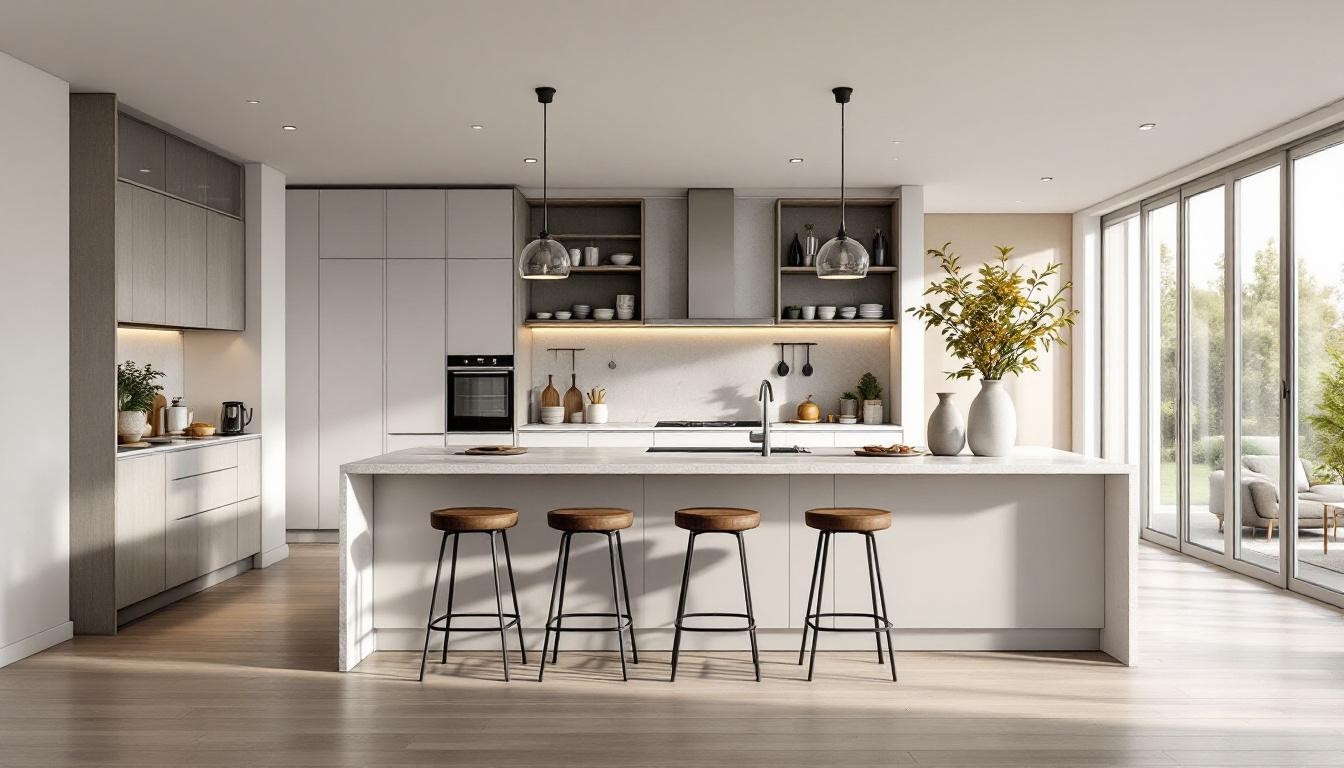
Modern minimalist peninsulas dominate Arlington and Vienna kitchens right now, and for good reason. This style strips away ornamental hardware and excess cabinetry depth, keeping the peninsula clean and functional. Matte black hardware paired with light oak or white cabinetry creates the sharp, intentional look homeowners want.
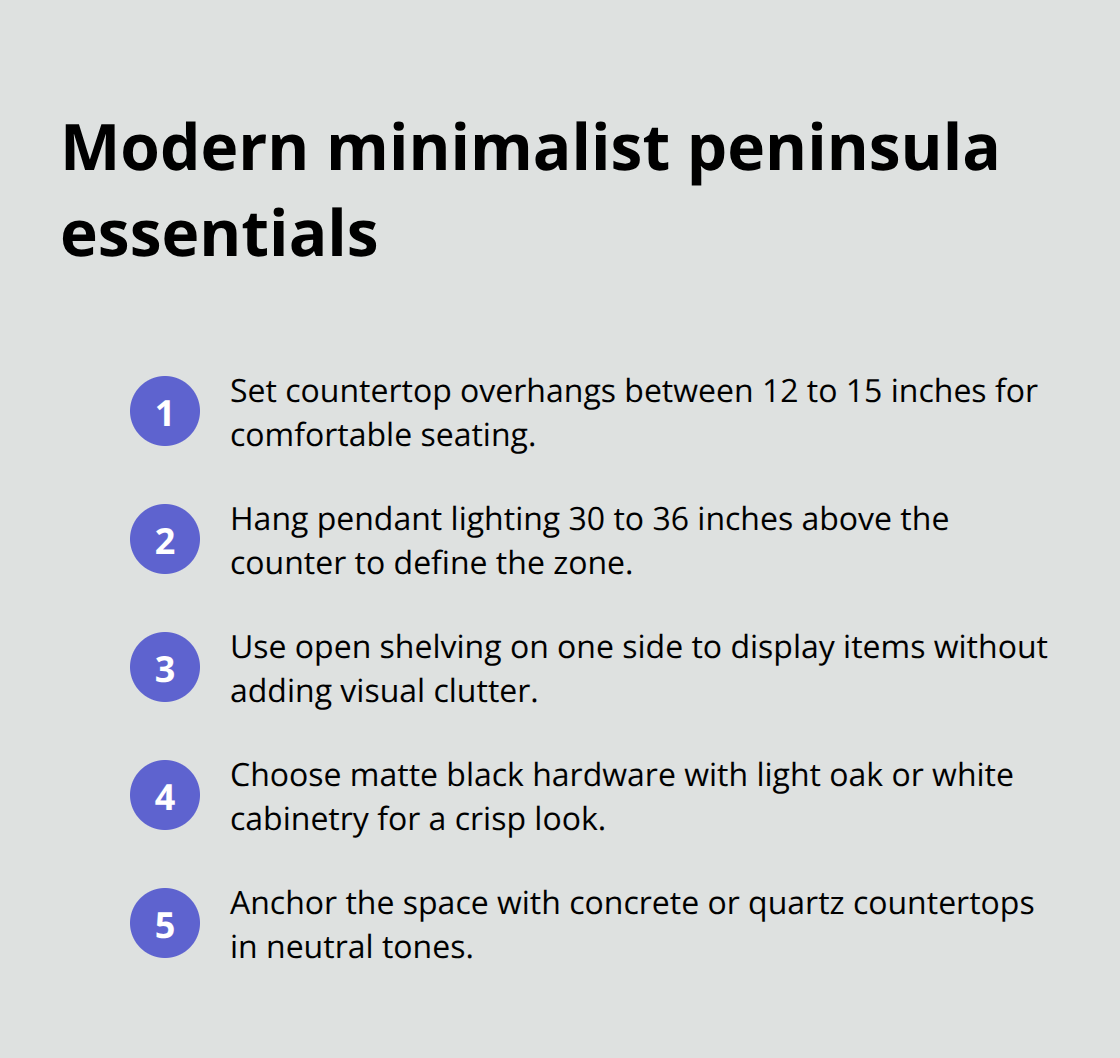
The countertop overhang should measure between 12 to 15 inches to accommodate comfortable seating without bulk. Pendant lighting positioned 30 to 36 inches above the counter defines the dining zone while reducing reliance on overhead fixtures. Open shelving on one side of the peninsula works well in modern layouts, letting you display dishware or cookbooks while maintaining the uncluttered feel. Concrete or quartz countertops in neutral tones anchor the design without visual noise.
Traditional Peninsula Designs with Storage
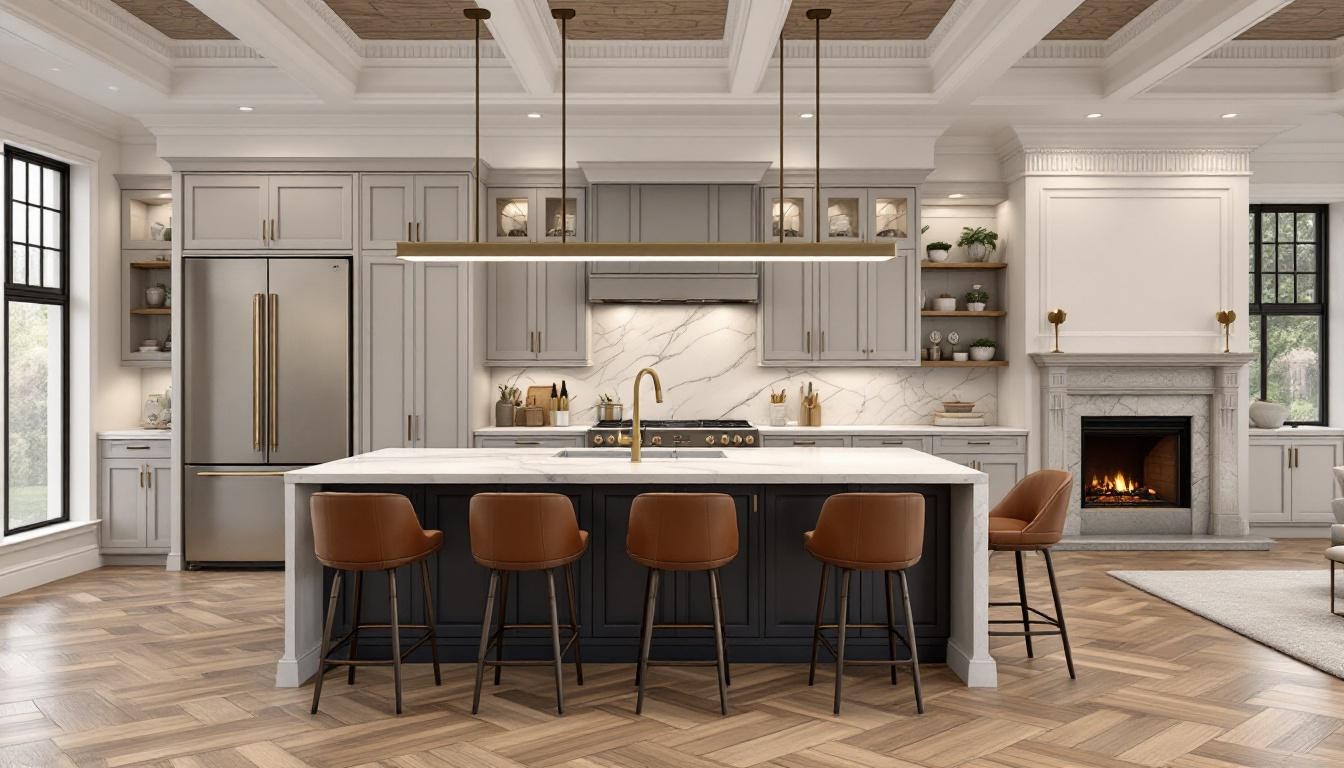
Traditional peninsula designs with integrated storage appeal strongly to Tysons homeowners working with older colonial and farmhouse-style homes. These peninsulas feature deeper cabinetry-typically 24 inches deep compared to 15 inches for minimalist versions-giving you substantially more storage capacity. Shiplap or beadboard cladding on the base adds texture and connects the peninsula visually to nearby architectural details. Wine coolers or beverage fridges built into the peninsula base maximize functionality in homes where entertaining matters. Natural walnut cabinets paired with quartz countertops create the high-end blend that Northern Virginia buyers expect.
Open-Concept Peninsulas for Smaller Spaces
For smaller Arlington and Vienna properties, open-concept peninsulas serve as smart alternatives to full islands. A peninsula attached to an existing wall or counter requires no structural changes, making installation faster and less expensive than island installation. Low-profile seating with acrylic or wooden stools keeps sightlines open and prevents the space from feeling cramped. Curved countertop edges improve traffic flow around the peninsula, which matters in tighter kitchens where movement patterns are tight. Contrasting the peninsula base with cabinet colors-like painting it robin’s egg blue while keeping upper cabinetry white-creates focal-point appeal without overwhelming the space. Wide counter overhangs of 16 to 18 inches work best for comfortable seating and tucked-in stools that don’t intrude on prep zones.
These design choices transform a peninsula from a functional addition into a gathering space that reflects your home’s character and your family’s actual cooking and entertaining patterns. Once you select your peninsula style, the next step involves understanding the practical remodeling considerations that affect both your timeline and budget.
Planning Materials, Plumbing, and Budget for Your Peninsula
Selecting Durable Materials for Long-Term Performance
Material selection matters more than most homeowners realize because peninsula countertops and cabinetry take constant wear from daily cooking and entertaining. Natural walnut cabinets paired with quartz countertops represent the most durable combination for Arlington, Vienna, and Tysons kitchens, resisting stains and scratches far better than laminate or solid surface options. Quartz costs between 60 to 100 dollars per square foot installed, while natural stone like granite runs 40 to 80 dollars per square foot but requires annual sealing. Matte black hardware outperforms polished brass in high-traffic zones because fingerprints show less prominently over time. Concrete countertops cost 65 to 150 dollars per square foot and develop character through use, though they need sealing every two to three years.
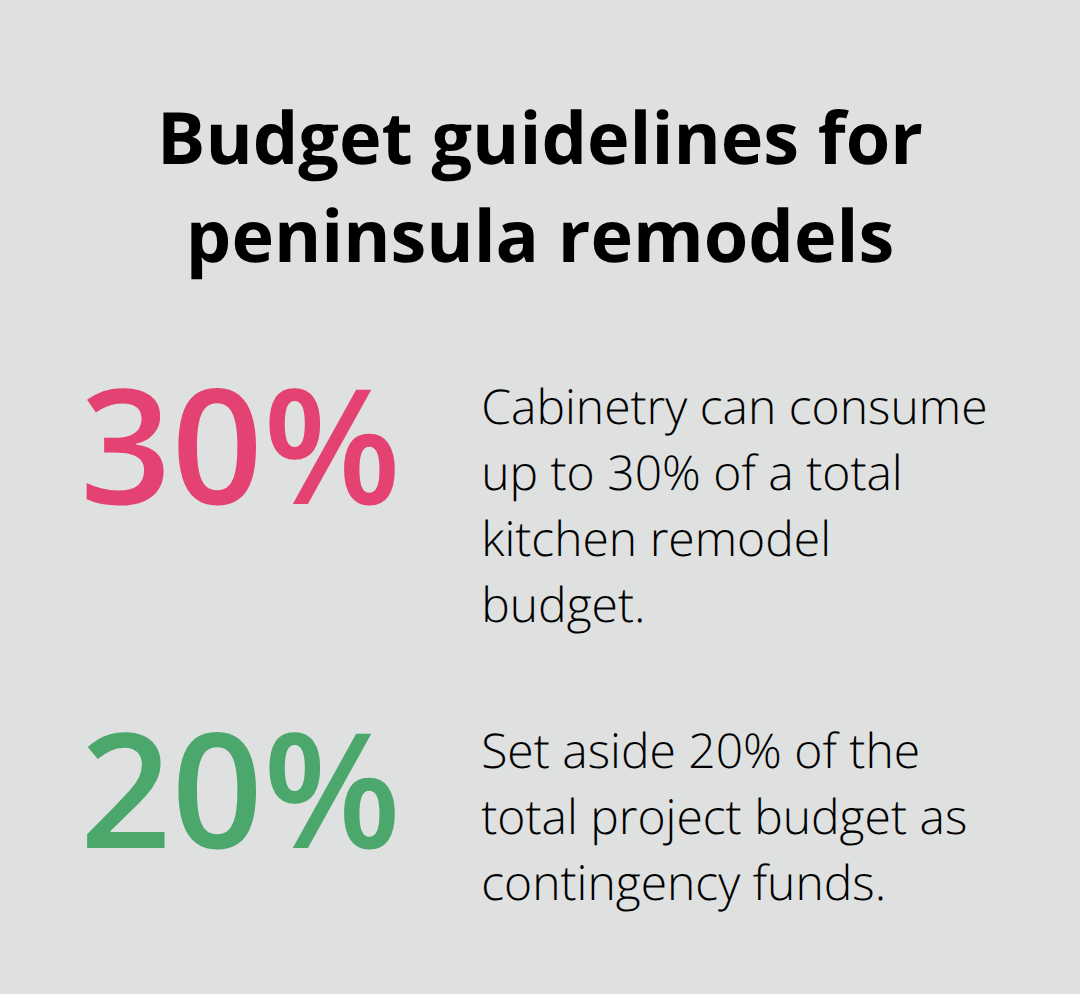
The Journal of Light Construction’s 2024 Cost vs Value Report indicates cabinetry consumes up to 30 percent of a total kitchen remodel budget, making material choices directly impact your final project cost. For peninsula-specific durability, overhang countertops should measure at least 12 inches and use support brackets rated for dynamic loads, not static weight alone.
Understanding Plumbing Requirements and Costs
Adding a sink to your peninsula requires running water supply lines and drain pipes from your main kitchen, typically adding 2,000 to 4,000 dollars to your project depending on wall construction and existing plumbing proximity. Budget-friendly alternatives include positioning your peninsula away from plumbing walls and focusing pendant lighting on design impact rather than task illumination. Set aside 20 percent of your total project budget as contingency funds because hidden plumbing issues behind walls surface frequently during construction in older Arlington and Tysons homes.
Electrical Planning and Appliance Integration
Electrical work for under-cabinet lighting, pendant fixtures, or appliances like a wine cooler costs between 1,500 to 3,000 dollars when handled by licensed electricians who follow Virginia code requirements. ENERGY STAR-rated appliances integrated into peninsula bases qualify for tax incentives through the U.S. EPA in some cases, offsetting installation costs. Coordinating plumbing and electrical work simultaneously prevents delays, ensuring both trades happen alongside cabinetry installation rather than sequentially, which accelerates your timeline substantially.
With materials selected and plumbing and electrical requirements mapped out, your peninsula takes shape on paper and in budget projections. The next step focuses on transforming that peninsula into a workspace that actually functions for how your family cooks, eats, and gathers together.
Maximizing Your Peninsula Workspace and Functionality
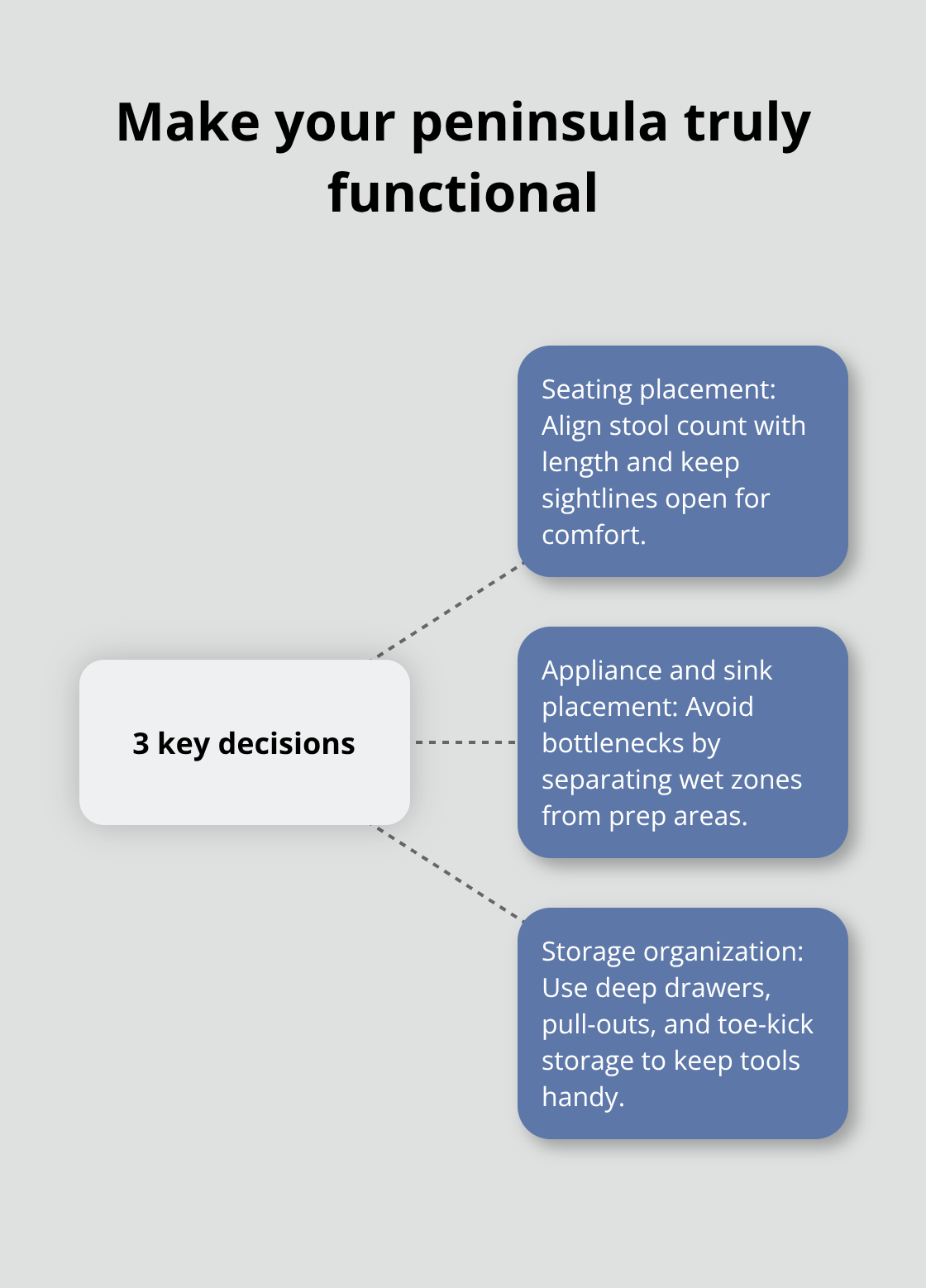
The gap between a beautiful peninsula and a functional one comes down to three decisions: where people sit, where appliances go, and how you organize your storage. Get these wrong and your peninsula becomes an obstacle rather than a workspace. Homeowners in Arlington, Vienna, and Tysons often struggle with peninsulas that looked great in renderings but didn’t match their actual cooking patterns, which is why nailing these details upfront matters more than design aesthetics alone.
Seating Height and Comfort Standards
Seating height and depth determine whether your peninsula actually gets used or becomes a decorative surface. Bar-height seating sits at 36 inches, matching standard counter height, and requires a 15-inch overhang minimum for comfortable leg room. Counter-height seating at 24 to 30 inches works better in smaller kitchens and allows people to interact with prep work happening on the peninsula surface itself. Most Arlington and Vienna homeowners prefer low-profile wooden or acrylic stools that tuck fully under the overhang because they preserve sightlines into the living room and prevent the kitchen from feeling blocked off.
A 16 to 18-inch overhang accommodates this tucking without eating into your prep zone, though anything less than 12 inches forces people to perch uncomfortably. The number of seats matters too-two to three stools work in smaller peninsulas, while longer peninsulas in Tysons homes can accommodate four to five without crowding the cooking side. Wider counter overhangs of 18 to 24 inches reduce the number of times family members bump elbows during meal prep and entertaining, and this extra depth pays dividends in homes where the peninsula becomes a homework station or informal workspace alongside cooking duties.
Sink and Appliance Placement for Workflow
Sink and appliance placement determines your actual workflow, not theoretical efficiency. A sink positioned at one end of the peninsula, rather than the center, keeps water splashing away from prep zones and prevents the sink from becoming a traffic bottleneck during cooking. If plumbing costs run high for peninsula sinks in older homes, positioning your peninsula away from plumbing walls and skipping the sink entirely costs far less while keeping prep and cleanup separated naturally-you prep on the peninsula, then carry dishes to the main sink.
Wine coolers or beverage fridges built into the peninsula base make more sense than prep sinks for Tysons homes where entertaining drives design choices. Under-cabinet lighting positioned 6 to 8 inches below upper cabinets illuminates countertop work without casting shadows, which outperforms pendant lighting alone for actual task work.
Storage Solutions and Counter Organization
Deep drawers for pots and pans on the peninsula side, rather than upper cabinets, keep frequently used items accessible without blocking sightlines. Pull-out spice racks tucked into narrow cabinet spaces keep your most-used seasonings within arm’s reach of the cooking side, eliminating the frustration of hunting through cabinets mid-recipe. Toe-kick drawers-the shallow space below the base cabinets-store flat items like baking sheets and cutting boards, maximizing otherwise wasted space that most homeowners overlook entirely.
Final Thoughts
A kitchen peninsula transforms your cooking space into a gathering hub that works harder than a traditional layout while costing less than a full island. The design options we’ve covered-from modern minimalist styles to traditional storage-rich layouts-prove that kitchen remodel ideas with peninsula designs fit every home in Arlington, Vienna, and Tysons, regardless of square footage or budget constraints. The real payoff comes when your peninsula matches how your family cooks and entertains.
Proper seating heights, thoughtful appliance placement, and smart storage solutions separate a peninsula that looks good from one that genuinely improves daily life. You’ll prep meals faster, entertain more comfortably, and gain counter space without the structural complexity of a full island installation. Starting your peninsula remodel requires three concrete steps: measure your kitchen and identify where a peninsula fits without blocking traffic patterns, decide whether you need plumbing for a sink or if a beverage cooler better serves your entertaining style, and get quotes from experienced contractors who understand Northern Virginia kitchens.
We at Dzala General Contractor handle every aspect of your kitchen remodel from initial design through final walkthrough, managing plumbing, electrical work, cabinetry installation, and material selection so you don’t coordinate multiple trades or worry about hidden costs derailing your budget. Contact us today to discuss your peninsula vision and start a kitchen that works as beautifully as it looks.