Arlington homeowners are transforming their properties with strategic home additions that blend seamlessly with existing architecture. The local real estate market shows a 15% increase in addition projects over the past two years.
We at Dzala General Contractor understand that successful additions require careful planning, proper permits, and expert execution. The right approach maximizes both functionality and property value in Arlington’s competitive housing market.
Planning Your Arlington Home Addition
Arlington’s Unique Zoning Requirements
Arlington County enforces strict zoning regulations that directly impact your addition project. Properties zoned R-20, R-10, R-8, R-6, R-5, R-10T, R-15-30T, or R-2-7 allow specific types of additions, but setback requirements vary significantly between districts. The county requires a pre-submission meeting with the Zoning Division before you file permits, and this step saves homeowners from costly redesigns later. Arlington’s codes mandate compliance with the Virginia Uniform Statewide Building Code, plus additional local environmental standards for stormwater management.
Budget Reality for Arlington Additions
Home additions in Northern Virginia cost between $400 to $500 per square foot for basic construction. Sunroom additions range from $100,000 to $200,000, while primary suite additions cost $150,000 to $250,000. Two-story additions jump to $250,000 to $500,000 due to complex foundation and structural requirements. Foundation type significantly impacts costs, with full basements costing more than slab-on-grade options. Premium materials and complex roof designs add 20-30% to base costs, but energy-efficient features reduce long-term utility expenses.
Addition Types That Work Best
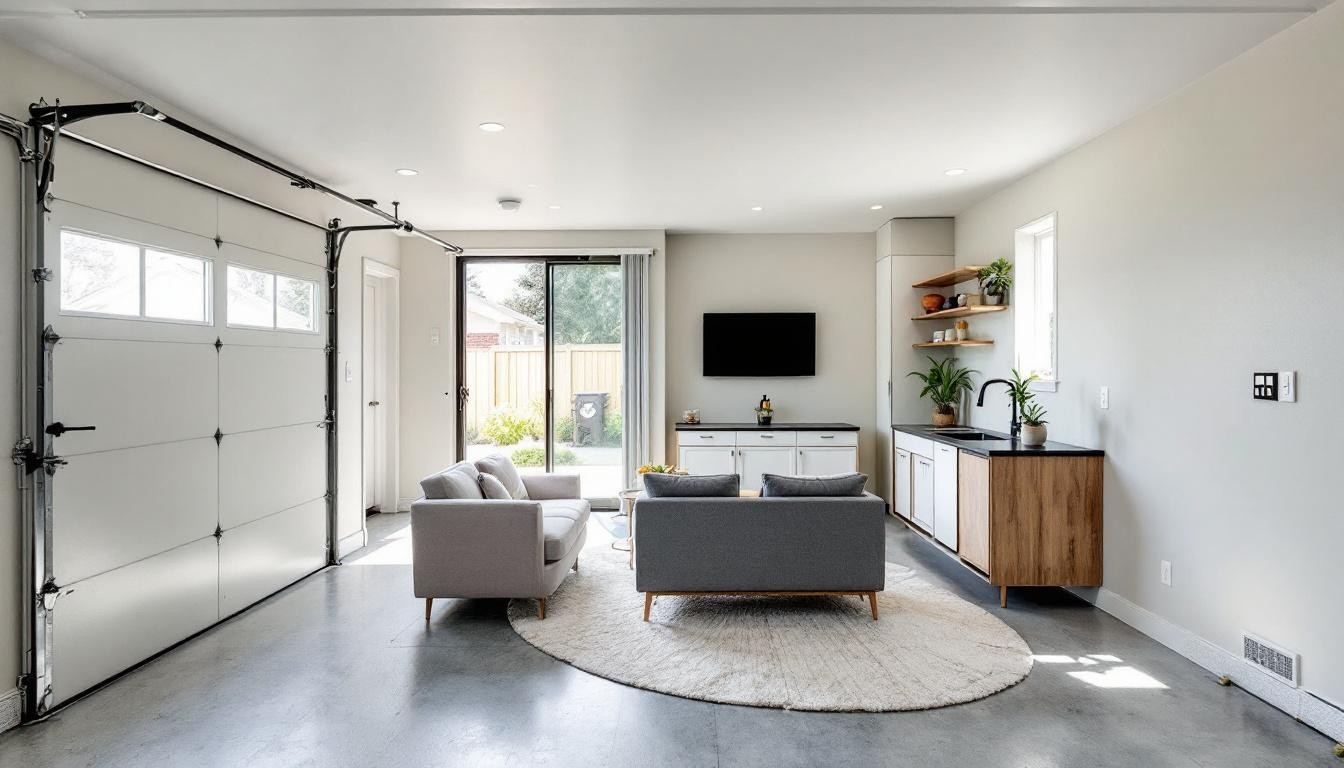
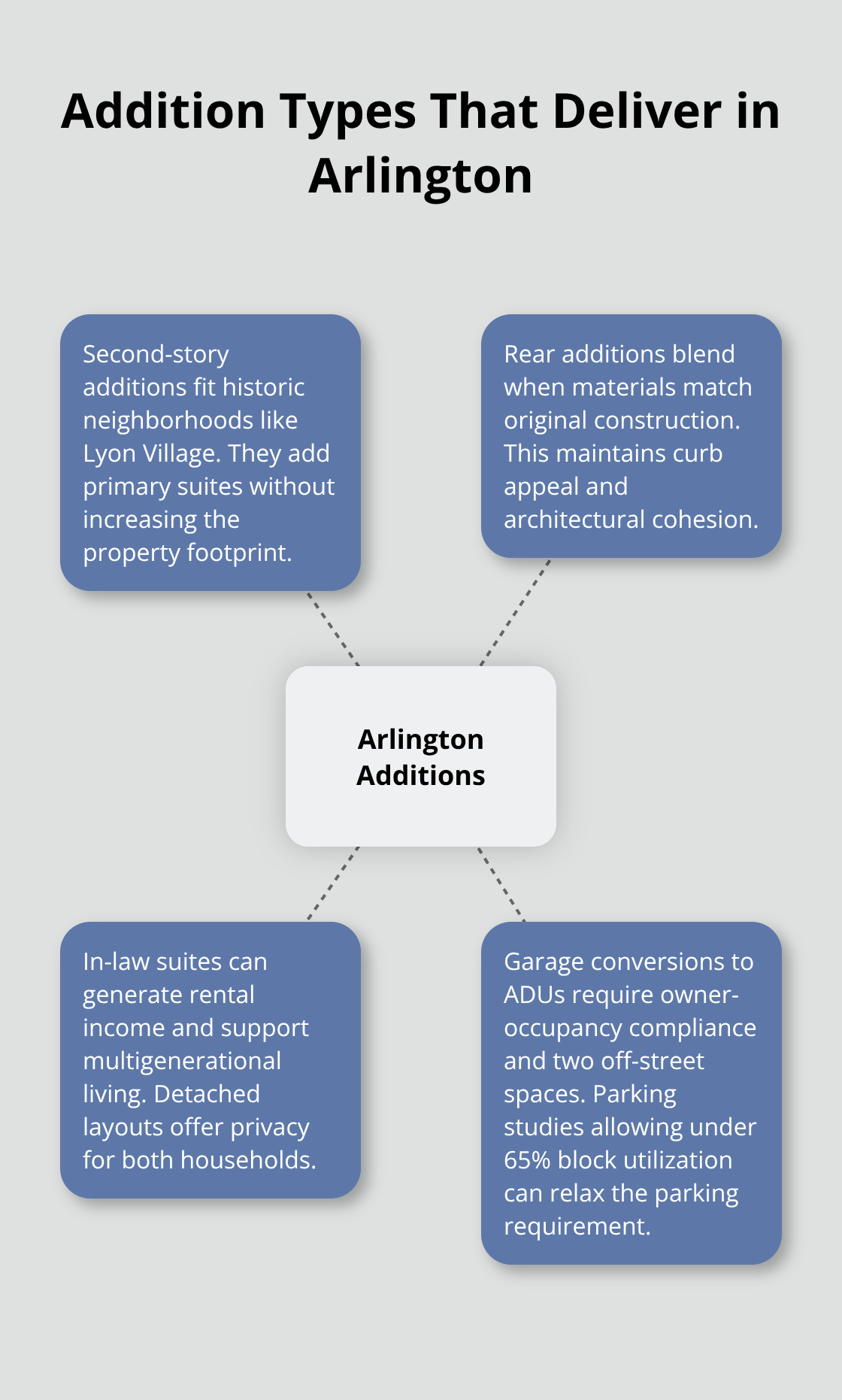
Second-story additions work best for historic neighborhoods like Lyon Village (they provide master suites without increasing property footprint). Rear additions blend seamlessly with existing architecture when materials match original construction. In-law suites generate rental income and accommodate multigenerational families, with detached structures offering privacy. Garage conversions into Accessory Dwelling Units require owner-occupancy compliance and two off-street parking spaces unless parking studies show less than 65% block utilization.
Space and Budget Determination
Property size dictates addition possibilities in Arlington’s dense neighborhoods. Homeowners must calculate existing square footage against zoning maximums before design begins. Budget planning should include a 10-20% contingency fund for unexpected costs (permit delays and material price fluctuations commonly occur). Smart homeowners prioritize must-have features over nice-to-have elements when budget constraints arise.
Once you understand these planning fundamentals, the next step involves assembling your design and construction team to bring your vision to life.
Design and Construction Process
Selecting Your Design-Build Team
Arlington addition projects require architects licensed in Virginia who understand local design standards and setback requirements. Homeowners should hire professionals with at least five completed projects in Arlington County within the past two years. Licensed contractors must carry minimum $500,000 liability insurance and workers’ compensation coverage. Check Arlington County’s contractor database to verify active licenses before you sign contracts. Experienced teams complete design phases 30% faster than newcomers because they anticipate county reviewer feedback. Request detailed portfolios that show similar additions in your neighborhood, particularly in Lyon Village or Ballston where architectural review boards scrutinize designs closely.
Arlington’s Permit Process
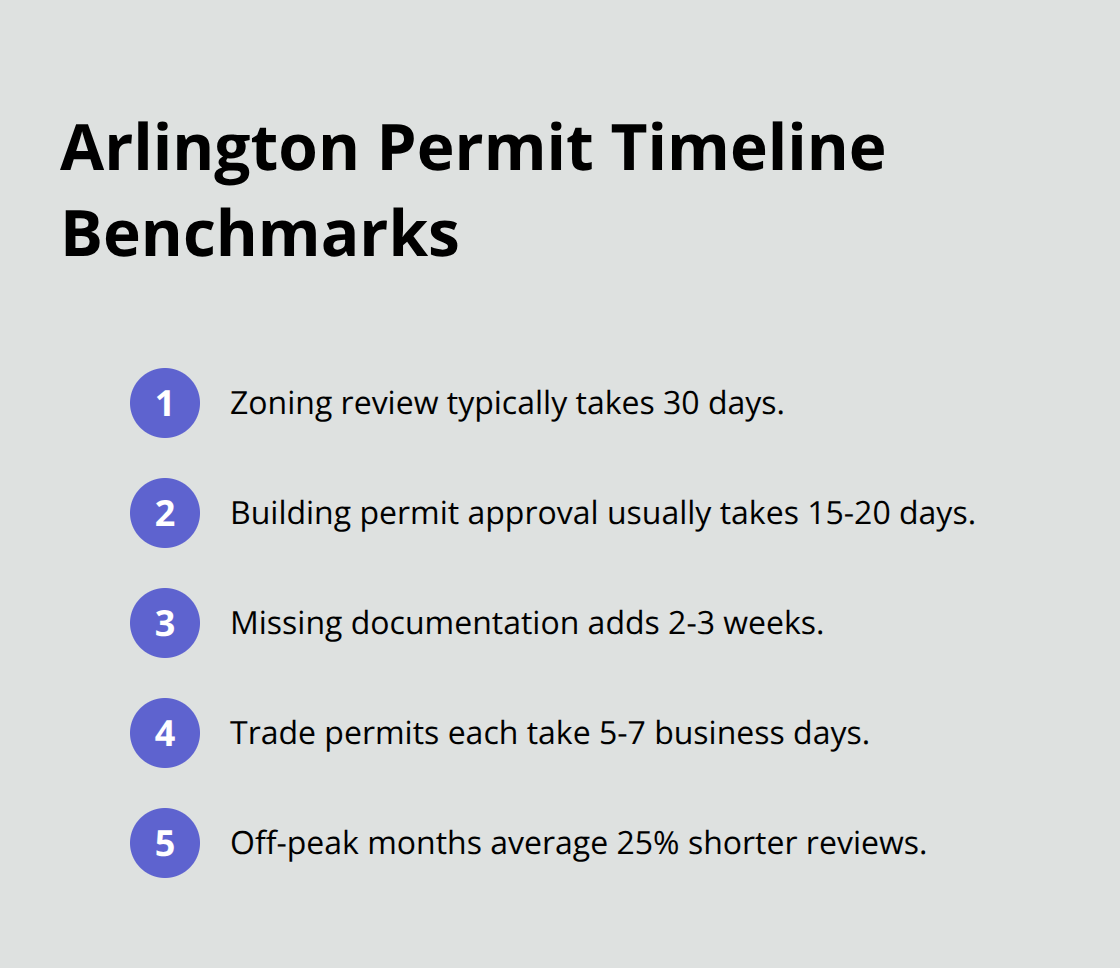
Submit applications through Arlington’s Permit Arlington platform after your pre-submission meeting with the Zoning Division. Complete applications typically take 30 days for zoning review, followed by 15-20 days for building permit approval. Missing documentation extends timelines by 2-3 weeks, so submit complete floor plans, site surveys, and structural calculations initially. Arlington requires separate permits for electrical, plumbing, and HVAC work (each takes 5-7 business days for approval). Schedule permit applications during off-peak months when review times average 25% shorter than summer months.
Professional contractors familiar with Arlington’s system reduce permit delays by preparing reviewer-ready documentation and addressing common rejection reasons proactively.
Construction Timeline Management
Arlington addition projects span 4-8 months from permit approval to certificate of occupancy. Weather delays extend timelines by 2-4 weeks during winter months, while material delivery issues add another 1-2 weeks. Smart homeowners schedule foundation work for April through October when ground conditions optimize excavation. Coordinate inspections immediately after you complete each phase because Arlington inspectors book 7-10 days out during busy seasons (professional project managers maintain detailed schedules and communicate weekly progress updates). This prevents the 40% of projects that exceed original timelines due to poor coordination.
With your construction team selected and permits approved, the focus shifts to maximizing both the value and functionality of your new space through smart design choices and material selection.
Maximizing Value and Functionality
Seamless Layout Integration
Arlington additions succeed when new spaces flow naturally with existing floor plans. Maintain consistent ceiling heights between old and new areas to avoid jarring transitions that decrease property value. Position doorways to create clear sight lines through connected rooms (real estate agents report this adds 8-12% to perceived home value). Match existing trim profiles and door styles exactly, as mismatched details signal poor craftsmanship to potential buyers. Install hardwood floors that run continuously from existing rooms into additions, which creates visual continuity that makes spaces feel larger. Professional designers recommend you avoid level changes between spaces whenever possible, since steps disrupt flow and create accessibility issues for homeowners.
Material Selection for Arlington Weather
Choose fiber cement siding over vinyl for Arlington additions because it withstands the region’s 40-degree temperature swings without warping. James Hardie fiber cement costs 30% more initially but lasts 50 years compared to 20 years for vinyl alternatives. Install impact-resistant windows rated for 110 mph winds, which Arlington County codes now require for new construction. Composite decking outperforms pressure-treated lumber in Arlington’s humid summers and resists moisture damage that causes 60% of deck replacements within 15 years. Select roofing materials rated for Class 4 hail resistance, as Arlington experiences severe storms annually that damage standard asphalt shingles.
Energy Performance Standards
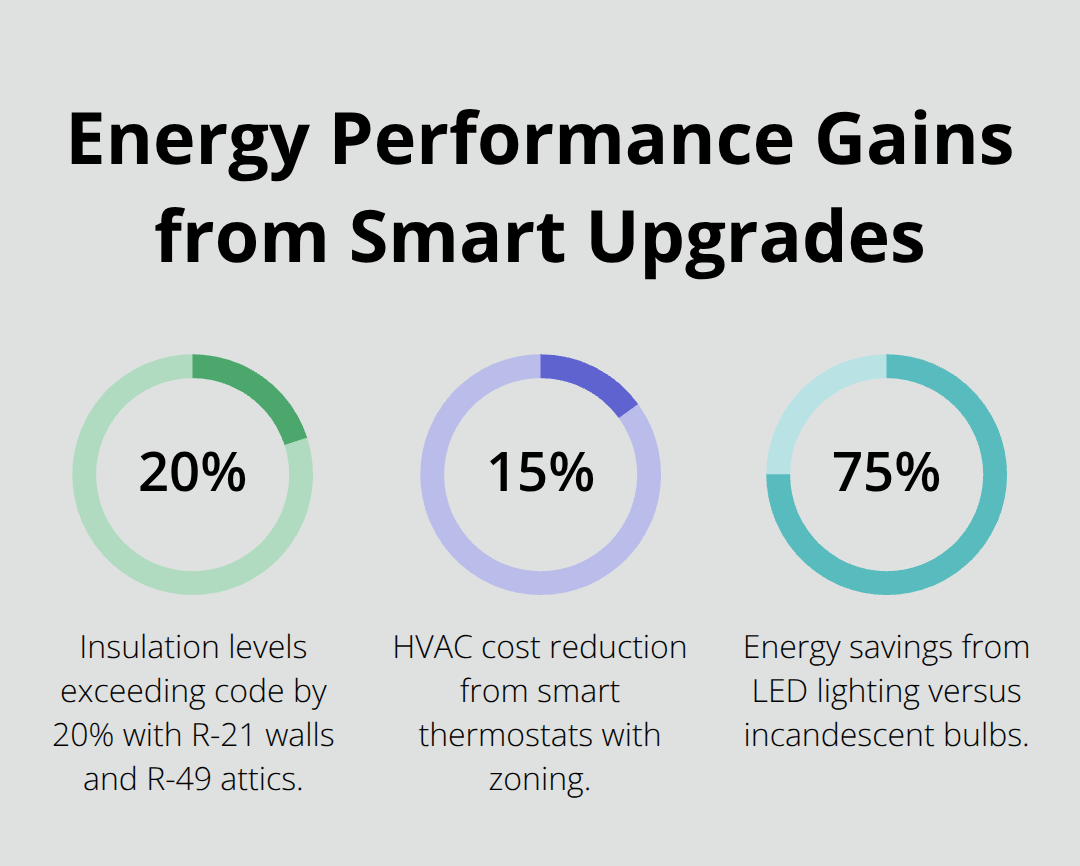
Install triple-pane windows with U-values below 0.25 to handle Arlington’s heating and cooling demands efficiently. High-performance windows reduce energy costs by $200-400 annually compared to standard double-pane units. Add spray foam insulation with R-values of 21 in walls and R-49 in attics to exceed Virginia energy codes by 20%. Smart thermostats with zoning capabilities cut HVAC costs by 15% in additions (they heat and cool only occupied spaces). LED systems use 75% less energy than incandescent bulbs and last 25 times longer, which reduces replacement costs significantly. Install Energy Star appliances that qualify for Virginia utility rebates up to $500 per unit.
Final Thoughts
Professional home additions deliver measurable returns for Arlington homeowners who invest in expert construction services. Properties with well-executed additions sell 12% faster than comparable homes without expansions, while quality craftsmanship increases resale values by $15-25 per square foot invested. Arlington’s complex zoning requirements and permit processes demand contractors who understand local regulations intimately.
We at Dzala General Contractor handle every aspect of your project from initial design through final walkthrough. Our experience with Arlington County’s permit system reduces approval delays compared to inexperienced contractors. Quality materials and energy-efficient installations protect your investment against Arlington’s challenging weather conditions (temperature swings reach 40 degrees annually).
Starting your home additions project begins with a consultation to assess your property’s potential within zoning constraints. Schedule site evaluations during fall months when contractors have more availability and material costs stabilize. Dzala General Contractor specializes in seamless additions that blend perfectly with existing architecture while maximizing functionality and value for Arlington families.